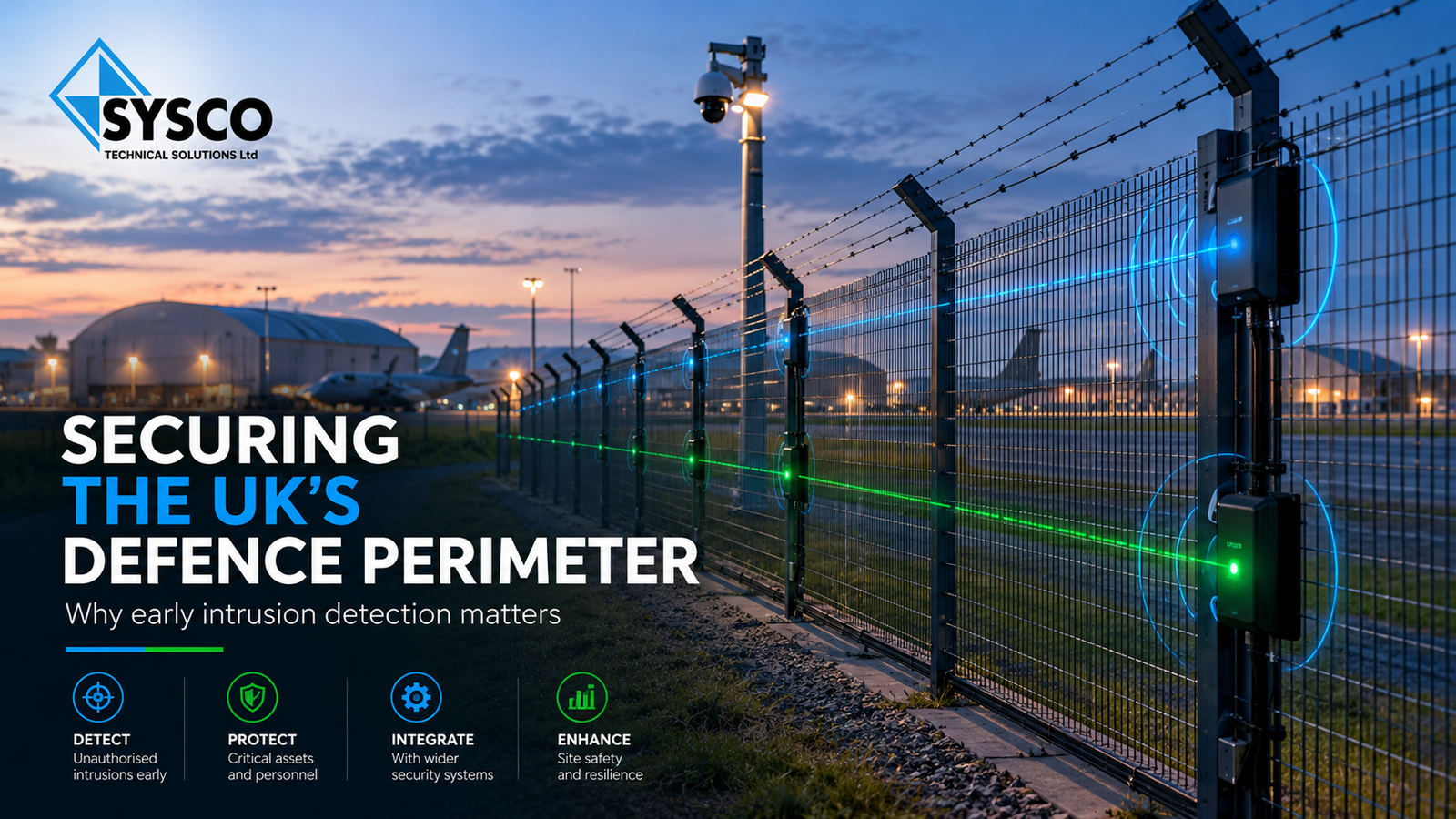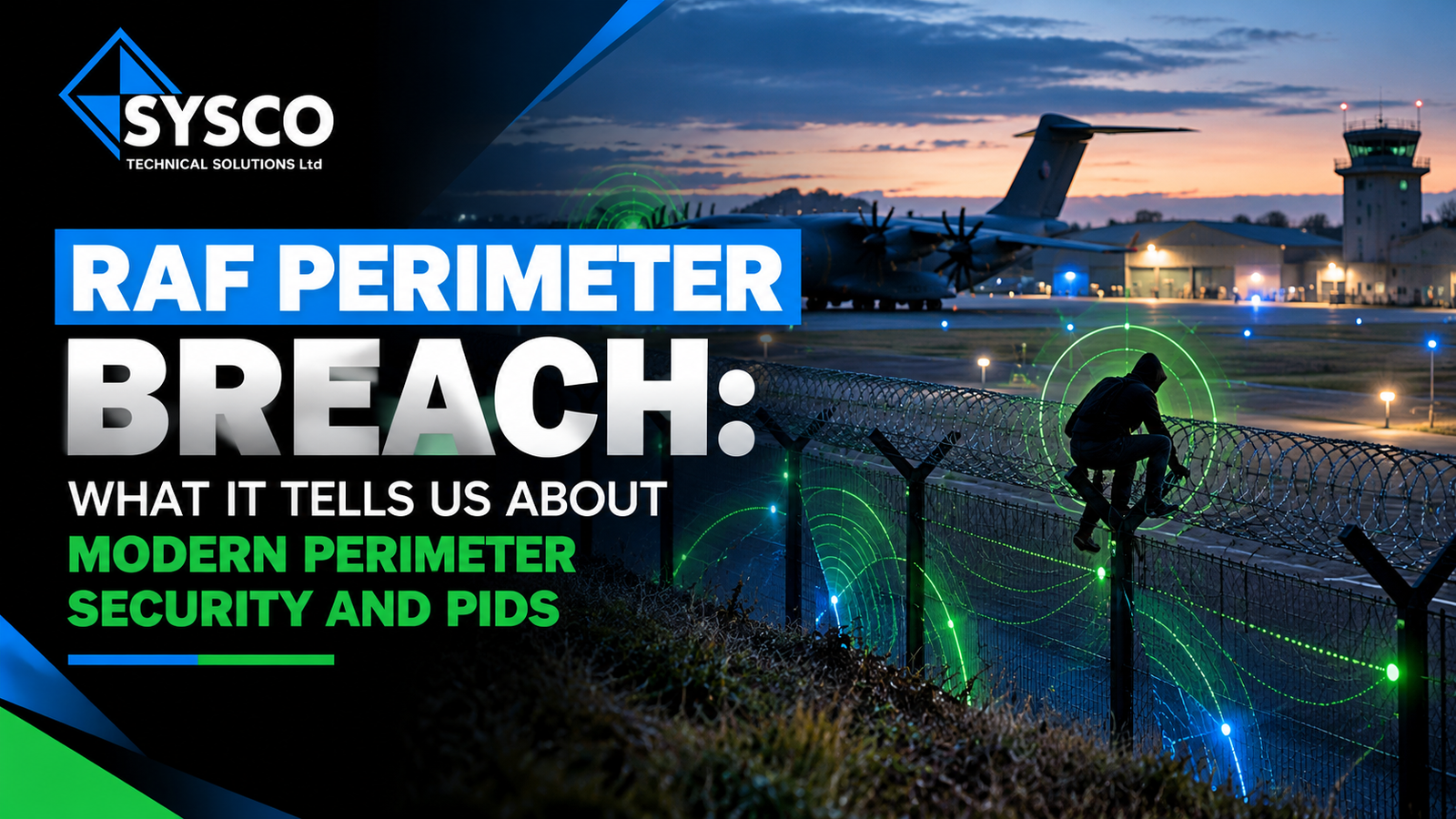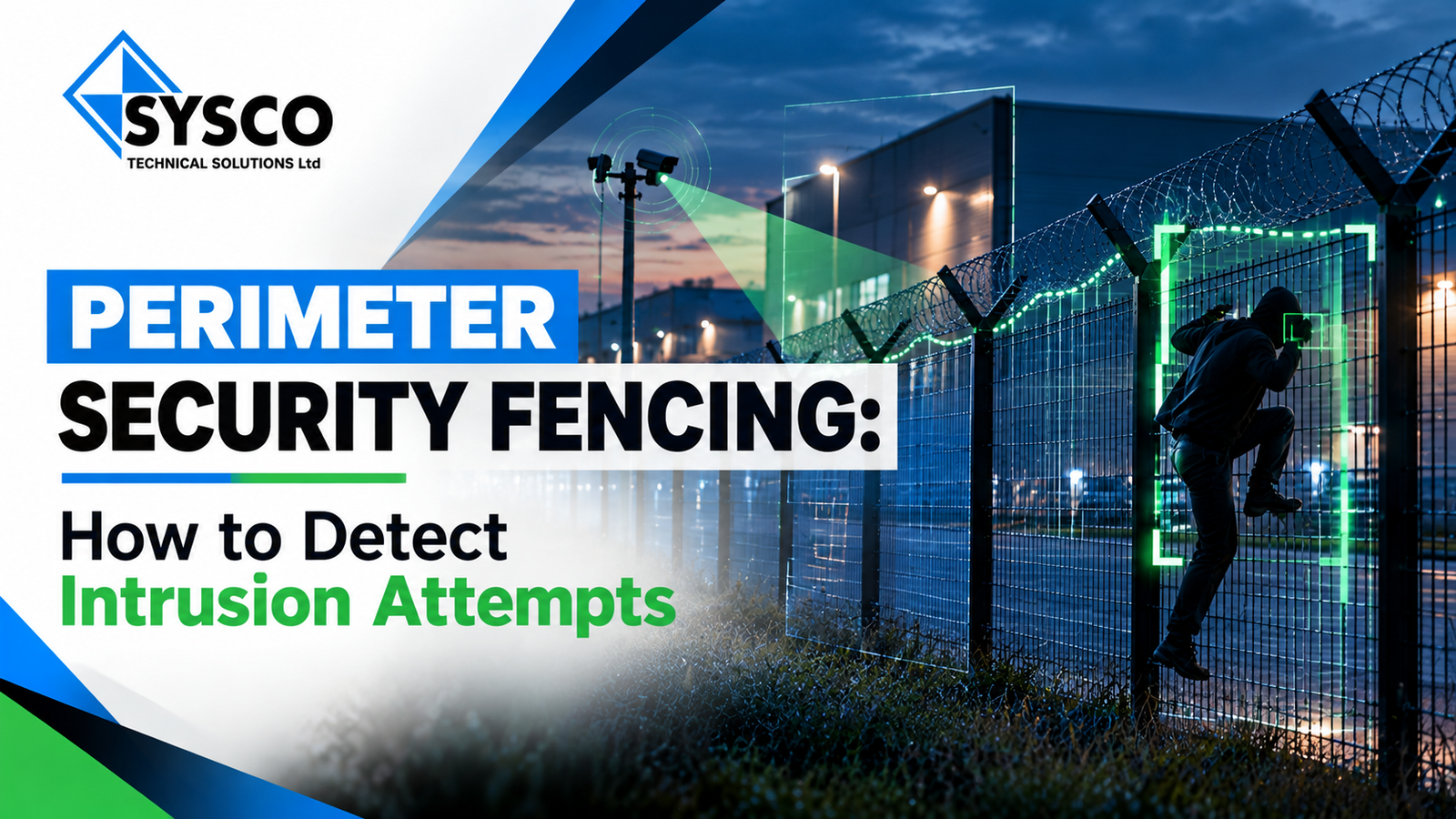
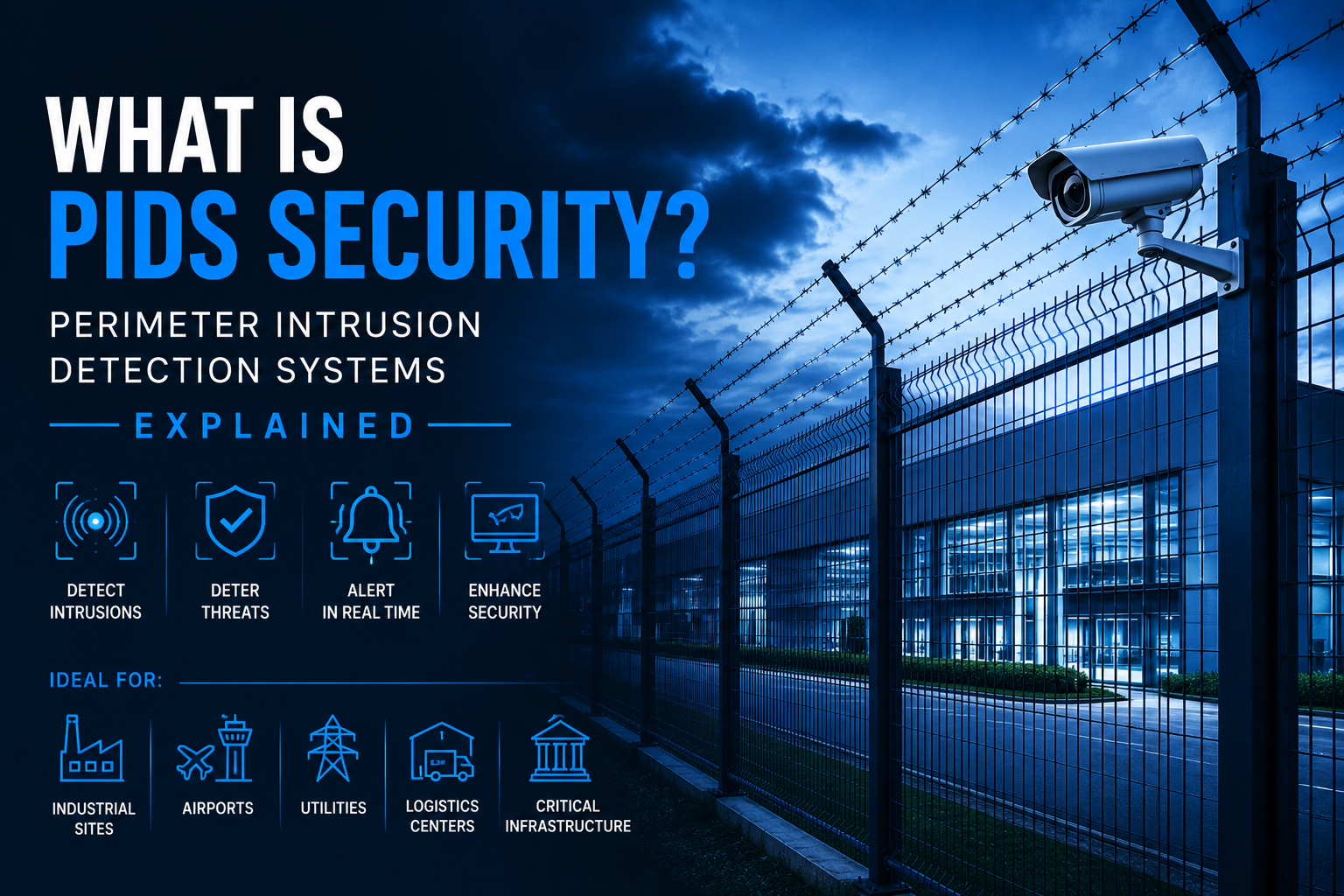
Every year, UK businesses lose hundreds of millions of pounds to site theft, vandalism, and unauthorised access. Fences and cameras help – but on their own, they are passive. By the time a breach is confirmed on CCTV, the damage is already done.
PIDS security changes that. A perimeter intrusion detection system detects a threat at the boundary of your site – before an intruder reaches your building, equipment, or people – and triggers an immediate alert so your security team can respond.
This guide explains exactly what PIDS security is, how different types of perimeter intrusion detection systems work, which sectors rely on them, and what to look for when choosing a system for your site.
What Is PIDS Security?
PIDS stands for Perimeter Intrusion Detection System. It is a category of physical security technology designed to detect unauthorised access attempts at the boundary of a protected area and alert security personnel in real time.
Unlike a passive physical barrier such as a fence or wall, a PIDS actively monitors your perimeter around the clock. The moment suspicious activity is detected – climbing, cutting, digging, or simply approaching a restricted zone – the system triggers an alarm and, in many cases, initiates an automated response such as activating CCTV, sounding an alert, or notifying a remote monitoring centre.
PIDS security is used across a wide range of high-security environments in the UK and globally, including:
- Critical national infrastructure (CNI) – water treatment plants, power stations, substations
- Industrial facilities and manufacturing sites
- Data centres and server farms
- Airports, ports, and transport hubs
- Warehouses, logistics hubs, and distribution centres
- Construction sites
- Prisons and secure detention facilities
- Military installations
The core purpose of any perimeter intrusion detection system is to give security teams the earliest possible warning of a threat – providing the critical window of time needed to prevent a breach rather than simply record one.
How Does a Perimeter Intrusion Detection System Work?
A perimeter intrusion detection system works by deploying sensors along or around your site boundary. These sensors continuously monitor for specific triggers – vibration, movement, pressure, heat, or the cutting of a cable – and feed data back to a central control system.
When a trigger is detected, the system:
- Generates a zone-specific alarm – identifying exactly where on the perimeter the activity has occurred
- Integrates with other security systems – activating CCTV cameras, access control locks, or floodlights pointed at the relevant zone
- Alerts security personnel – either on-site via a control panel, or remotely via a 24/7 monitoring centre
Modern perimeter detection systems use advanced analytics and AI to distinguish between a genuine intrusion attempt and a false trigger caused by environmental factors such as wind, rain, wildlife, or passing vehicles. This is critical – a system that generates too many false alarms leads to alert fatigue and slower responses to real threats.
Types of Perimeter Detection Systems
There is no single PIDS technology that suits every site. The right perimeter intrusion detection system depends on your site layout, perimeter type, environmental conditions, and security requirements. The main categories are:
Fence-Mounted Sensors
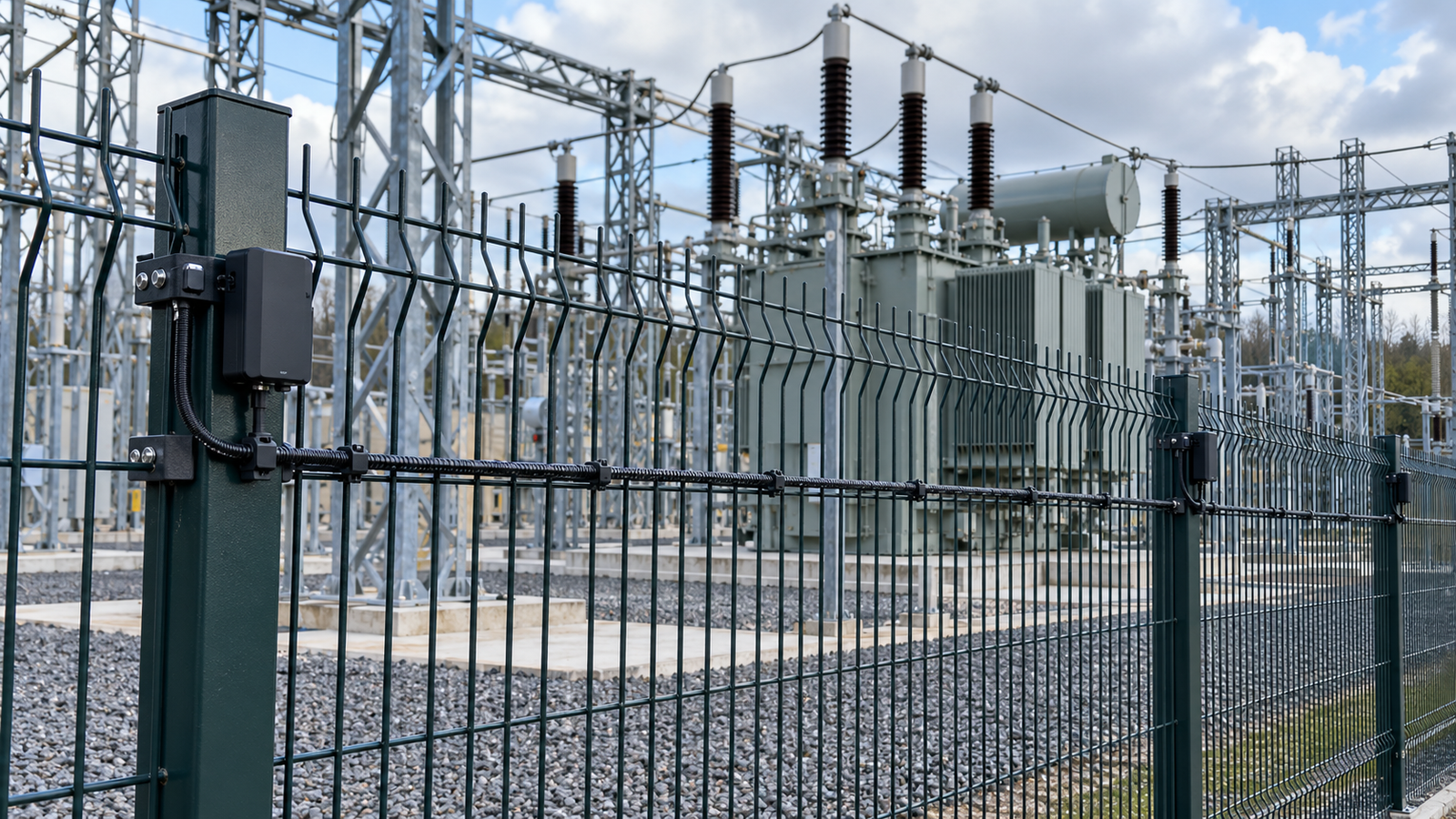
Sensors attached directly to an existing perimeter fence detect vibration, movement, or changes in tension when someone attempts to climb, cut, or push through. These are cost-effective, relatively straightforward to install, and well-suited to industrial and commercial sites with existing fencing infrastructure.
Buried Cable (Ground-Based) Systems
Concealed underground cables detect footsteps, vibrations, or pressure above the surface. Because they are invisible, they provide covert detection and are highly resistant to tampering. These systems are commonly used in high-security applications where detection must be discreet.
Fibre Optic Cable Systems
Fibre optic PIDS uses distributed acoustic sensing (DAS) technology to detect vibrations anywhere along a fibre optic cable run. A single cable can cover kilometres of perimeter and provide precise, zone-level location data. This technology is increasingly used for critical infrastructure and large perimeter installations.
Radar-Based Systems
Ground-based radar systems monitor open ground and detect moving objects – people or vehicles – within a defined detection zone. Radar is highly effective on open sites without defined fence lines, and performs well in all weather conditions including fog, rain, and darkness.
Microwave and Infrared Beam Systems
Active beam systems create an invisible detection zone between two units. If the beam is broken, an alarm is triggered. These are typically used for defined access points, gates, or as a secondary detection layer within a wider PIDS installation.
Why PIDS Security Matters: The Key Benefits
Investing in a perimeter intrusion detection system delivers benefits that go well beyond basic deterrence:
- Early warning – detection at the outer boundary gives security teams more time to respond before a breach is completed
- Precise location data – zone-specific alarms tell responders exactly where on the perimeter a threat is occurring, not just that an alarm has been triggered
- 24/7 unmanned protection – PIDS systems operate continuously without fatigue, shift changes, or human error
- Reduced false alarms – modern systems use AI-driven filtering to minimise nuisance alarms and improve response confidence
- Integration with wider security – PIDS connects seamlessly with CCTV, access control, and alarm management platforms to create a layered, intelligent security ecosystem
- Insurance and compliance benefits – many insurers recognise accredited PIDS installations when calculating commercial premiums
Choosing the Right PIDS Security System for Your Site
No two sites are identical. Selecting the right perimeter intrusion detection system requires a thorough assessment of your specific risk profile, site layout, and operational requirements. Key factors to consider include:
- Perimeter type – fenced, open ground, mixed terrain
- Site size – the length and complexity of the perimeter to be monitored
- Environment – local weather conditions, wildlife activity, proximity to roads or public areas
- Existing infrastructure – what CCTV, access control, or alarm systems are already in place
- Security grade required – commercial site, high-risk industrial, or critical national infrastructure
- Operational requirements – whether the site is manned, unmanned, or remotely monitored
Working with an experienced PIDS security specialist like Sysco Tech – rather than a generic alarm installer – ensures your system is designed around your actual vulnerabilities, minimising false alarms and maximising detection accuracy from day one.
Frequently Asked Questions About PIDS Security
What does PIDS stand for?
PIDS stands for Perimeter Intrusion Detection System. It refers to any security technology designed to detect unauthorised access attempts at the outer boundary of a site or facility.
Is PIDS security only for large or high-security sites?
No. While PIDS originated in military and critical infrastructure environments, modern perimeter detection systems are cost-effective and scalable enough for commercial warehouses, logistics hubs, schools, and medium-sized industrial sites. The right system can be tailored to almost any budget and perimeter type.
How is PIDS different from a standard alarm system?
A standard alarm system typically detects an intruder once they are already inside a building. PIDS security detects the intrusion attempt at the perimeter – well before the intruder reaches any building, vehicle, or asset. This earlier warning window is the key distinction and the primary advantage.
Can PIDS integrate with my existing CCTV and access control?
Yes. Modern perimeter intrusion detection systems are designed to integrate with CCTV cameras, access control platforms, alarm panels, and remote monitoring centres. Integration transforms individual triggers into coordinated, actionable alerts with visual verification.
Will PIDS generate lots of false alarms?
This is one of the most common concerns, and the honest answer is: it depends on the quality of the system and how well it is designed and commissioned for your specific site. A well-designed PIDS installation with correct sensitivity calibration and AI-assisted filtering will produce very low false alarm rates. Poorly designed or incorrectly commissioned systems are where false alarm problems originate.
Does my site need planning permission for PIDS installation?
In most cases, fence-mounted and buried cable PIDS installations do not require planning permission. However, above-ground structures or certain radar installations on heritage sites may require consultation with your local planning authority. A reputable PIDS provider will advise you on this during the survey and design phase.
How long does a PIDS installation take?
Installation time depends heavily on site size and system complexity. A straightforward fence-mounted installation on a single perimeter run can be completed in a few days. A multi-zone system for a large industrial site or CNI facility may take several weeks, including design, manufacture, installation, commissioning, and testing.
Summary
PIDS security is the most effective way to protect the outer boundary of any commercial, industrial, or critical site. By detecting intrusion attempts at the perimeter – before a breach is completed – a well-designed perimeter intrusion detection system gives your security team the time and information needed to prevent incidents, not just document them.
The right perimeter detection system depends on your site, your risk profile, and your existing security infrastructure. The starting point is always a professional site survey from an experienced PIDS specialist.
Sysco Technical Solutions are UK specialists in perimeter intrusion detection systems, with over 20 years of experience protecting critical national infrastructure, industrial facilities, and commercial sites. For a free consultation, call 01772 621716 or email enquiries@syscotech.co.uk.