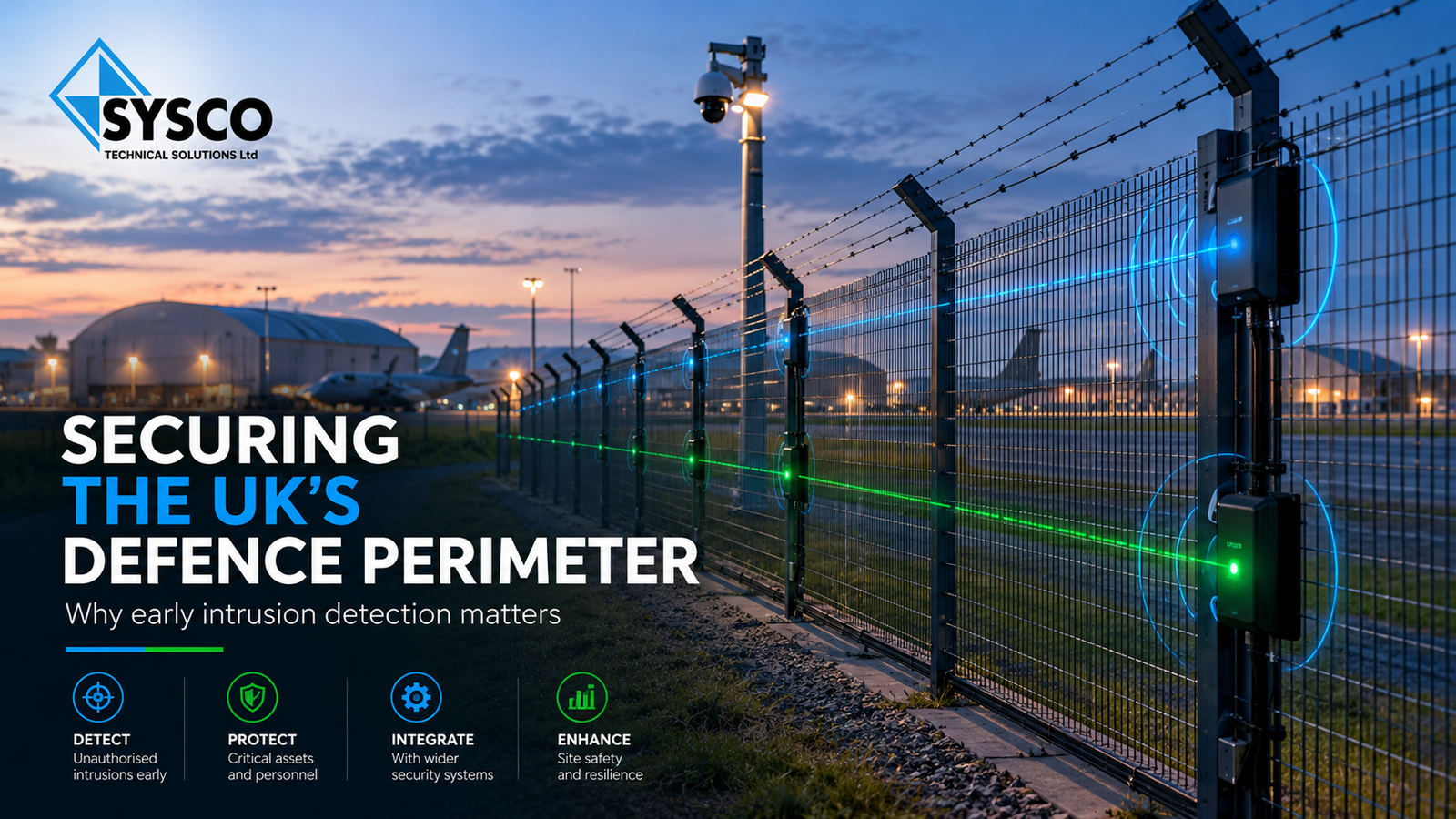

Whether you manage a commercial site, an industrial facility, a data centre, utility or critical national infrastructure, one thing is certain – keeping threats on the outside of your boundary is far more effective than dealing with them once they’ve already got in. That is the fundamental principle behind perimeter security installation, and it is why more organisations across the UK are investing in dedicated perimeter intrusion detection systems than ever before.
This guide covers everything you need to know – from how perimeter detection systems work and what technologies are available, to how a professional installation is planned and what to expect from a modern perimeter security system.
What Is Perimeter Security Installation?
Perimeter security installation refers to the process of designing, supplying, and fitting the technology and infrastructure needed to detect, deter, and alert against unauthorised intrusion at the boundary of a site – before a threat reaches your buildings, assets, or people.
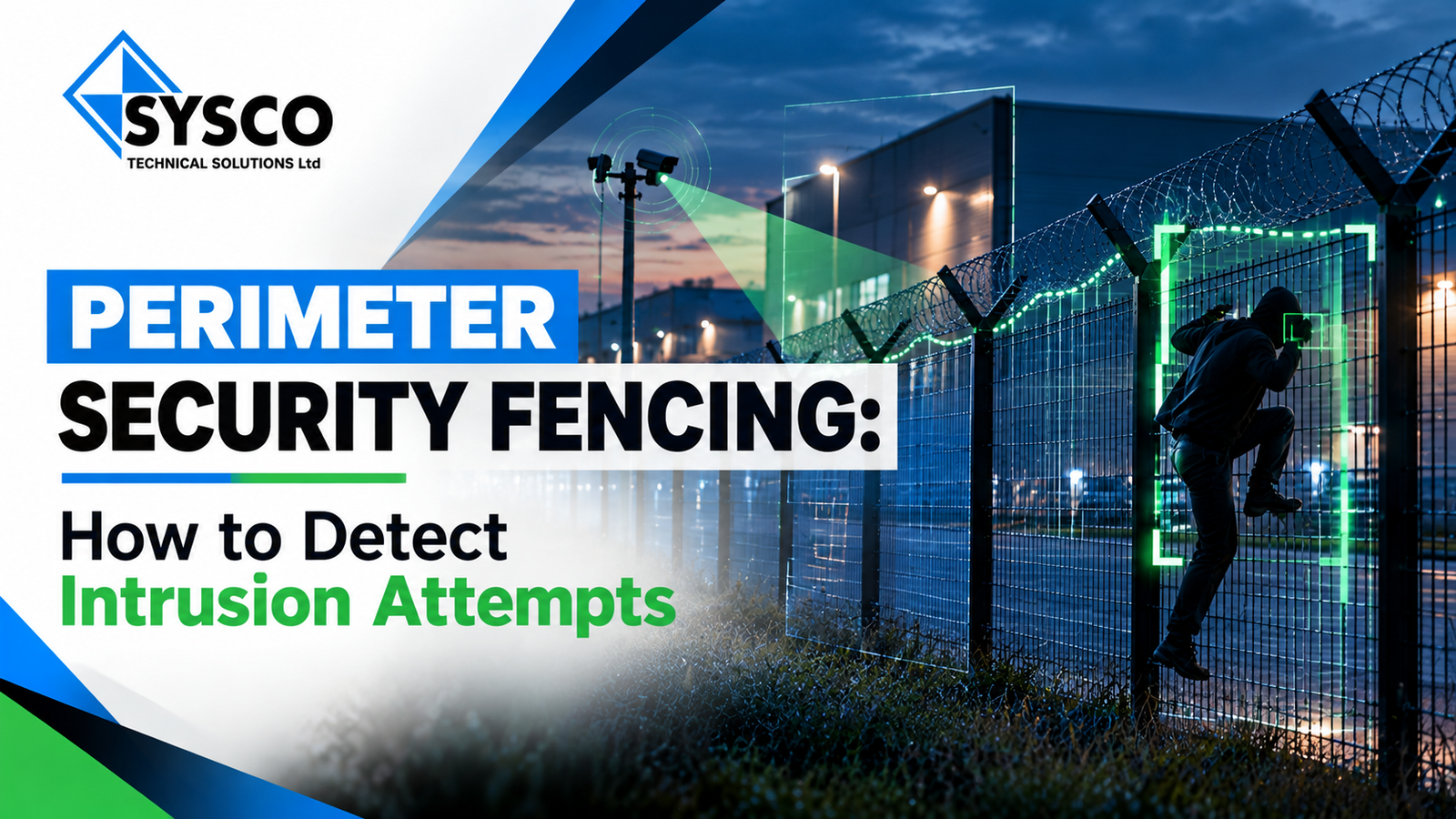
Unlike reactive security measures, perimeter protection is proactive. A well-planned perimeter intrusion detection system identifies a potential intruder the moment they approach or breach a boundary line, giving security teams or response units maximum time to act.
At Sysco Tech, our specialism is perimeter intrusion detection (PID) – the technology that forms the intelligent backbone of any serious perimeter security strategy.
Why Perimeter Protection Matters
The UK’s security landscape has changed significantly over the past decade. Threats to commercial and industrial sites have grown more sophisticated, and the consequences of a security breach – whether theft, vandalism, trespass, or more serious criminal activity – can be severe in both financial and reputational terms.
Perimeter protection matters because it:
- Provides the earliest possible warning of an intrusion attempt
- Reduces the risk of false alarms through smart detection technology
- Covers large or complex boundary areas that physical guarding alone cannot
- Works continuously, day and night, in all weather conditions
- Generates evidential data that supports investigations and insurance claims
- Can be scaled and adapted as a site’s needs evolve
The cost of a quality perimeter security installation is almost always far lower than the cost of what it prevents.
How Perimeter Intrusion Detection Systems Work
A perimeter intrusion detection system (PIDS) is designed to detect the presence, approach, or breach of a defined boundary and generate an alert. The specific technology used depends on the site, the threat level, and the environment – but most modern perimeter detection systems follow the same logical flow:
Sense → Analyse → Alert
- Sensing – Sensors installed along or around the perimeter continuously monitor for changes in their environment, whether that is movement, vibration, heat signatures, or interference with a field or signal.
- Analysis – On-board or centralised processing interprets the sensor data. Modern systems use sophisticated algorithms to distinguish genuine intrusion events from environmental noise such as animals, wind, or passing vehicles.
- Alerting – When a genuine event is detected, the system generates a zone-specific alarm, notifying a control room, security management system, or response team with the location and nature of the alert.
Types of Perimeter Detection Systems
There is no single solution that suits every site. Professional perimeter security installation always begins with a thorough site assessment to match the right technology to the environment and threat profile. The main categories of perimeter intrusion detection technology include:
Fence-Mounted Sensors
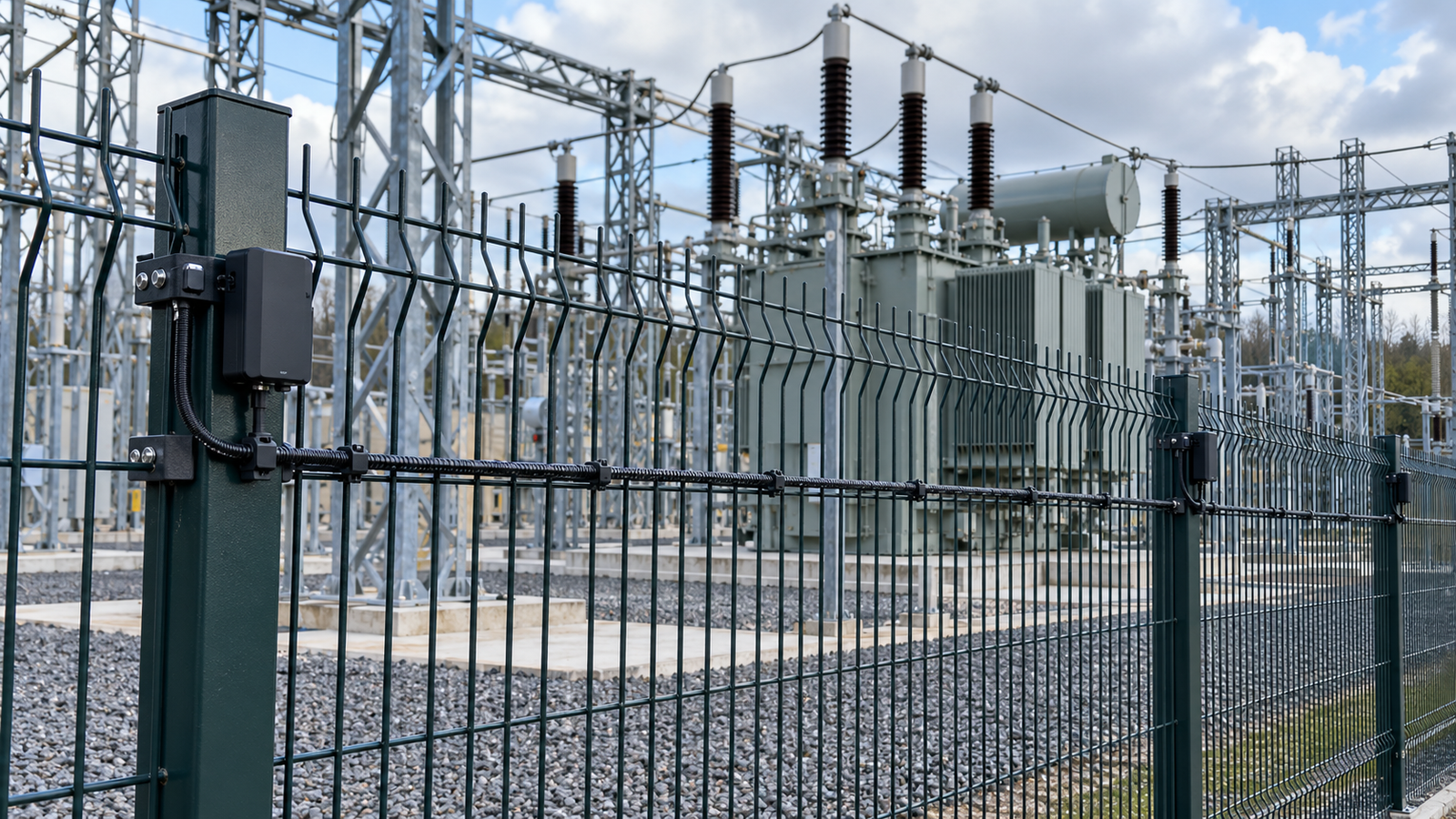
These are installed directly onto an existing or purpose-built fence and detect vibration, movement, or cutting attempts. They are well-suited to industrial sites, utilities, and high-security facilities where a defined physical barrier already exists.
Ground-Based Detection
Buried cable or geophone systems detect the ground disturbance caused by footsteps or vehicles crossing a defined zone. Highly covert and unaffected by weather, these are popular for protecting open perimeters, airfields, and rural sites.
Free-Standing or Pole-Mounted Systems
These include technologies such as microwave barriers, active infrared beams, and LiDAR-based sensors. They create an invisible detection curtain across open ground and are ideal for sites without a fence line, or as a secondary detection layer behind a physical barrier.
Video-Based Analytics
Modern cameras equipped with AI-driven video analytics can perform perimeter detection functions by identifying and classifying movement within a defined zone. When integrated with a wider perimeter security system, they can provide visual verification of alerts – though it is worth noting that camera-based detection is a complement to, not a replacement for, dedicated PIDS technology in higher-risk applications.
Perimeter Security Installation: The Process
A professional perimeter security installation is not simply a matter of fitting hardware. It involves careful planning, design, and commissioning to ensure the system performs as required from day one.
1. Site Survey and Risk Assessment
The process begins with a comprehensive survey of the site. This includes mapping the boundary, identifying vulnerable areas, assessing the environmental conditions (terrain, vegetation, lighting, local wildlife), and understanding the specific threats the client needs to address.
2. System Design
Based on the survey findings, a system design is produced. This specifies the technology to be used, sensor placement, cable routing, power requirements, and the method of integration with any existing security infrastructure – such as CCTV, intruder alarm systems, or access control platforms.
3. Installation
Physical installation is carried out by trained engineers. Depending on the complexity of the site, this may involve groundworks, cable installation, post and bracket fabrication, sensor mounting, and connection to control equipment.
4. Commissioning and Testing
Once installed, the system is configured and fine-tuned. Sensitivity levels are set, detection zones are mapped, and the system is tested rigorously to confirm performance across the full perimeter. Integration with third-party systems is verified at this stage.
5. Handover and Training
A quality installation includes full handover documentation and training for the client’s team, so they can operate and manage the system with confidence.
Integrating Perimeter Intrusion Detection With Other Systems
One of the most valuable aspects of modern perimeter intrusion detection systems is their ability to integrate with wider security platforms. While Syscotech specialises in PID rather than access control, CCTV, or alarm systems themselves, our installations are designed to interface with these technologies seamlessly.
Common integrations include:
- CCTV systems – An alert from a perimeter detection sensor can automatically slew a PTZ camera to the relevant zone, providing immediate visual verification.
- Intruder alarm systems – Perimeter detection can serve as an outer zone trigger, escalating to building-level alarms if an intrusion continues.
- Security management platforms – Alerts, zones, and event data from the perimeter intrusion detection system feed into a central management interface, giving operators a unified operational picture.
- Lighting systems – Detection events can activate floodlights, both as a deterrent and to support visual verification.
This layered approach – using the perimeter detection layer to trigger and direct other systems – is the foundation of a truly intelligent security strategy.
Choosing the Right Perimeter Protection Products
The market for perimeter protection products is broad, and the right choice depends on your specific site and requirements. When evaluating options, consider:
- Detection technology – Is the technology appropriate for your terrain, boundary type, and threat profile?
- False alarm performance – What measures does the system use to reject environmental nuisance triggers?
- Zone granularity – How precisely can the system locate an intrusion event along the perimeter?
- Environmental ratings – Is the hardware rated for outdoor exposure in UK weather conditions?
- Scalability – Can the system expand as your site or requirements change?
- Integration capability – Does it support open protocols for connection with CCTV, alarm, and management systems?
- Manufacturer support – Is the technology backed by strong UK-based technical support?
At Sysco Tech, we work with leading perimeter protection product manufacturers and recommend solutions based on site need, not product preference.
Frequently Asked Questions About Perimeter Security Installation
What is the difference between a perimeter intrusion detection system and an intruder alarm?
A traditional intruder alarm is typically designed to detect intrusion once someone is already inside a building. A perimeter intrusion detection system detects activity at or near the boundary of a site – often before an intruder has even breached the fence line. The two technologies are complementary and work well together as part of a layered security strategy.
Can perimeter detection systems cope with wildlife and other nuisance triggers?
Yes. Modern perimeter intrusion detection systems are engineered with sophisticated signal processing to discriminate between genuine intrusion events and environmental noise such as animals, vegetation movement, or passing vehicles. Nuisance alarm performance is one of the most important evaluation criteria during system design.
How long does a perimeter security installation take?
This varies considerably depending on the size and complexity of the site. A straightforward installation on a single-boundary commercial site might be completed in a few days. A large industrial or infrastructure site with multiple detection layers and complex integrations could take several weeks. Your installation partner should provide a clear project timeline during the design phase.
Do I need planning permission for perimeter security installation in the UK?
For most electronic detection systems, planning permission is not required. However, if the installation involves significant structural works – such as the erection of new fencing, poles, or enclosures – it is worth checking with your local planning authority. Your installation company should advise you on any relevant regulatory considerations.
Can a perimeter intrusion detection system be integrated with my existing CCTV?
In most cases, yes. Modern perimeter detection systems support integration with CCTV platforms via standard protocols, enabling automatic camera positioning and visual verification when an alert is generated. Syscotech designs its installations with integration in mind.
What maintenance does a perimeter security system require?
Like any safety-critical system, perimeter intrusion detection systems benefit from regular inspection, testing, and servicing. Syscotech recommends scheduled preventive maintenance visits to ensure sensors, cabling, and control equipment remain in optimal condition. Most clients opt for an annual or bi-annual maintenance contract.
Is perimeter security installation suitable for smaller commercial sites, or only large facilities? Perimeter protection is scalable and suitable for sites of almost any size. Whilst the technology is most commonly associated with large industrial, utility, or critical infrastructure sites, it is increasingly being adopted by smaller commercial premises, logistics facilities, and retail parks where traditional security measures are proving insufficient.
Talk to Sysco Tech About Your Perimeter Security Requirements
If you are considering a perimeter security installation for your site – whether you are starting from scratch or looking to upgrade an existing system – Sysco Tech can help. We specialise in perimeter intrusion detection and bring the expertise, technology knowledge, and installation capability to deliver systems that perform reliably in real-world UK conditions.
Get in touch with our team at syscotech.co.uk to arrange a site survey and consultation.