
Construction sites are among the most targeted locations for theft and criminal damage in the United Kingdom. According to industry figures, site crime costs the UK construction sector an estimated £800 million every year – and that number understates the real damage. Stolen plant takes weeks to replace. Insurance claims delay programmes. A single overnight raid on a high-value site can set a project back by weeks and push costs well beyond what any policy will fully cover.
The problem is structural. A live construction site is designed to be accessible – heavy vehicles need to get in and out, contractors arrive and leave at different times, and the perimeter changes shape constantly as the project progresses. Traditional hoarding and heras fencing creates a boundary. It does not create detection.
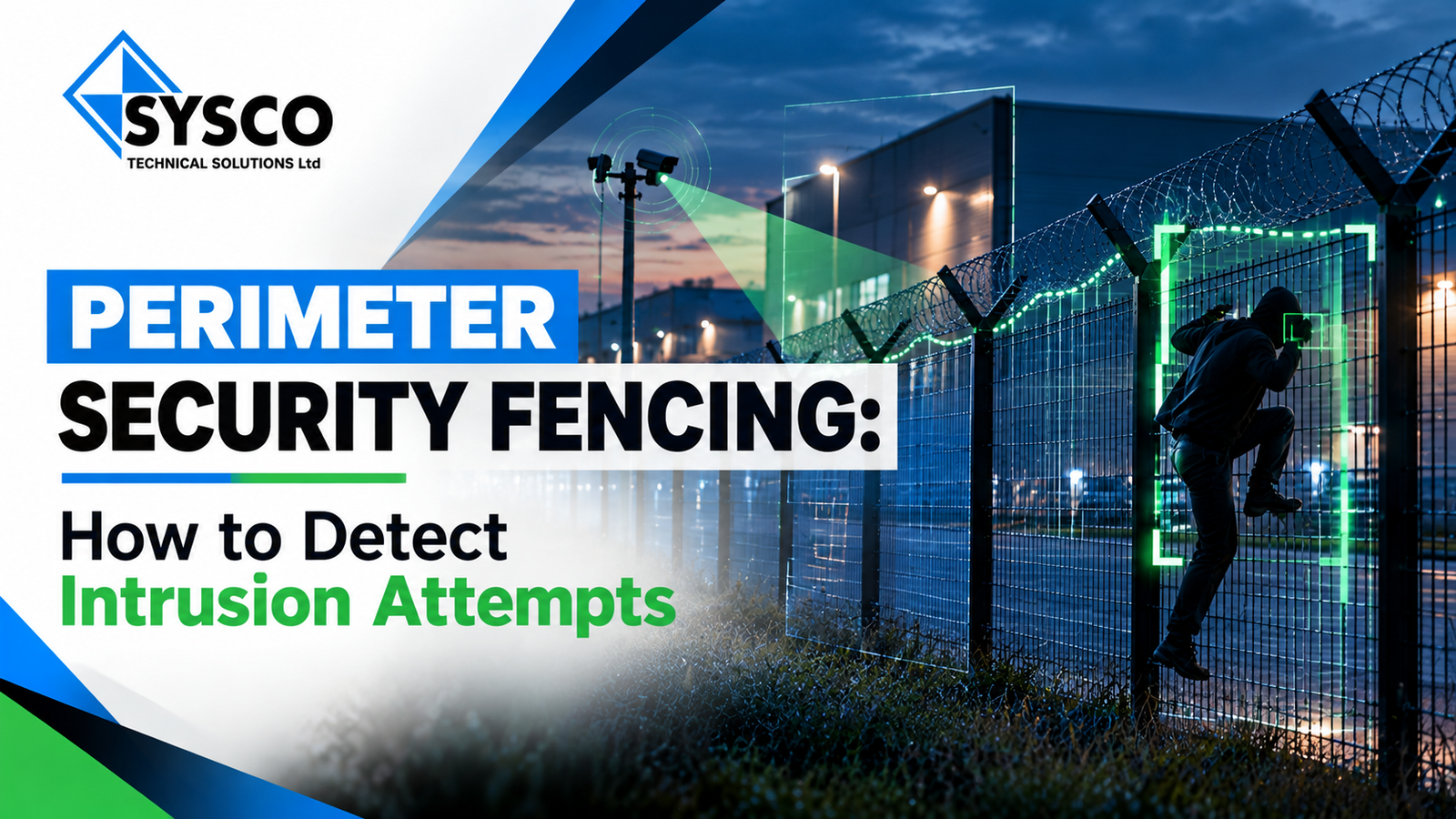
This guide covers everything site managers, principal contractors, and project developers need to know about perimeter security for construction sites in 2026 – including why a fence alone is never enough, which technologies work, and when PIDS (Perimeter Intrusion Detection Systems) are the right choice over alternative approaches.
Why Construction Sites Are Uniquely Vulnerable
Most security thinking is designed for fixed, predictable environments. A construction site is neither. Several factors combine to create a threat profile that demands a different approach:
- Constantly shifting perimeters. As excavation, groundworks, and building phases progress, the site boundary moves. A fence line that was logical at the start of a project may leave blind spots or unprotected zones by week six.
- High-value assets with no permanent shelter. Plant machinery, copper cabling, fuel, tools, and building materials are left on open sites overnight and through weekends. Many items are easy to move and almost impossible to trace once removed.
- Irregular operating hours. Most site theft happens between midnight and 5am, or over public holidays. These are exactly the periods when conventional site staffing is absent.
- Multiple access points. Principal contractors, subcontractors, delivery vehicles, surveyors and visitors mean sites typically have several entry and exit points – each of which is a potential weakness.
- Public proximity. Urban development sites are often adjacent to walkways, roads, and residential areas. This makes opportunistic surveillance easy for would-be thieves, and creates additional complications for perimeter security design.
The result is a site where the assets are valuable, the perimeter is permeable, and the windows of vulnerability are predictable. Organised criminal groups know this, and they plan accordingly.
The Limits of Traditional Construction Site Security
Heras fencing, hoarding, and padlocked gates are the baseline for most UK construction sites. They serve a purpose – they mark the boundary, create a basic physical delay, and satisfy the principal contractor’s duties under Regulation 13(4)(b) of the Construction (Design and Management) Regulations 2015, which requires that necessary steps are taken to prevent access by unauthorised persons.
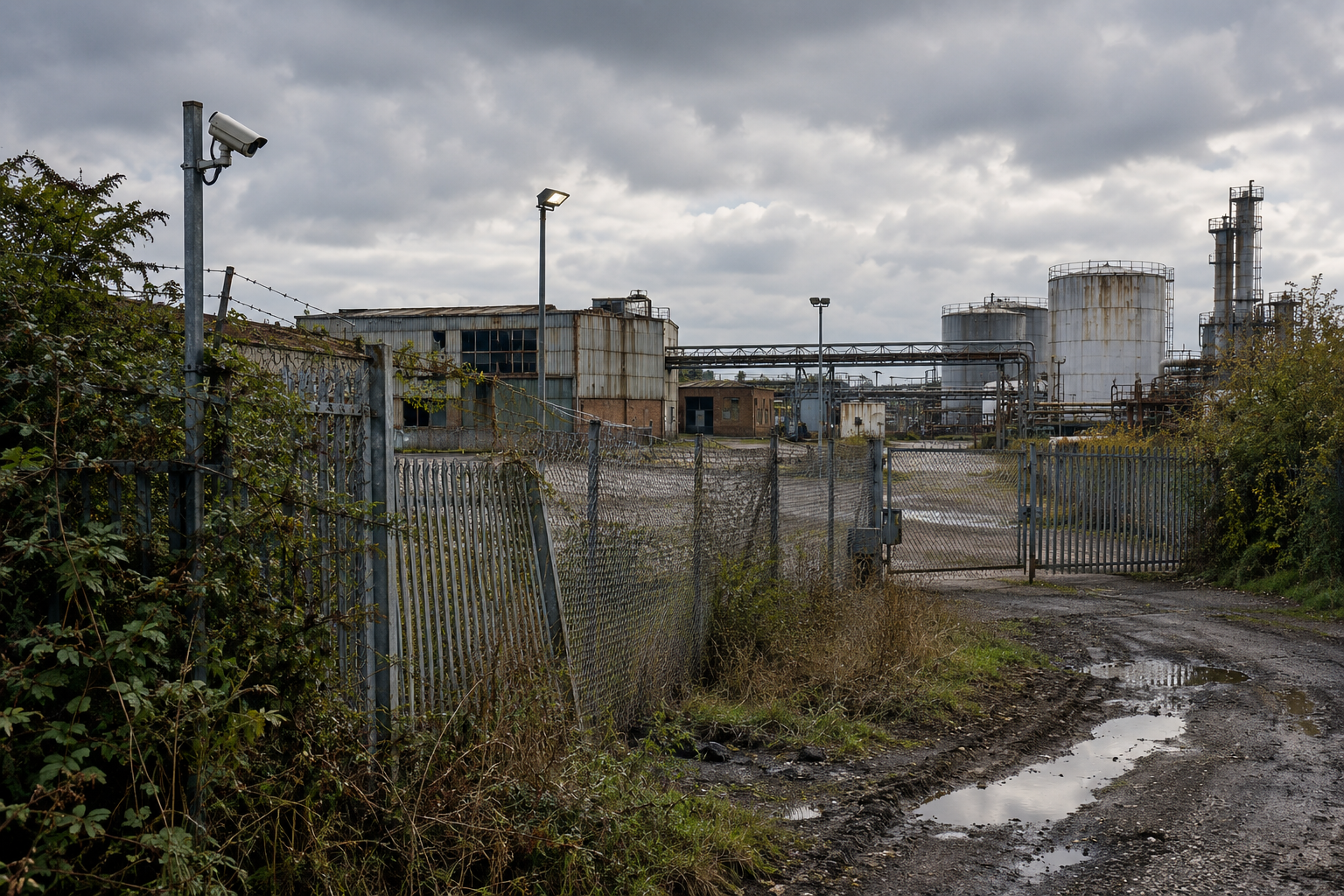
But a physical barrier without detection is a passive measure. It only tells you something has happened after the fact – when a site manager arrives on Monday morning to find cut fencing and missing plant. By then, the equipment has left the county.
Detection is what changes the security equation. The moment you add a system that can identify an intrusion attempt at the boundary, in real time, and alert a monitoring centre or on-site resource to respond, you shift from passive to active protection.
That is the core purpose of a perimeter intrusion detection system on a construction site.
What Is PIDS and How Does It Work on a Construction Site?
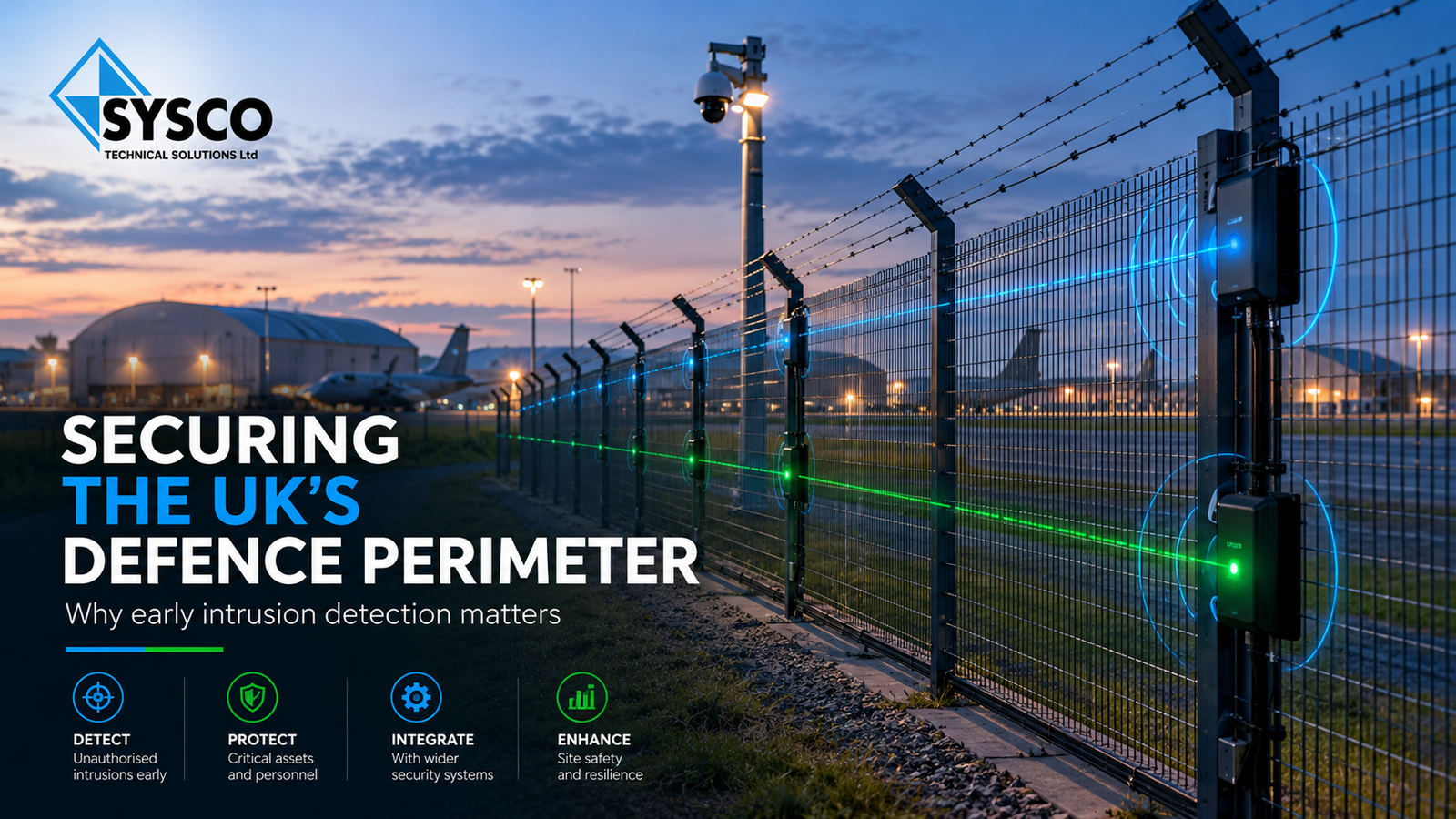
A Perimeter Intrusion Detection System (PIDS) uses sensors positioned along or around the site boundary to detect any unauthorised breach and trigger an immediate alert. On a construction site, this typically involves one of several sensor technologies depending on the site type, fencing arrangement, and risk profile.
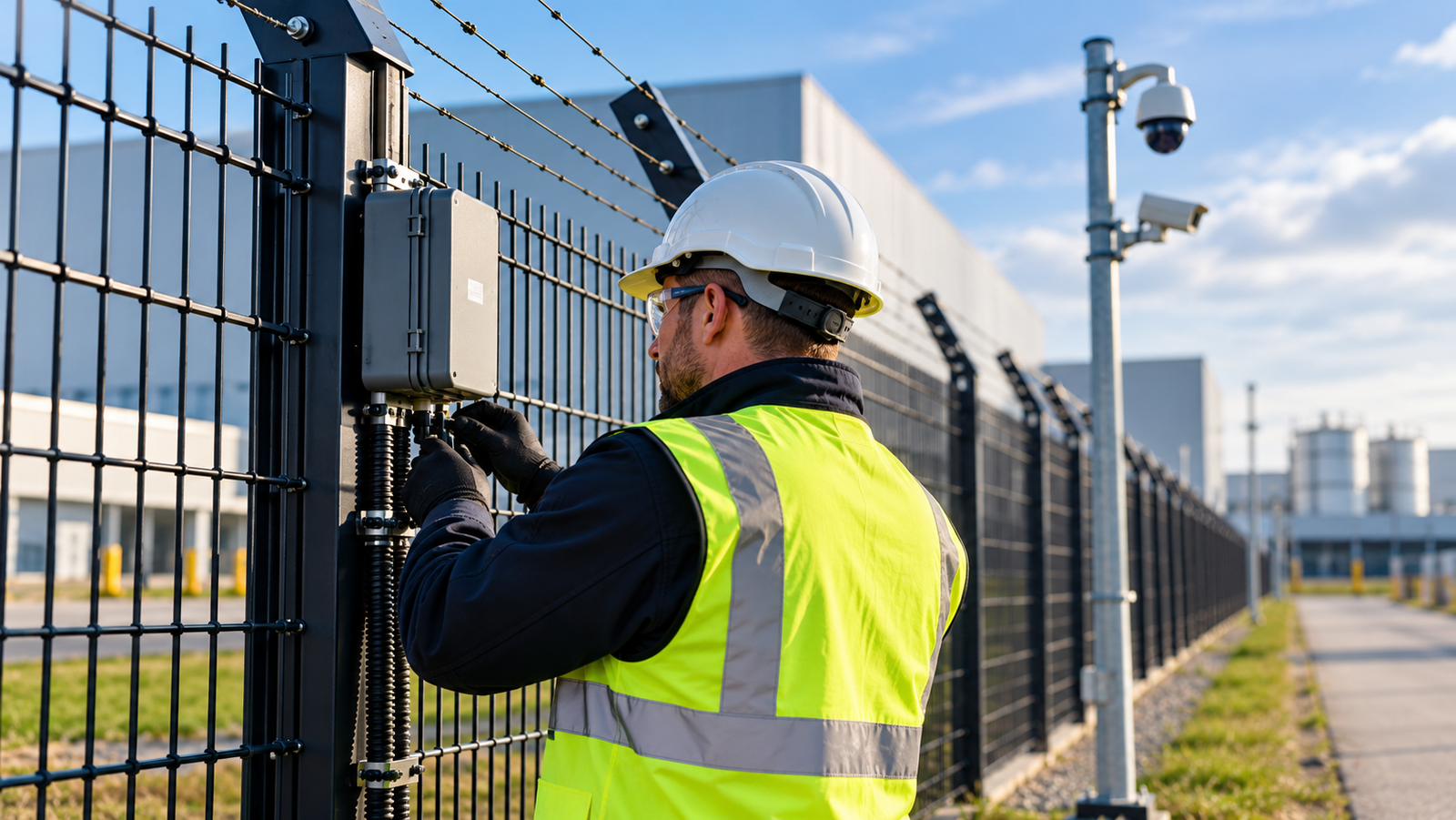
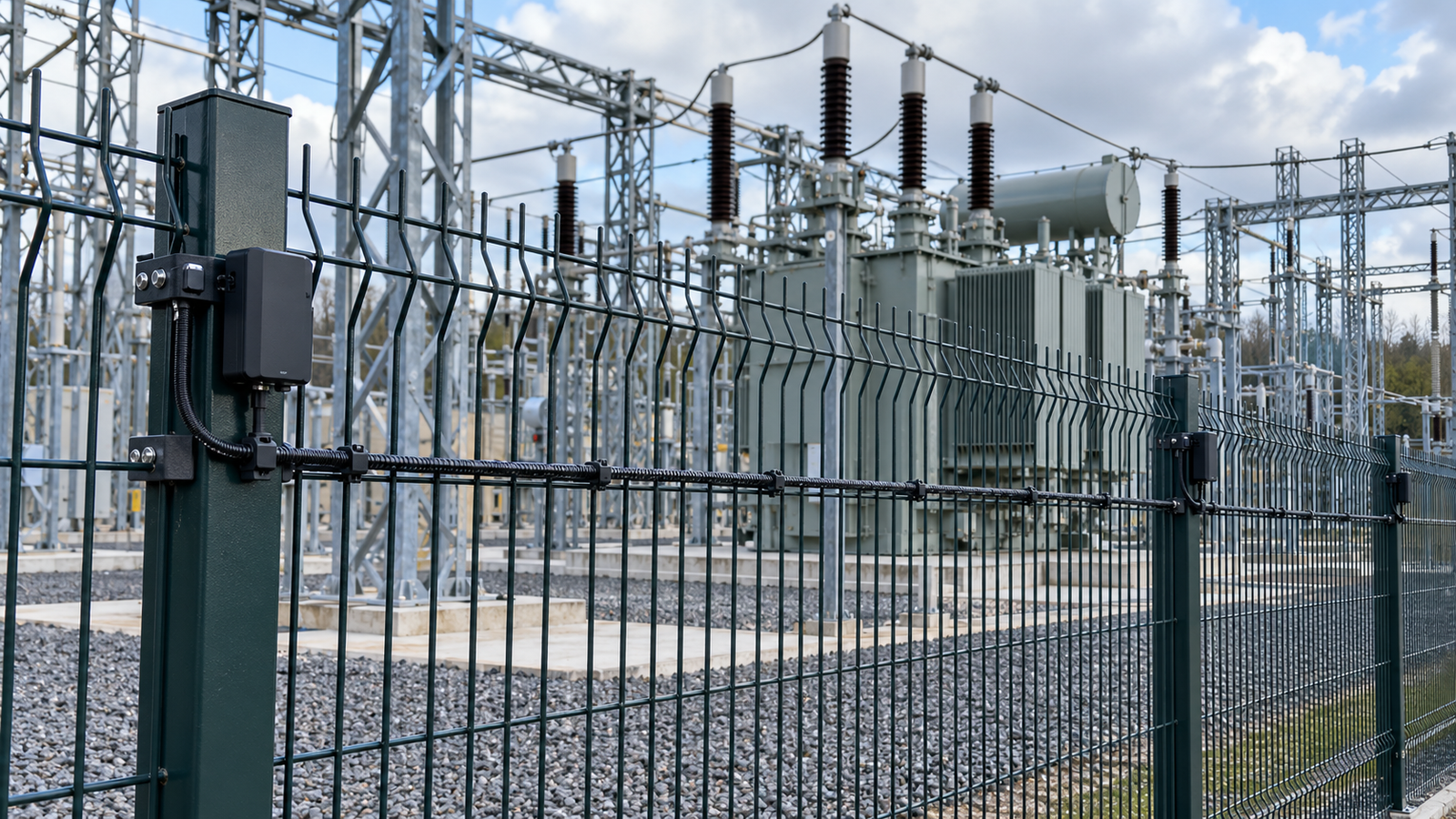
- Vibration sensors / accelerometer-based systems are attached to the existing fence structure – compatible with heras panels, palisade, mesh, and most temporary fencing types. They detect the specific vibration signature of climbing, cutting, or pushing through the fence, and distinguish these from environmental noise such as wind or passing vehicles. When a genuine threat signature is detected, an alarm is triggered – zone-specific, so responders know exactly where on the perimeter the activity is occurring.
- Wireless PIR and microwave detection units are freestanding units that can be positioned at key points around a perimeter without any attachment to fencing. These suit construction sites where the fence line changes frequently, or where temporary protection is needed at a specific high-risk zone such as a plant compound, fuel store, or materials yard.
- Ground-based buried sensors use seismic or pressure-sensitive technology to detect footfall and movement above ground. These are invisible to intruders and provide covert detection even before a fence line is breached. They are more common on high-security infrastructure sites than standard construction projects, but relevant for projects involving sensitive assets or in areas with a high organised crime threat.
Modern wireless PIDS units are battery or solar-powered, require no mains connection, and can be operational within hours of delivery. This makes them genuinely practical for a construction environment where mains power may not be available in all areas and where speed of deployment matters.
PIDS vs CCTV Towers vs Manned Guarding: Understanding the Differences
The three most common active security approaches for UK construction sites are PIDS, CCTV towers with remote monitoring, and manned guarding. They serve different functions, and the best construction site security plans typically combine more than one.
PIDS – Early Detection at the Boundary
The key advantage of PIDS is that detection happens at the boundary, the moment someone attempts to breach it – before they are inside the site, before any asset is at risk, and while there is still time to deploy a response. PIDS systems can cover large perimeters efficiently and provide zone-specific location data that tells a monitoring centre or guard exactly where to look.
PIDS is most effective when the site perimeter is broadly stable, and when integrated with a monitoring centre that can receive the alarm and coordinate a response. It works particularly well alongside CCTV, since the PIDS triggers an alarm and the camera confirms whether the threat is genuine before a physical response is dispatched.
CCTV Towers – Monitored Visual Coverage
Mobile CCTV towers with 24/7 remote monitoring offer verified visual coverage of specific areas. When movement is detected, an operator views live footage, assesses whether a genuine intrusion is occurring, and triggers the appropriate response. This significantly reduces false alarm call-outs compared to basic motion-triggered systems.
CCTV towers are well-suited to compound areas, plant storage zones, and areas where visual evidence is important for insurance or enforcement purposes. They are less suited to covering an entire site perimeter economically – a large perimeter would require a significant number of towers, whereas PIDS sensors can cover the same ground at a fraction of the cost.
Manned Guarding – Visible Deterrence and Response
SIA-licensed guards provide a visible deterrent and immediate on-site response capability. They are effective at access control, are essential for managing multiple contractor movement during working hours, and provide reassurance that PIDS and CCTV systems alone cannot replicate.
However, manned guarding is expensive relative to other technologies when deployed across extended overnight periods, and a single guard cannot physically monitor a large perimeter simultaneously. Guards work best when they are the response element of a system – alerted by PIDS or CCTV, then deployed to the specific zone where activity has been detected.
A practical configuration that works well for mid-to-large UK construction projects:
- PIDS along the main site perimeter for full boundary coverage and early breach detection
- CCTV tower or two covering the high-value compound and fuel store
- On-call or rapid response guarding for overnight periods
- Access control during working hours
This layered approach means that no single system needs to do everything, and each element compensates for the limitations of the others.
Construction Site PIDS: Key Considerations
Not every PIDS system is equally suitable for a live construction site. When evaluating options, site managers and security specifiers should consider the following:
- Ease of relocation. As site phases progress, the perimeter changes. A system that takes days to reconfigure will create gaps in coverage during transitions. Wireless, modular PIDS systems designed for rapid redeployment are significantly more practical than hard-wired installations.
- False alarm performance. A system that generates frequent false alarms from wind, rain, or site traffic is worse than no system at all – it creates alert fatigue and means genuine intrusions may be dismissed. Look for systems with environmental filtering and multi-factor detection logic that confirms a genuine intrusion signature before triggering an alarm.
- Fence compatibility. Different sensor types work with different fence configurations. Vibration-based sensors require a fence that transmits vibrations effectively – rigid weld mesh and palisade work well; flimsy heras panels may need different sensor placement or technology. Confirm compatibility before specifying.
- Integration with monitoring. A PIDS that triggers an alert only to a local buzzer has limited value on an unmanned site overnight. The system should integrate with a 24/7 alarm receiving centre (ARC) that can verify the alert and coordinate a response within minutes.
- Power supply. Mains-connected systems are unsuitable for many construction environments. Solar-powered and battery-backed wireless units are the practical choice for the majority of UK construction sites.
- Scalability. Your site will grow and change. The system you deploy in week one should be capable of expanding to cover additional phases without requiring a complete reinstallation.
CDM 2015 Compliance and Construction Site Security
The Construction (Design and Management) Regulations 2015 place a specific legal duty on the principal contractor to prevent unauthorised persons from accessing the construction site. Security is not optional under UK law – it is a compliance obligation.
In practice, evidencing that duty requires a perimeter, a controlled entry point, an induction process, and a record of who is on site at any given time. A PIDS system with zone-specific alarm logging can form part of that compliance evidence – demonstrating that active steps were taken to detect and respond to unauthorised access attempts, not merely that a fence was erected.
For projects involving critical infrastructure, government sites, or sensitive assets, the security standard required may be higher. The National Protective Security Authority (NPSA) publishes guidance on perimeter security for sites where the threat level justifies a more rigorous approach, including specifications for security fencing, PIDS categories, and integrated security system design.
Sysco Technical Solutions holds NPSA approval for its perimeter intrusion detection systems – a standard that many construction projects working within the energy, defence, and critical infrastructure sectors require from their security suppliers.
When Is a PIDS the Right Choice for a Construction Site?
PIDS is not always the appropriate solution for every construction project. Here is a straightforward framework for deciding:
PIDS is well-suited to:
- Medium to large construction sites with perimeters of 200 metres or more
- Sites holding high-value plant, fuel, or materials overnight and at weekends
- Infrastructure projects (utilities, energy, highways, rail) where security standards are higher
- Remote or rural sites where a manned guard response cannot reach quickly
- Sites operating over extended project timelines where investment in a detection system pays for itself relative to the cost of a single theft incident
- Projects where the client or principal contractor has contractual security obligations
PIDS is less likely to be the primary solution for:
- Very small or short-duration sites (a few weeks) where the cost-benefit balance favours simpler approaches
- Sites in urban areas with existing natural lighting and high footfall that provide inherent deterrence
- Projects where temporary hoarding is already providing a solid physical barrier and the main risk is access control rather than perimeter breach
If you are unsure which approach is right for your site, a site security assessment – at no obligation – is the right starting point. Sysco Technical Solutions carries out free site surveys across the UK, assessing the perimeter, identifying risk zones, and recommending a proportionate security solution based on the specific project.
What Happens During a Construction Site Security Assessment?
A site survey from Sysco Technical Solutions is not a sales visit. It is a structured risk assessment carried out by a specialist who understands both the technical requirements of perimeter security and the practical realities of a live construction environment.
During the survey, we assess:
- The total perimeter length and fence type at each boundary
- Access points, gates, and high-traffic zones
- High-risk areas within the site – plant compounds, fuel stores, material storage
- Lighting and sightlines
- Power availability at key sensor locations
- The phase of the project and anticipated perimeter changes over the project timeline
- Any contractual or compliance obligations relevant to the project
From that assessment, we produce a site-specific security recommendation covering the technology best suited to the site, the coverage required, and the monitoring approach. You receive a clear proposal with transparent pricing – no obligation to proceed.
Frequently Asked Questions
Can PIDS be installed on temporary heras fencing?
Wireless PIR-based PIDS units can be deployed alongside temporary heras fencing without attachment. Vibration-based sensor systems generally require a more rigid fence structure to transmit intrusion signatures accurately. We assess fence compatibility as part of every site survey and recommend the most appropriate technology for the fencing in place.
How quickly can a PIDS system be installed on a construction site?
Wireless systems can typically be operational within a few hours of delivery. Larger perimeters with multiple zones may require a full day for installation and calibration. We can usually deploy within 48-72 hours of a confirmed order for urgent projects.
Does a PIDS system work in all weather conditions?
Yes. Our systems are designed for outdoor deployment in the UK climate – weatherproof to IP65 standard and tested to operate in rain, wind, and low temperatures. Environmental filtering within the detection algorithms means that heavy rain or high winds do not generate false alarms.
Can the system move as the construction site perimeter changes?
Wireless modular systems are designed specifically for this. Sensor units can be relocated and the zone configuration updated without specialist engineering. We can support reconfigurations remotely or with a site visit depending on the scale of change.
What happens when the system detects an intrusion?
The alarm is transmitted to a 24/7 alarm receiving centre, which receives a zone-specific alert identifying where on the perimeter the activity is occurring. The ARC then verifies the alarm – either by viewing integrated CCTV footage or by protocol – and coordinates the appropriate response, which may include notifying an on-call guard, contacting the site manager, or alerting the police.
Is NPSA approval relevant for a construction site?
For most standard construction projects, NPSA approval is not a contractual requirement. However, for projects involving utility infrastructure, government facilities, defence estates, or critical national infrastructure, NPSA-approved systems may be specified. Sysco Technical Solutions holds NPSA approval for its PIDS range.
How much does construction site PIDS cost?
Cost depends on the perimeter length, sensor technology, number of zones, and monitoring arrangement. It is genuinely difficult to provide a meaningful figure without a site survey, because the variables are significant. What we can say is that for most mid-to-large projects, the cost of a properly specified PIDS system is a small fraction of the value of the plant and materials it is protecting – and typically far less than the excess on a single insurance claim following a significant theft.
Speak to a Specialist
Sysco Technical Solutions designs and installs perimeter intrusion detection systems for construction sites, infrastructure projects, and high-security facilities across the UK. With over 20 years of experience and NPSA-approved systems, we work with principal contractors, project managers, and developers to deliver proportionate, practical security that protects your site from the first day of groundworks to handover.
Book a free site survey: Call 01772 621716 or email enquiries@syscotech.co.uk
Our team will assess your site, identify your risk zones, and recommend the right solution – with no obligation to proceed.
Sysco Technical Solutions | 31 Momentum Place, Nook Lane, Bamber Bridge, Lancashire, PR5 6EF
Specialists in perimeter intrusion detection systems for construction, infrastructure, energy, and critical national infrastructure sites across the UK.