Protecting the boundary of a high-security site is about more than installing a strong fence or monitoring CCTV. Modern security teams need to know when someone is attempting to climb, cut, breach or approach a perimeter – ideally before they reach the assets or buildings inside.
A fibre optic perimeter intrusion detection system (PIDS) provides an additional layer of protection by using fibre optic sensing technology to detect disturbances along a protected boundary.
Unlike conventional electrical sensors, fibre optic detection systems can operate without electrical power along the sensing cable itself. They can also cover long distances and are naturally resistant to electromagnetic interference, making them particularly useful for critical infrastructure, utilities, industrial facilities, data centres and other high-security environments.
What Is a Fibre Optic Perimeter Intrusion Detection System?
A fibre optic perimeter intrusion detection system is a security solution that uses fibre optic cable as a sensing medium to detect disturbances around a site’s perimeter.
The fibre can be installed in different ways depending on the security requirements of the site. For example, it may be mounted directly onto a security fence, integrated into a perimeter barrier or installed underground.
When the protected cable is disturbed, the system analyses changes in the optical signal and determines whether the activity is consistent with a potential intrusion.
Modern systems can also identify the approximate location of an event along the perimeter. This allows security personnel to respond to a specific area rather than searching an entire fence line.
For large sites, this ability to detect and locate an event can make a significant difference to response times.
How Does Fibre Optic Perimeter Detection Work?
The technology behind many modern fibre optic intrusion detection systems is based on analysing changes in light travelling through an optical fibre.
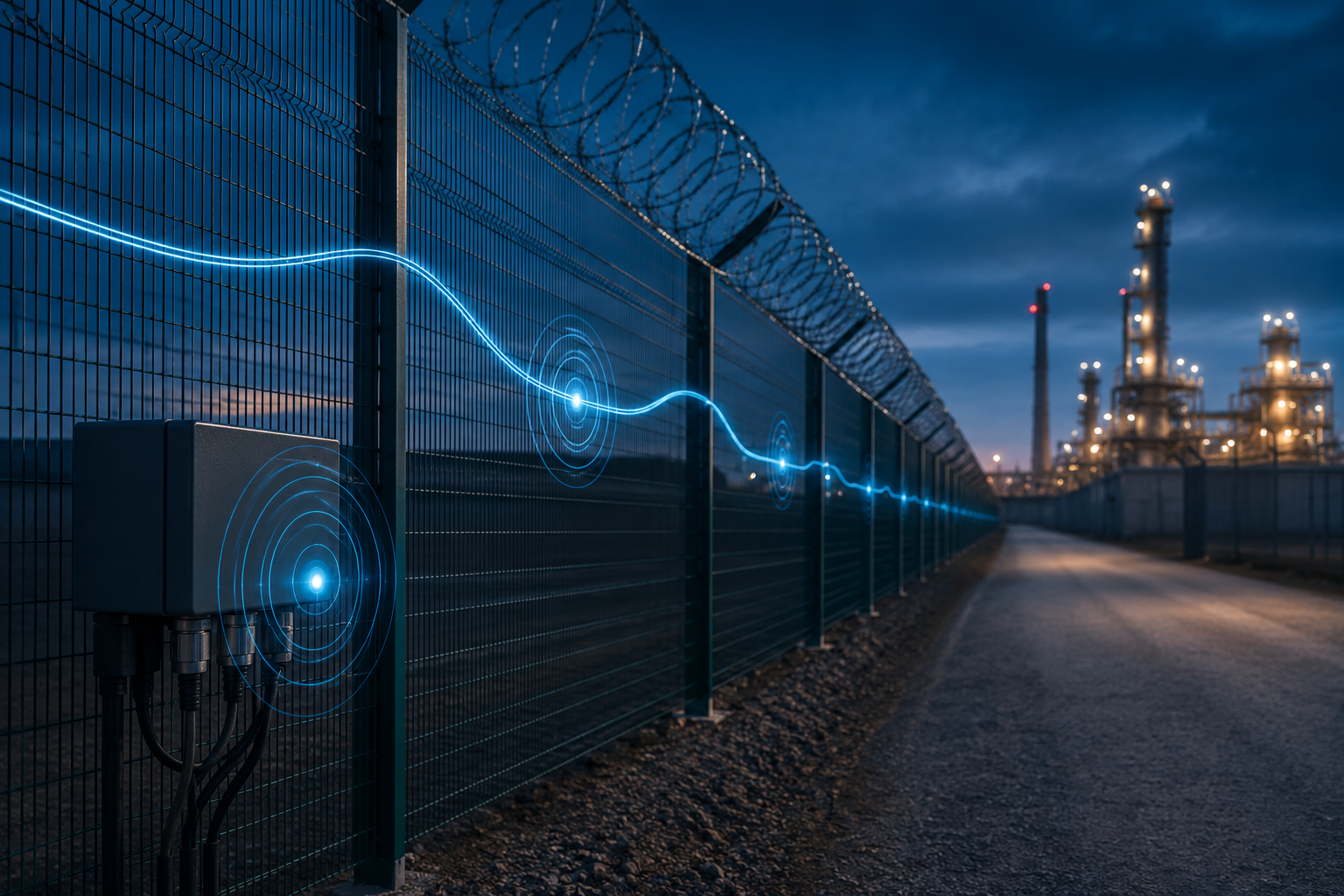
A sensing unit sends optical signals through the fibre. When the fibre experiences vibration, movement or another physical disturbance, the characteristics of the returning signal change.
Sophisticated processing software analyses these changes and can distinguish between different types of activity.
For example, a system may be configured to identify events associated with:
- Fence climbing
- Fence cutting
- Attempts to lift or damage fencing
- Digging near a protected boundary
- Movement around a buried detection zone
- Other abnormal vibrations or disturbances
The system can then generate an alarm when the detected activity meets the configured criteria.
This is particularly useful because a perimeter detection system is not simply looking for movement. It is analysing activity occurring at the boundary and determining whether that activity represents a potential security event.
Fibre Optic PIDS on Security Fences
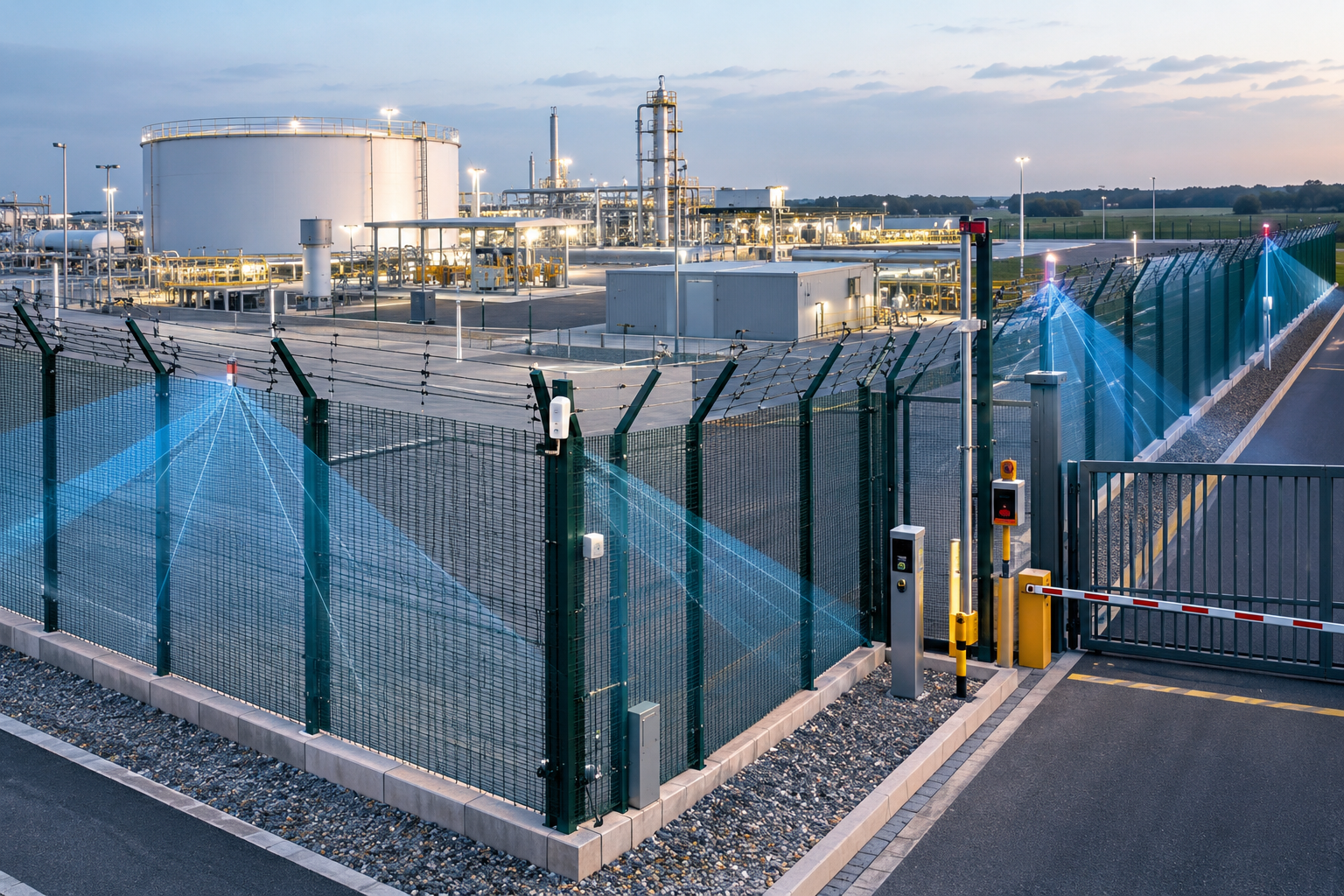
One of the most common applications is installing fibre optic sensing cable along a perimeter fence.
The sensing cable can be positioned along the fence so that physical disturbances caused by an attempted intrusion are detected.
If an intruder attempts to climb or cut the fence, the resulting vibration and movement can be detected by the fibre optic system.
The major advantage is that detection takes place at the perimeter itself.
Instead of relying solely on CCTV to identify an intruder after they have entered a site, a perimeter intrusion detection system can provide an earlier warning that the boundary is being attacked.
This can give security teams valuable time to verify the alarm and respond.
Buried Fibre Optic Perimeter Intrusion Detection
Fibre optic technology can also be used for buried perimeter protection.
In this configuration, sensing cable is installed underground to create a covert detection zone.
Buried systems can be useful where organisations want to protect a boundary without placing visible detection equipment along the perimeter.
They may also be considered where traditional fence-mounted detection is unsuitable or where additional protection is required outside or inside an existing security boundary.
Depending on the system and installation design, buried fibre optic detection can help identify activities such as walking, digging or attempts to approach a protected area.
For critical infrastructure and high-security sites, combining visible barriers with covert detection can create a layered approach to perimeter protection.
Why Use Fibre Optic Technology for Perimeter Security?
There are several reasons why fibre optic sensing has become an important technology for perimeter intrusion detection.
Resistance to Electromagnetic Interference
Fibre optic cables transmit information using light rather than electrical signals.
This makes fibre optic sensing particularly suitable for environments where electromagnetic interference could affect conventional electronic detection equipment.
Long Perimeter Coverage
Large sites can have kilometres of boundary to protect.
Fibre optic systems can provide continuous sensing across long cable runs, making the technology suitable for large industrial sites, infrastructure projects and other extensive perimeters.
Precise Event Location
Modern systems can identify where along the fibre an event has occurred.
Instead of receiving a general alarm stating that there is a problem somewhere around a site, operators can be provided with information about the location of the detected event.
This can help security teams direct cameras, patrols or other response measures towards the relevant area.
Passive Sensing
The sensing cable itself does not require electrical power in the same way as many conventional field devices.
This can simplify certain installations and can be particularly beneficial in environments where running power to every section of a perimeter would be difficult.
Covert Detection Options
When fibre optic cable is installed underground, the detection system can be concealed from view.
This can make it more difficult for an intruder to identify exactly where the detection system is located.
Fibre Optic PIDS vs CCTV
CCTV remains an important part of a modern security system, but cameras and perimeter intrusion detection perform different functions.
A CCTV camera provides visual information.
A PIDS provides detection.
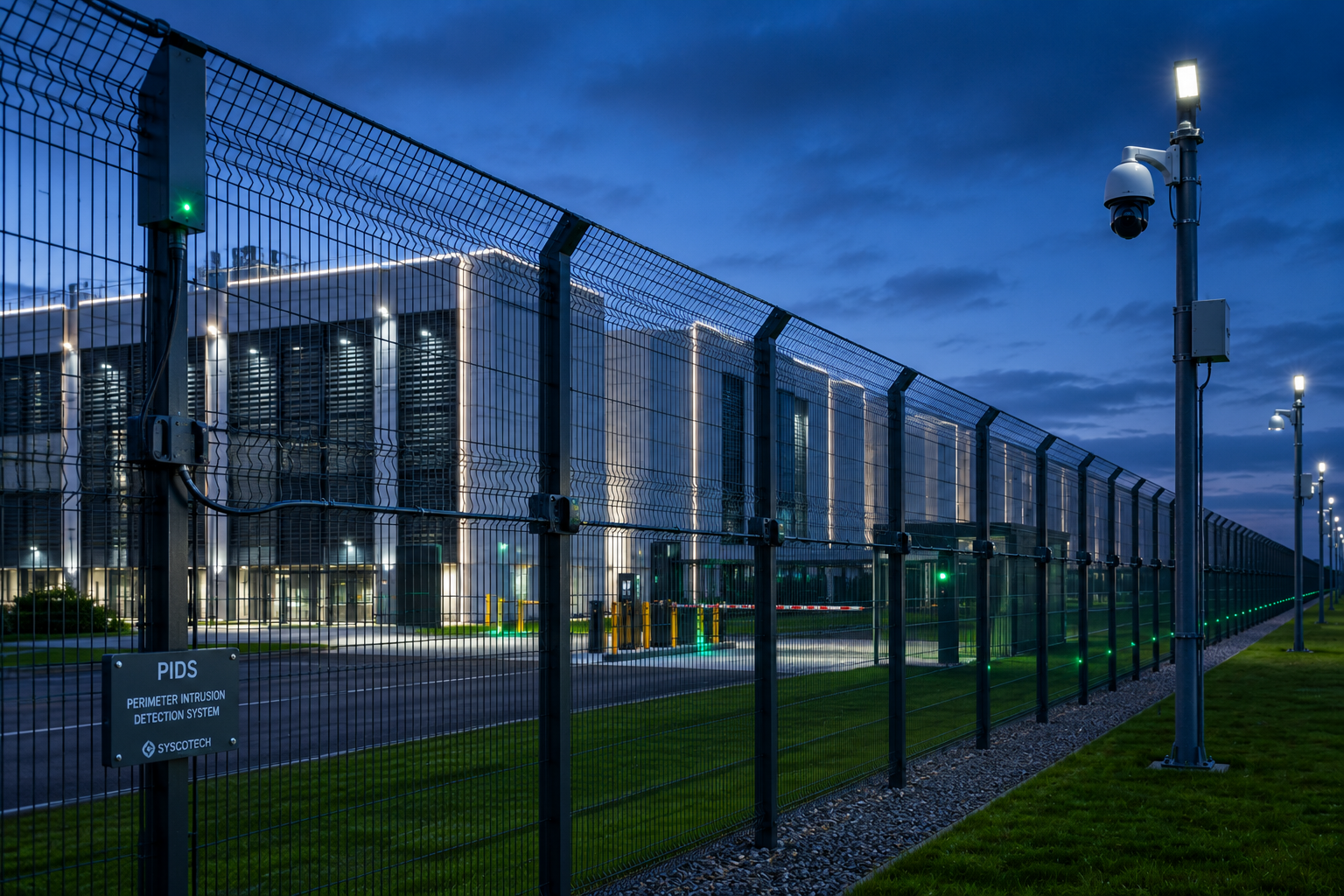
For example, a fibre optic system may detect an attempted fence breach and identify its location. The security platform can then use that information to direct a PTZ camera towards the alarm location for visual verification.
This creates a more proactive security process:
Detect → Locate → Verify → Respond
Rather than asking security operators to continuously watch every camera around a large site, perimeter detection can draw attention to an area where suspicious activity has actually been detected.
The strongest perimeter security designs therefore often use detection and video surveillance together rather than treating them as competing technologies.
Fibre Optic PIDS for Critical Infrastructure
Critical infrastructure sites face particularly demanding security requirements.
Utilities, energy facilities, water infrastructure, telecommunications sites and other essential facilities can have extensive boundaries and assets that need continuous protection.
A fibre optic perimeter intrusion detection system can form part of a layered security strategy alongside:
- Security fencing
- CCTV and thermal imaging
- Access control
- Security lighting
- Intruder alarms
- Perimeter monitoring software
- Remote monitoring
- Security response procedures
The objective is not simply to install a sensor.
The objective is to create a security system capable of detecting a threat, locating it accurately, verifying what is happening and supporting an appropriate response.
Fibre Optic PIDS for Data Centres
Data centres are another environment where perimeter protection is increasingly important.
A data centre’s physical infrastructure can be critical to the organisations and services that depend on it. Protecting the boundary therefore forms part of a wider physical security strategy.
Fibre optic perimeter detection can be considered for:
- Data centre perimeter fencing
- Security compounds
- Restricted external areas
- Buried perimeter zones
- High-security access areas
The technology can also be integrated with other security systems to provide a more complete view of activity around the site.
Fibre Optic Perimeter Security for Solar Farms and Energy Sites
Large renewable energy installations can present a different perimeter challenge.
Solar farms and other energy facilities may occupy large areas, meaning the boundary can extend for several kilometres.
A combination of physical fencing, perimeter intrusion detection, CCTV and remote monitoring can provide a more effective approach than relying on fencing alone.
Fibre optic sensing is particularly interesting for long perimeter applications because a single sensing infrastructure can provide monitoring across substantial distances.
The exact system should always be selected based on the site’s layout, risk profile, perimeter construction, environmental conditions and required detection performance.
What Should You Consider When Choosing a Fibre Optic PIDS?
There is no single fibre optic perimeter intrusion detection system that is suitable for every site.
Before selecting a system, organisations should consider several factors.
Perimeter Length
The total length of the protected boundary will influence the type of architecture and equipment required.
Fence Construction
A system designed for a palisade fence may have different installation requirements from one used on welded mesh or chain-link fencing.
Threat Profile
The system should be designed around the threats the site is actually trying to detect.
Is the main concern climbing, cutting, digging, forced entry or unauthorised approach?
Environmental Conditions
Wind, rain, wildlife, nearby roads, industrial activity and other sources of vibration can affect perimeter detection.
A properly engineered system should therefore include appropriate signal processing and alarm filtering to minimise nuisance alarms.
Integration
It is also important to consider how the PIDS will interact with the site’s existing security infrastructure.
Integration with CCTV, access control, alarm management and remote monitoring can help turn a standalone detection system into a coordinated security solution.
Maintenance and Support
A perimeter security system needs to remain operational after installation.
Organisations should consider commissioning, testing, maintenance, system monitoring and technical support when evaluating a PIDS supplier.
Is Fibre Optic PIDS Right for Your Site?
Fibre optic perimeter intrusion detection can be an effective solution where early detection, long-distance coverage, accurate event location and resistance to electromagnetic interference are important.
However, the right perimeter security solution depends on the individual site.
A high-security facility may benefit from a combination of technologies rather than relying on one detection method.
For example, fibre optic detection can be combined with CCTV, thermal cameras, radar, access control and physical perimeter protection to create multiple layers of security.
At Sysco Technical Solutions, we design perimeter security systems around the requirements of the site rather than taking a one-size-fits-all approach. Our services cover consultation, site assessment, system design, supply, installation, commissioning and ongoing support.
If you are considering a fibre optic perimeter intrusion detection system for a critical infrastructure site, industrial facility, data centre, energy installation or other high-security environment, a site-specific assessment is the best place to start.
Frequently Asked Questions About Fibre Optic Perimeter Intrusion Detection Systems
What is a fibre optic perimeter intrusion detection system?
A fibre optic perimeter intrusion detection system (PIDS) uses fibre optic sensing technology to detect potential intrusion attempts along a protected boundary. The system can identify disturbances such as climbing, cutting, movement or other activity and generate an alarm when a potential threat is detected.
How does a fibre optic perimeter intrusion detection system work?
A fibre optic PIDS monitors changes in the optical signal travelling through a sensing fibre. When the fibre experiences a physical disturbance, the system analyses the resulting signal changes to determine whether the activity is consistent with a potential intrusion. Depending on the system, it can also identify the approximate location of the event along the perimeter.
Where can fibre optic perimeter intrusion detection systems be installed?
Fibre optic detection systems can be designed for a range of perimeter applications. They can be installed along security fencing or used in buried applications where a covert detection zone is required. The most suitable installation depends on the site’s perimeter construction, environment, security risks and required level of detection.
What can a fibre optic PIDS detect?
Depending on the technology and installation, a fibre optic perimeter intrusion detection system can be configured to detect disturbances associated with activities such as fence climbing, cutting, tampering, digging and unauthorised movement around a protected perimeter.
Can fibre optic PIDS be used on existing security fencing?
Yes. Fibre optic sensing can be incorporated into suitable existing perimeter fencing, subject to a site assessment. The fence type, construction, condition and expected environmental conditions should be assessed before selecting and installing the detection system.
Can fibre optic perimeter detection be installed underground?
Yes. Fibre optic sensing technology can be used for buried perimeter intrusion detection. Underground installation can provide a covert detection zone without placing visible detection equipment along the boundary, making it an option for sites where discreet perimeter protection is required.
What are the benefits of fibre optic perimeter intrusion detection?
Key benefits can include long-distance perimeter coverage, accurate event location, resistance to electromagnetic interference and the ability to use passive fibre optic sensing infrastructure. The technology can also be integrated with other security systems to provide a coordinated detection and response process.
Does fibre optic PIDS replace CCTV?
No. Fibre optic PIDS and CCTV perform different roles and are often most effective when used together. The fibre optic system can detect and locate a potential intrusion, while CCTV can provide visual verification of what is happening. Integration between the two can allow cameras to be directed towards the alarm location.
Can fibre optic PIDS reduce false alarms?
A properly designed and commissioned system can help minimise nuisance alarms by analysing detected signals and distinguishing potential intrusion activity from environmental disturbances. Site conditions, system configuration, installation quality and ongoing calibration all play an important role in achieving reliable detection.
Is fibre optic PIDS suitable for critical infrastructure?
Fibre optic perimeter intrusion detection can be suitable for a wide range of high-security and critical infrastructure environments. Applications can include energy facilities, utilities, data centres, telecommunications sites, industrial facilities and other locations where early perimeter detection is important.
How long can a fibre optic perimeter intrusion detection system protect?
The coverage available from a fibre optic PIDS depends on the specific technology, system architecture and site design. Large and complex perimeters can be engineered with appropriate sensing and processing equipment to provide continuous protection across extensive boundary areas.
How much does a fibre optic perimeter intrusion detection system cost?
There is no single price for a fibre optic PIDS. Cost depends on factors including perimeter length, installation method, fencing, terrain, detection requirements, integration with existing security systems and the level of monitoring and maintenance required.
A professional site survey is the best way to determine the appropriate system and provide an accurate quotation.
How do I choose the right fibre optic perimeter security system?
The right system should be selected according to the site’s risk profile rather than simply choosing the most advanced technology. Factors such as perimeter length, fence construction, environmental conditions, likely intrusion methods, required detection accuracy, CCTV integration and ongoing maintenance should all be considered.
Sysco Technical Solutions can assess the site and recommend a perimeter intrusion detection solution based on its specific security requirements.
Protect Your Perimeter Before an Intrusion Becomes a Breach
A fence can provide a physical barrier, but it cannot tell you when somebody is attempting to breach it.
A fibre optic perimeter intrusion detection system adds an intelligent detection layer that can identify disturbances, locate potential incidents and provide security teams with an opportunity to respond before an intrusion develops into a more serious security event.
For sites where perimeter security is critical, combining physical protection with intelligent detection and video verification can provide a stronger security strategy.
Sysco Technical Solutions provides professionally designed perimeter intrusion detection and physical security solutions for high-security sites across the UK.
Contact the Sysco Technical Solutions team to discuss your perimeter requirements and arrange a site assessment.