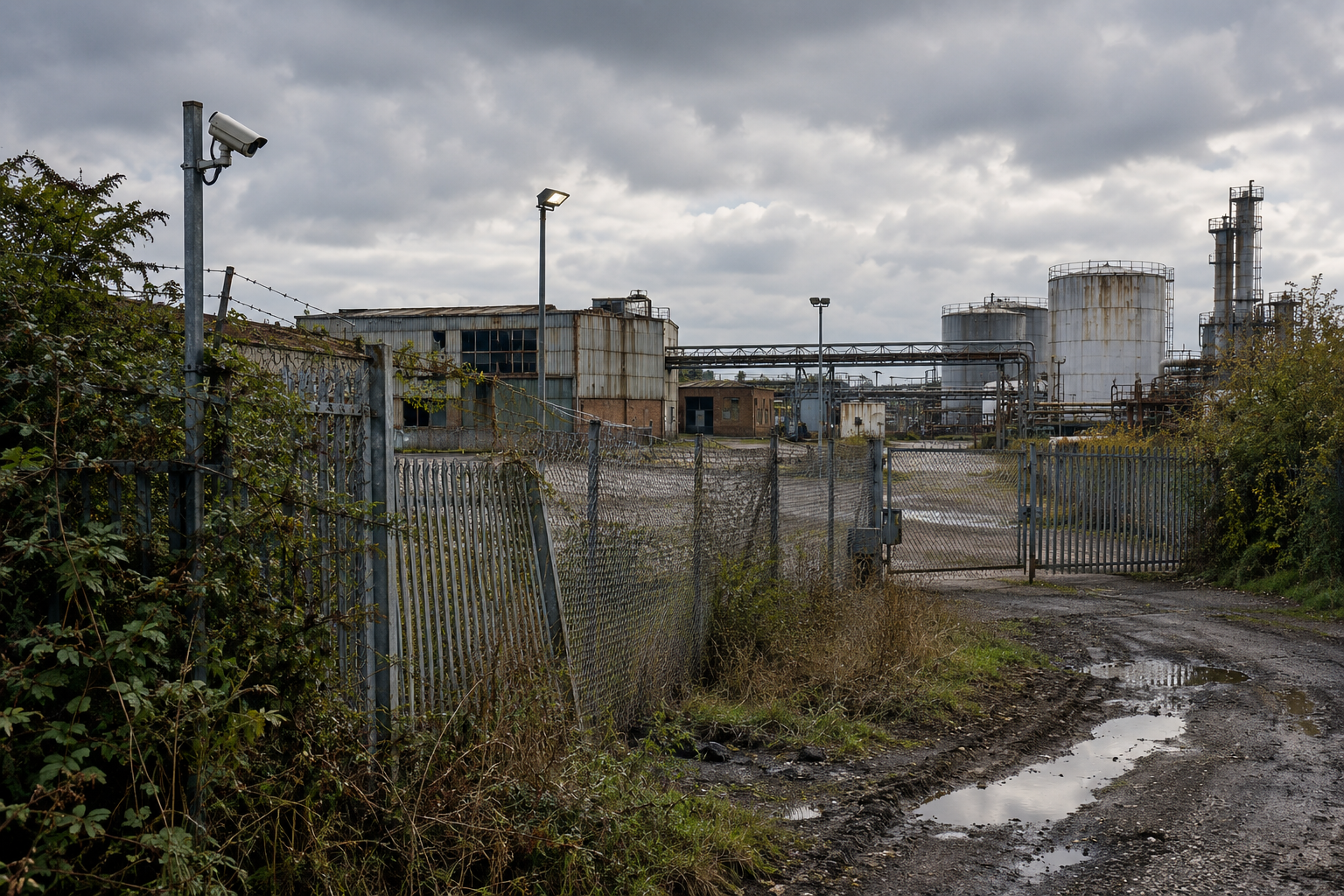

Securing a site boundary is never simple, but it becomes especially challenging when that boundary runs alongside a public road or footpath. You’re no longer dealing with a controlled, isolated environment – you’re managing a live security risk right next to pedestrians, cyclists, traffic, and passers-by who have every legal right to be there. Get it wrong, and you either create a security gap that’s easy to exploit, or you build something so intrusive it causes friction with the public and local authorities.
This guide walks through the practical realities of perimeter protection along a public-facing boundary, and where perimeter intrusion detection technology fits into the picture.
Why Public-Facing Perimeters Are Different
A perimeter tucked away behind other buildings or rural land gives you options that simply aren’t available next to a footpath:
- Visibility works both ways. The same sightlines that help you spot an intruder also let potential intruders study your defences at their leisure, in broad daylight, completely legally.
- You can’t control who’s nearby. Genuine members of the public, dog walkers, and commuters will be metres from your fence line every single day. Your system has to tell them apart from someone testing the boundary.
- Planning and highway restrictions apply. Fence height, setback distance, lighting, and even the type of detection equipment you can mount may be governed by local planning rules or highway authority requirements.
- Reputational risk is higher. An aggressive-looking fence covered in visible sensors and warning signage sends a message to every person who walks past it – for better or worse.
Core Layers of Perimeter Protection
Most effective boundary security along a road or footpath is built in layers, not a single fence line.
1. Physical Deterrents
The first layer is what a potential intruder sees before they even think about testing the fence. This includes:
- Anti-climb fencing (mesh panels, palisade, or high-security weldmesh)
- Appropriate height and design to prevent easy scaling
- Clear signage indicating the site is monitored and protected
- Controlled, well-lit access points
2. Perimeter Intrusion Detection Systems
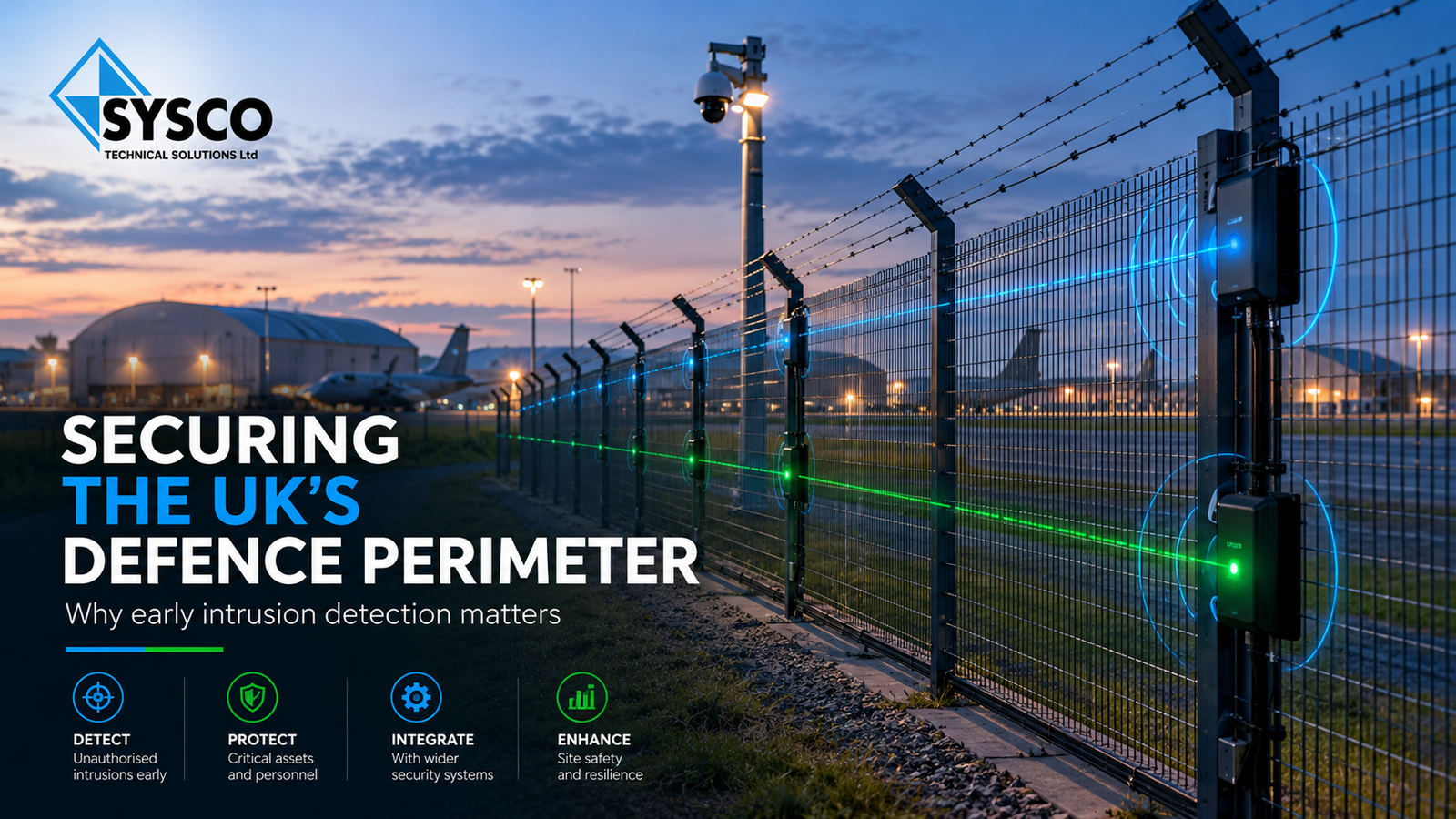
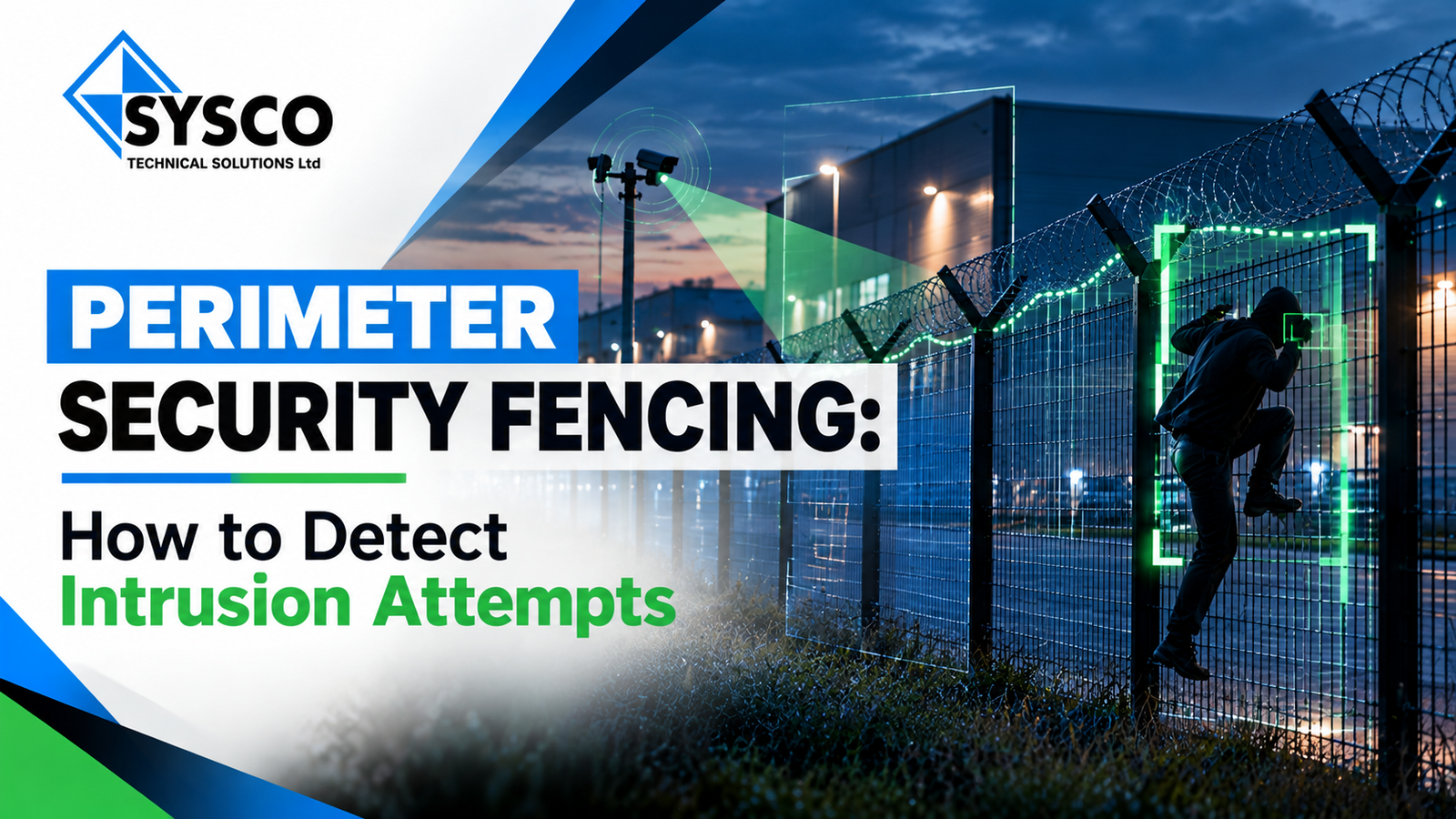
This is where physical security becomes “smart.” A perimeter intrusion detection system (PIDS) senses attempts to breach, climb, cut, or tunnel under a boundary and triggers an alert before an intruder ever reaches the building itself. Along a public road or footpath, PIDS technology needs to be tuned carefully, since a busy footpath generates constant background activity – pedestrians brushing past railings, wind, traffic vibration, even wildlife.
Common types of perimeter detection systems suited to this environment include:
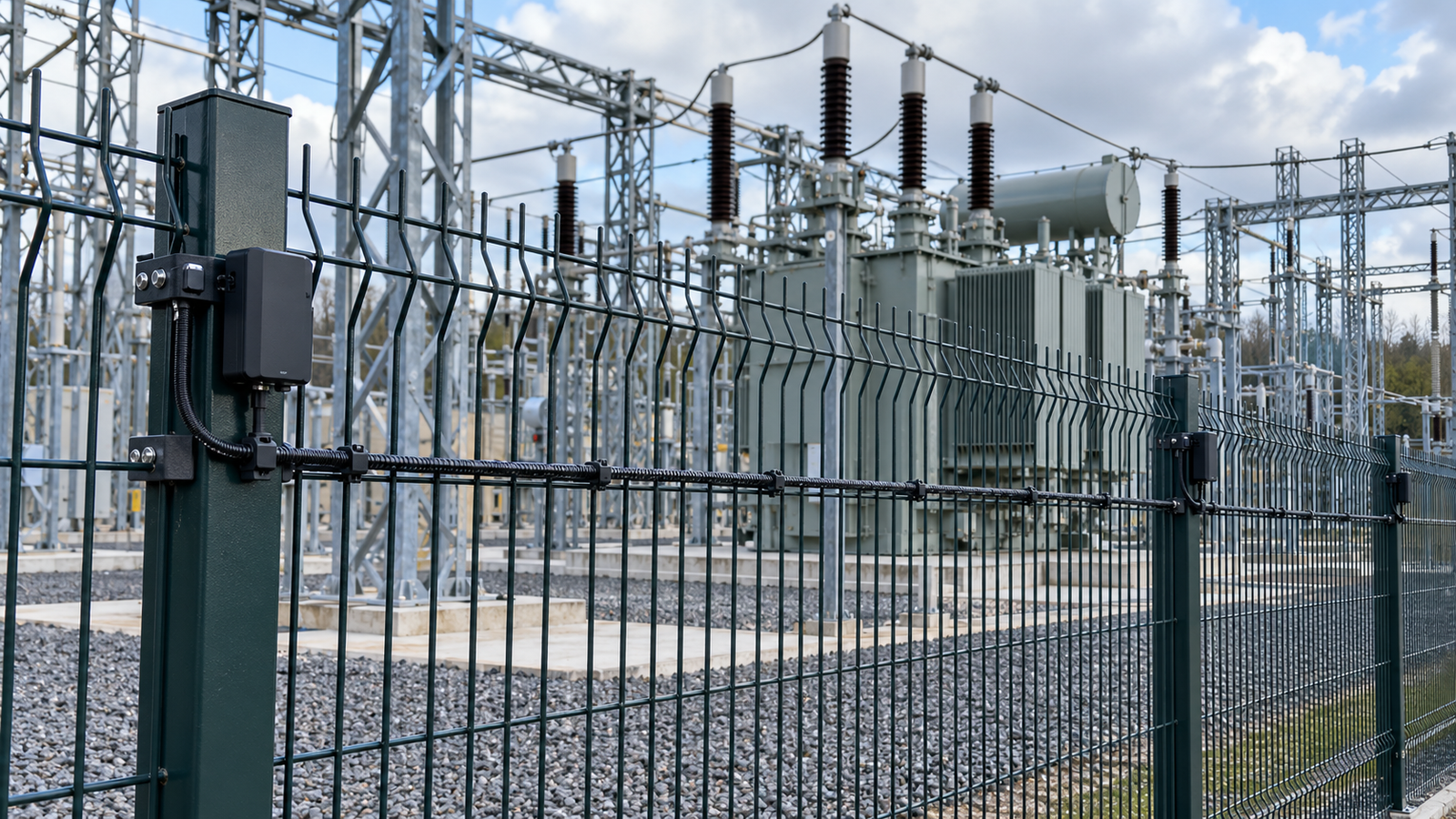
- Fence-mounted vibration/fibre-optic sensors that detect climbing or cutting attempts on the fence fabric itself
- Volumetric sensors (microwave or infrared beams) that create an invisible detection zone just inside the boundary
- Buried cable detection for sites where a visible sensor line isn’t appropriate
- Video analytics/CCTV integration that uses AI-based motion analysis to distinguish a person approaching the fence from ordinary footpath traffic
The best perimeter intrusion detection systems for a public-boundary application are designed specifically to minimise false alarms triggered by legitimate pedestrian activity, while still catching genuine attempts to breach the line.
3. Monitoring and Response
Detection is only useful if it leads to action. A modern perimeter intrusion detection system should feed into a monitored platform – either an on-site control room or a remote monitoring service – so that a real alert results in a fast, appropriate response, whether that’s a site guard, a call to the client, or a direct link to the police.
Practical Considerations for Roadside or Footpath Boundaries
Setback distance matters. Wherever possible, keep a buffer zone between the public path and the fence line itself. Even a metre or two makes tailgating and “fence-testing” far more conspicuous.
Lighting needs to serve two purposes. It should illuminate the boundary for your detection system and cameras, without glaring into the eyes of pedestrians or drivers on the adjacent road.
Signage should be clear, not aggressive. Simple, factual signage (“This site is protected by CCTV and perimeter security systems”) does the deterrent job without appearing hostile to the general public.
Detection sensitivity should be site-tuned. A system calibrated for a rural, unpopulated boundary will generate constant false alarms on a busy urban footpath. Any credible perimeter detection systems provider will carry out a site survey and tune sensitivity to your specific environment before commissioning.
Consider the site’s risk category. Critical infrastructure, data centres, and high-security facilities near public roads typically require NPSA/CPNI-aligned design standards, while a commercial premises may only need a more modest combination of fencing and CCTV.
Getting It Right: Professional Design vs. Off-the-Shelf
Perimeter protection along a public boundary is rarely a simple product purchase – it’s a design problem specific to your site, your risk profile, and the realities of the road or footpath running alongside it. Specialists in this field, such as Sysco Technical Solutions, typically start with a site survey to understand foot traffic patterns, sightlines, and existing infrastructure before recommending a tailored combination of fencing, detection technology, and monitoring.
FAQs
Q: What’s the difference between perimeter protection and a perimeter intrusion detection system?
A: Perimeter protection is the broad term for everything used to secure a boundary – fencing, lighting, signage, and access control included. A perimeter intrusion detection system (PIDS) is the specific technology layer that senses and alerts on an attempted breach, such as climbing, cutting, or crossing the boundary line.
Q: Can perimeter intrusion detection systems tell the difference between a pedestrian on a footpath and someone trying to break in?
A: Modern systems can, when properly tuned. Fence-mounted sensors calibrated to detect climbing or cutting vibrations (rather than simple contact or nearby movement), combined with video analytics that recognise human behaviour patterns, significantly reduce false alarms from legitimate passers-by.
Q: Do I need planning permission to install perimeter detection systems along a public road?
A: It depends on the fence height, the type of equipment, and local planning rules. Fences over a certain height, or any structure near a public highway, may require planning consent or highway authority sign-off. It’s worth checking with your local planning authority or a specialist installer before installation begins.
Q: What causes false alarms in perimeter intrusion detection systems near footpaths?
A: The most common causes are wind, wildlife, vibration from nearby traffic, and pedestrians brushing against or near the fence line. A proper site survey and calibration process during installation is the best way to minimise these.
Q: How much does a perimeter intrusion detection system cost?
A: Costs vary widely based on the length of the boundary, the type of detection technology used, and whether monitoring is included. A short, straightforward fence-mounted system will cost far less than a multi-layered solution combining fibre-optic detection, volumetric sensors, and 24/7 monitored CCTV across a large site. Most reputable providers offer a free site survey to give you an accurate quote.
Q: Who is responsible for monitoring alerts from a perimeter intrusion detection system?
A: This depends on how the system is set up. Some organisations route alerts to an in-house security team or control room; others use a remote monitoring service provided by the installer, which can dispatch a response or alert the relevant authorities when a genuine breach is detected.
Q: Is perimeter intrusion detection only for high-security sites like critical infrastructure?
A: No – while critical infrastructure, data centres, and government sites often require the most advanced, NPSA-approved systems, scaled-down perimeter detection systems are increasingly common for commercial premises, warehouses, and any site where the boundary runs alongside a public road or footpath and a simple fence alone isn’t enough.
Protecting a perimeter that runs alongside a public road or footpath means balancing genuine security against the practical realities of shared public space. Done well, the right combination of physical deterrents, a properly tuned perimeter intrusion detection system, and responsive monitoring keeps your site secure without turning the boundary into an eyesore or a source of friction with the community around it.