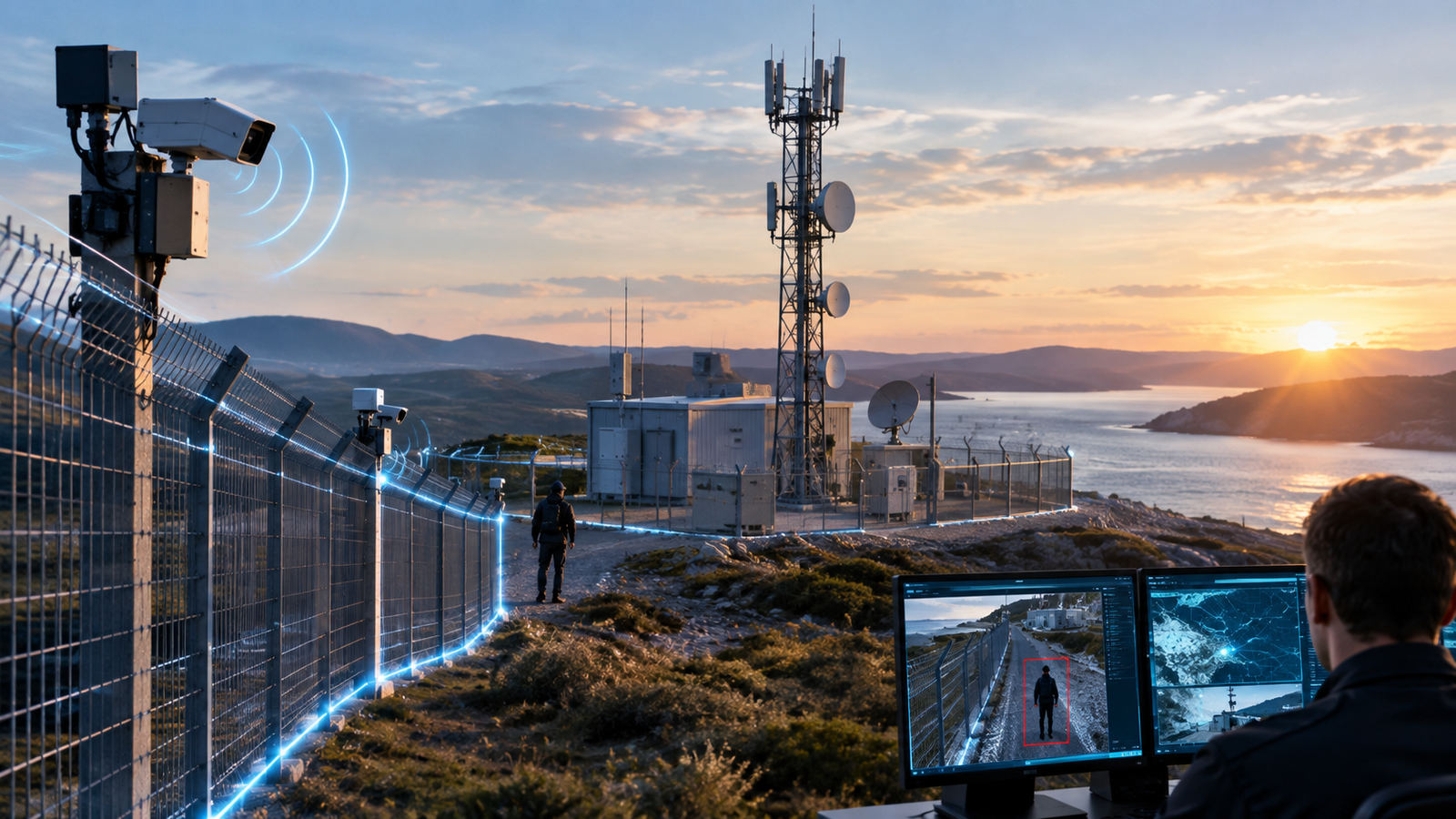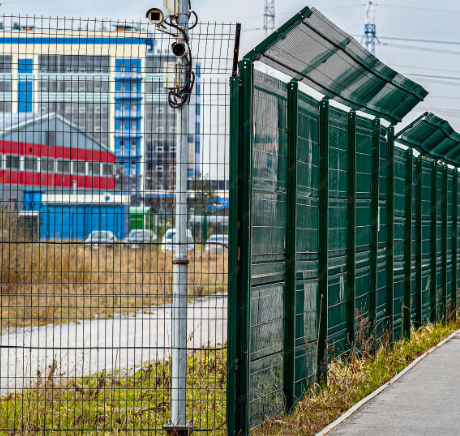
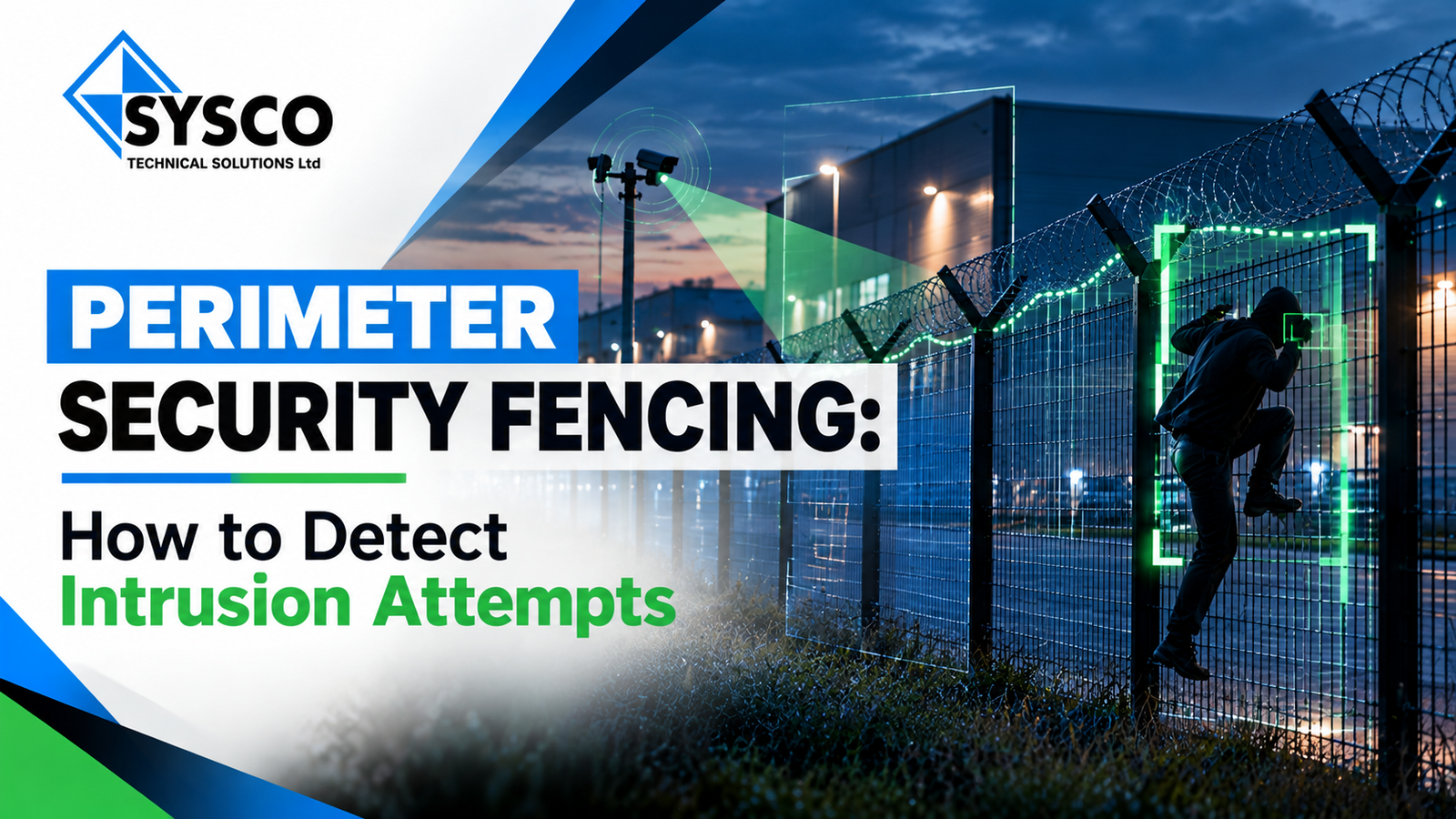
A security fence can be an important first line of defence, but a fence on its own does not necessarily tell you when someone is trying to breach your site.
For sites protecting critical infrastructure, industrial facilities, data centres, energy sites, transport infrastructure and other high-value locations, the ability to detect an intrusion attempt at the perimeter can be just as important as physically preventing access.
This is where perimeter security fencing and fence-mounted intrusion detection systems work together.
Rather than simply creating a physical barrier, a properly designed perimeter security system can detect climbing, cutting, lifting, tampering or other attempts to breach the fence and provide an early warning to security teams.
What Is Perimeter Security Fencing?
Perimeter security fencing is designed to create a physical boundary around a protected site and make unauthorised access more difficult.
Depending on the application and required security level, this can include security mesh fencing, high-security fencing, welded mesh, palisade fencing and other specialist perimeter barriers.
However, physical fencing is only one part of an effective perimeter protection strategy.
A determined intruder may attempt to:
- Climb over the fence
- Cut through fencing
- Lift or manipulate fence panels
- Damage fence posts or fixings
- Create an opening underneath the fence
- Tamper with gates or access points
- Exploit vulnerable sections of the perimeter
This is why modern perimeter security often combines physical fencing with electronic intrusion detection.
How Does Fence Intrusion Detection Work?
A fence intrusion detection system uses sensors installed on or around the perimeter to identify activity that could indicate an intrusion attempt.
The technology used depends on the fence construction, site environment, required detection performance and the type of threat being considered.
When abnormal movement or disturbance is detected, the system can generate an alarm that is passed to a security management system, monitoring centre or site security team.
The objective is simple:
Detect the attempted breach before the intruder reaches the protected asset.
This provides security personnel with additional time to assess and respond to a potential threat.
What Types of Intrusion Can Be Detected?
Different perimeter detection technologies are designed to identify different types of activity.
1. Fence Climbing
Climbing is one of the most obvious ways an intruder may attempt to defeat a fence.
Sensors mounted to the fence can detect characteristic movement or vibration associated with climbing or significant interference with the structure.
This can allow an alarm to be generated while the attempted intrusion is still taking place.
2. Fence Cutting
An intruder may attempt to create an opening by cutting through mesh or other fencing materials.
Depending on the detection technology installed, a perimeter intrusion detection system can identify activity associated with cutting or tampering.
This is particularly important because a conventional fence may remain physically intact enough to appear secure while an intruder is actively creating an entry point.
3. Fence Climbing and Shaking
Heavy movement of the fence can provide an indication that someone is attempting to climb, pull or otherwise manipulate the barrier.
A suitable fence-mounted detection system can monitor these disturbances and distinguish potentially significant events from normal environmental activity.
4. Tampering
Security fencing itself can become a target.
Intruders may attempt to interfere with sensors, fixings, cables, gates or other components of the perimeter security system.
A properly designed solution should therefore consider not only intrusion detection but also the possibility of deliberate tampering.
Perimeter Sensors: Why They Matter
Perimeter sensors form a critical part of many perimeter intrusion detection systems.
Different sensor technologies can be used depending on the environment and application.
The choice of technology should take into account factors such as:
- Fence construction
- Perimeter length
- Terrain
- Weather conditions
- Nearby roads and railways
- Animals and wildlife
- Vegetation
- Industrial activity
- Expected threat level
- Required detection performance
There is no single perimeter sensor that is ideal for every site.
A professional perimeter security assessment should consider the characteristics of the site before determining which technology and configuration are appropriate.
Perimeter Security Fencing vs Perimeter Intrusion Detection
It is important to understand the difference between the physical barrier and the detection system.
Perimeter fencing is designed to delay, deter and restrict unauthorised access.
Perimeter intrusion detection is designed to identify attempts to breach the perimeter.
Used together, they provide a more complete approach to perimeter protection.
For example, an intruder might be able to climb a fence despite its height and construction. Without intrusion detection, security personnel may not know about the attempt until the person has already entered the site.
With a suitable fence intrusion detection system, the attempt can potentially be detected at the perimeter.
Integrating Detection With CCTV
Perimeter intrusion detection can become even more effective when integrated with CCTV and other security systems.
An alarm generated by a perimeter sensor can be used to direct attention towards the relevant area of the site.
This can help security personnel quickly establish:
- Where the alarm occurred
- Whether an intrusion is actually taking place
- What type of activity is occurring
- Whether a response is required
Instead of relying on cameras to continuously monitor every section of a large perimeter, intrusion detection can provide an event-based trigger for investigation.
This can be particularly valuable across large or complex sites.
Reducing False Alarms
One of the biggest considerations when designing a perimeter detection system is managing false alarms.
Outdoor environments are unpredictable. Wind, rain, wildlife, vegetation, nearby traffic and other sources of movement can all create disturbances around a perimeter.
A poorly specified system may therefore generate excessive alarms that do not represent genuine security threats.
Over time, this can lead to alarm fatigue and reduce confidence in the system.
The right approach is to consider the site environment during the design and specification process and select technology that is appropriate for the conditions.
Where Is Perimeter Security Fencing Used?
Perimeter security fencing and intrusion detection systems can be used across a wide range of applications, including:
Data Centres
Data centres require robust physical security because unauthorised access to the site can present significant operational and security risks.
Perimeter fencing combined with intrusion detection can provide an additional layer of protection around the facility.
Critical Infrastructure
Power, water, telecommunications and other critical infrastructure sites can have extensive perimeters that require continuous monitoring.
A perimeter intrusion detection system can help security teams identify potential breaches at an early stage.
Solar Farms
Solar farms can cover large areas and may have relatively remote perimeters.
Perimeter detection can provide an additional security layer around the site while helping security teams identify activity without relying entirely on physical patrols.
Transport Infrastructure
Rail, airport and other transport-related sites can have complex perimeters and multiple access points.
Security fencing combined with detection technology can help protect vulnerable boundaries.
Industrial Sites
Factories, warehouses, manufacturing facilities and other industrial sites may use perimeter security systems to protect buildings, equipment, materials and restricted areas.
How to Choose a Perimeter Intrusion Detection System
There is no universal perimeter security system that suits every site.
Before selecting a solution, consider:
1. What are you protecting?
The security requirements of a data centre will differ from those of a commercial warehouse or solar farm.
2. How large is the perimeter?
Long perimeters require technologies and system architectures that can provide effective coverage at scale.
3. What is the fence construction?
Different fencing materials and designs can affect how detection technologies perform.
4. What environmental conditions exist?
Wind, rain, wildlife, vegetation and nearby infrastructure should all be considered.
5. What are the likely intrusion methods?
Understanding the threat helps determine which detection technologies are appropriate.
6. How will alarms be managed?
The detection system should integrate effectively with the site’s wider security operation.
7. Is future expansion required?
A scalable system can make it easier to extend protection as the site or security requirements change.
A Fence Is Only the Beginning
Modern perimeter security is no longer simply about building a higher or stronger fence.
The most effective approach combines physical protection, intrusion detection, monitoring and an appropriate response process.
A security fence can create the physical boundary. A perimeter intrusion detection system can provide the intelligence needed to identify when that boundary is being challenged.
For high-security and critical sites, that early warning can make the difference between detecting an attempted intrusion at the perimeter and discovering a security breach after an intruder has already entered the site.
Conclusion
Perimeter security fencing remains an important component of physical security, but its effectiveness can be significantly enhanced when combined with a suitable perimeter intrusion detection system.
By detecting climbing, cutting, tampering and other attempts to breach the perimeter, fence-mounted sensors and other detection technologies can provide security teams with an early warning of potential intrusion.
The right solution depends on the site, fence construction, environmental conditions, threat profile and security objectives.
For organisations protecting critical infrastructure, data centres, energy facilities, transport infrastructure or industrial sites, perimeter security should therefore be considered as an integrated system rather than simply a physical fence.
The goal is not just to stop an intruder at the fence. It is to know when someone is attempting to breach it.