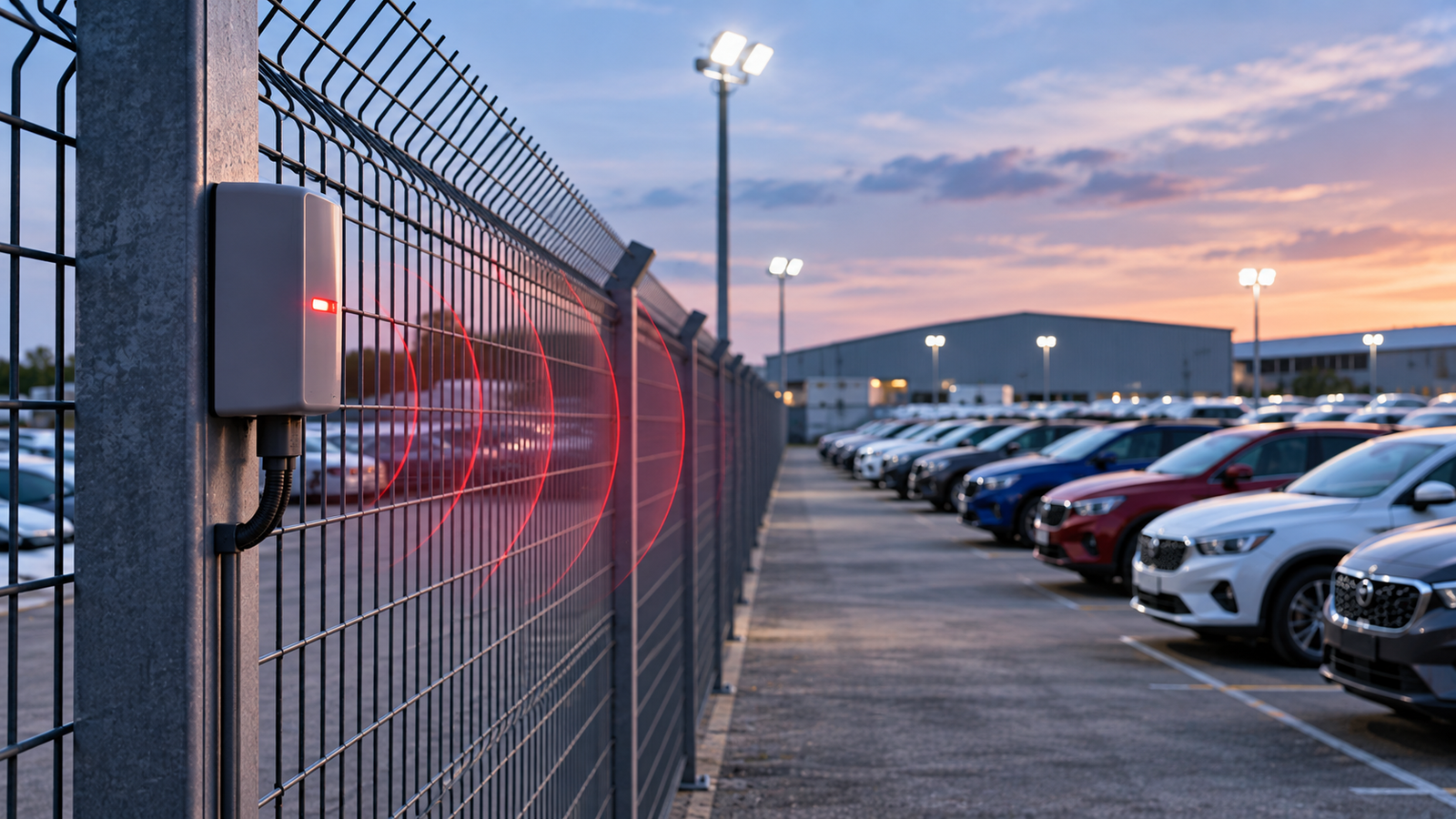
Vehicle storage compounds play an important role in automotive logistics, fleet management, vehicle distribution and dealership operations. These facilities often hold large numbers of valuable vehicles across extensive outdoor areas, making effective vehicle compound security essential.
However, protecting a vehicle compound presents particular challenges. Long perimeter fence lines, multiple access points, isolated boundaries and reduced activity outside working hours can create opportunities for unauthorised entry.
Traditional fencing provides a physical barrier, but it cannot independently alert operators when someone attempts to climb, cut or breach the boundary.
This is where Perimeter Intrusion Detection Systems (PIDS) can provide an important additional layer of protection.
By detecting potential intrusion attempts at the perimeter, PIDS can help vehicle storage operators identify suspicious activity earlier and initiate an appropriate security response.
In this guide, we explore the security risks facing vehicle storage compounds, how perimeter intrusion detection works and what businesses should consider when protecting their facilities.
Why Vehicle Storage Compounds Need Effective Perimeter Security
Vehicle compounds often contain substantial amounts of valuable inventory, including new and used cars, commercial vehicles, fleet vehicles and specialist equipment.
For businesses managing these assets, unauthorised entry can lead to theft, vandalism, property damage and operational disruption.
Several factors make vehicle storage compound security particularly important.
Extensive perimeter boundaries
Vehicle storage facilities frequently occupy large outdoor sites with long stretches of fencing.
Monitoring every section of the boundary can be challenging, particularly where fences run alongside roads, industrial estates or open land.
High-value assets
Vehicles stored within compounds can represent significant financial value.
An intrusion may expose multiple vehicles to theft or damage, making early detection particularly important.
Reduced activity outside working hours
Some vehicle storage facilities operate primarily during normal business hours.
Even sites with 24-hour operations may have areas that receive limited attention overnight.
Without active perimeter monitoring, attempted intrusions may not be identified promptly.
Multiple operational access points
Vehicle transporters, delivery drivers and employees may regularly enter and leave the compound.
Perimeter detection systems must therefore account for legitimate operational activity while maintaining effective protection against unauthorised access.
Remote or isolated locations
Some vehicle compounds are located away from main operational buildings or in relatively isolated industrial areas.
These facilities may benefit from automated perimeter alerts that can be assessed through existing security monitoring arrangements.
For these reasons, vehicle compound perimeter security should be designed around the specific layout, risks and operational requirements of each site.
How Perimeter Intrusion Detection Systems Protect Vehicle Compounds
A Perimeter Intrusion Detection System (PIDS) is designed to identify activity associated with attempted unauthorised entry at a protected boundary or within a defined detection area.
Unlike conventional fencing, which primarily provides a physical barrier, PIDS adds an active detection capability.
Depending on the technology and installation, perimeter sensors may identify activity associated with:
- Attempts to climb perimeter fencing.
- Cutting or damaging fence structures.
- Unusual vibration or movement affecting protected boundaries.
- Unauthorised movement within designated detection zones.
- Potential intrusion attempts near vulnerable perimeter sections.
When the system detects an event meeting its configured alarm criteria, it generates an alert.
This alert can then be assessed through the site’s existing security monitoring arrangements.
The purpose of PIDS is to provide earlier warning of possible intrusion, helping security personnel respond before an incident develops further.
1. Fence-Mounted Intrusion Detection for Vehicle Storage Compounds
Many vehicle storage compounds already have established perimeter fencing.
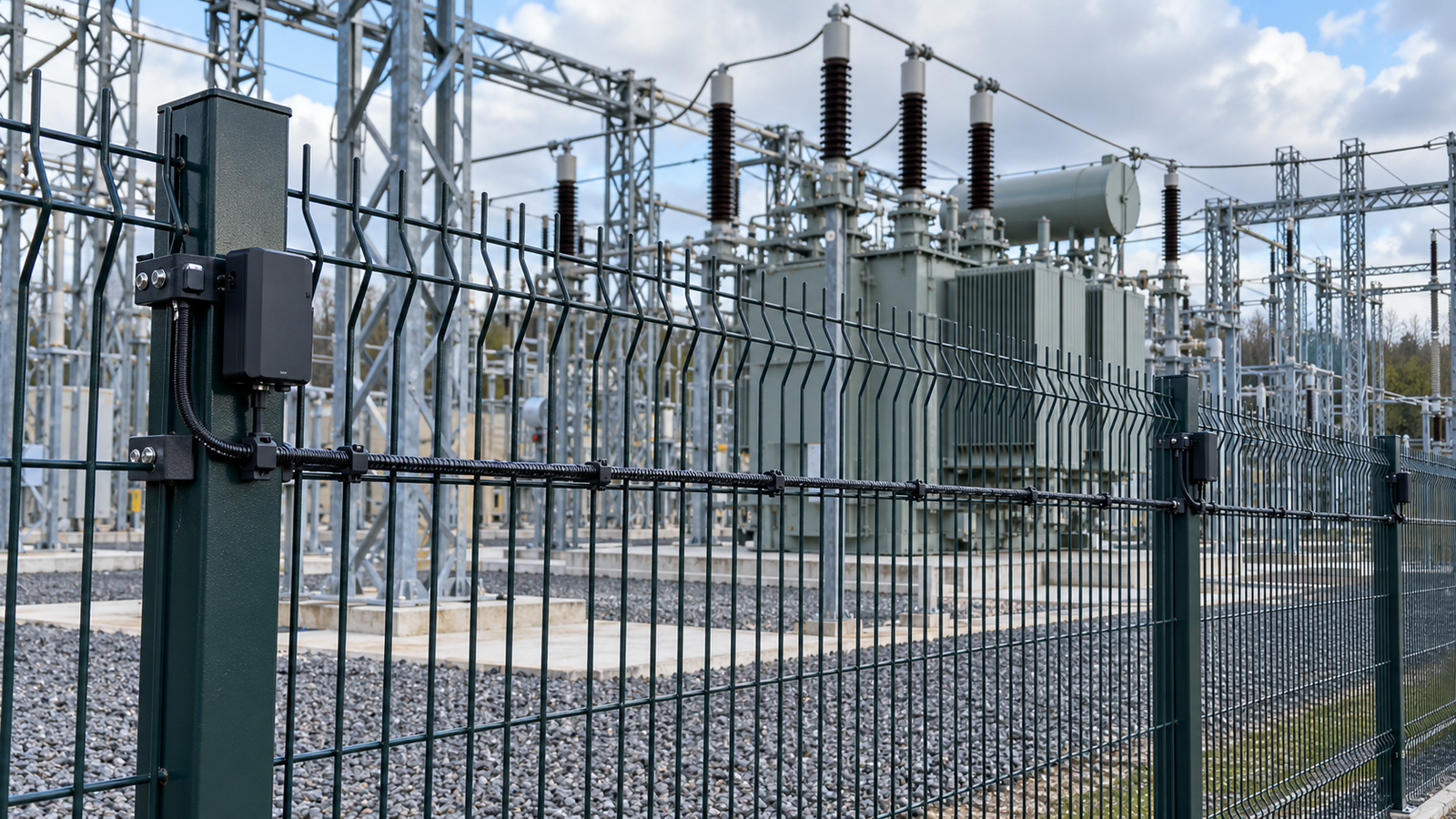
Fence-mounted intrusion detection systems can provide an additional layer of protection by monitoring disturbances affecting suitable fence structures.
Depending on the technology, sensors may detect vibration or movement associated with attempted climbing, cutting or interference.
How fence-mounted PIDS works
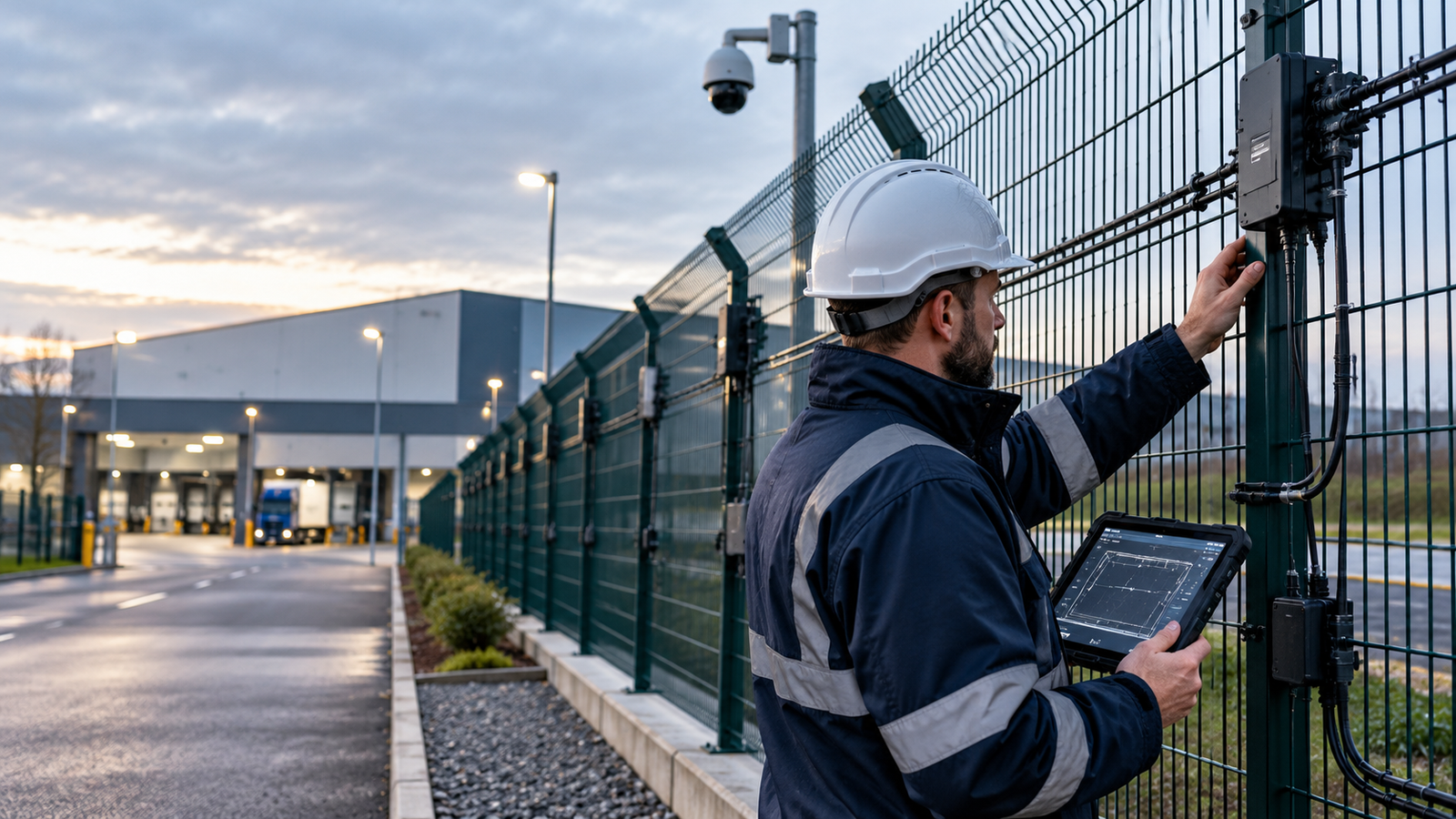
Sensors are installed along the protected boundary and configured to identify relevant disturbance patterns.
When activity exceeds the system’s detection criteria, an alarm is generated.
For vehicle compounds, this can help identify attempted breaches along sections of fencing that are difficult to monitor continuously.
Benefits for vehicle compound operators
Fence-mounted PIDS can offer several advantages:
- Active monitoring of suitable existing perimeter fencing.
- Detection of potential climbing or cutting attempts.
- Configurable detection zones.
- Alarm information associated with affected boundary sections.
- Integration with compatible existing security infrastructure.
However, detection performance depends on the fence construction, condition, installation quality and environmental conditions.
A site assessment is therefore important before selecting a fence-mounted solution.
2. Point Sensors for Vulnerable Perimeter Areas
Not every part of a vehicle storage compound has the same security requirements.
Some locations may need targeted detection because of their construction, accessibility or exposure to potential intrusion attempts.
Point-based perimeter intrusion sensors can provide detection at selected locations.
Depending on the sensor technology and installation, these may include:
- Particular sections of perimeter fencing.
- Vulnerable boundary structures.
- Selected gates or perimeter access areas.
- Locations where conventional continuous fence detection may be unsuitable.
Point sensors can be useful where operators need focused detection rather than continuous monitoring across an entire boundary.
They may also form part of a wider PIDS arrangement combining different detection technologies.
The appropriate sensor type and configuration should be determined by the site’s physical characteristics and security requirements.
3. Radar-Based Perimeter Detection for Large Vehicle Compounds
Large vehicle storage facilities may require additional intrusion detection beyond the physical fence line.
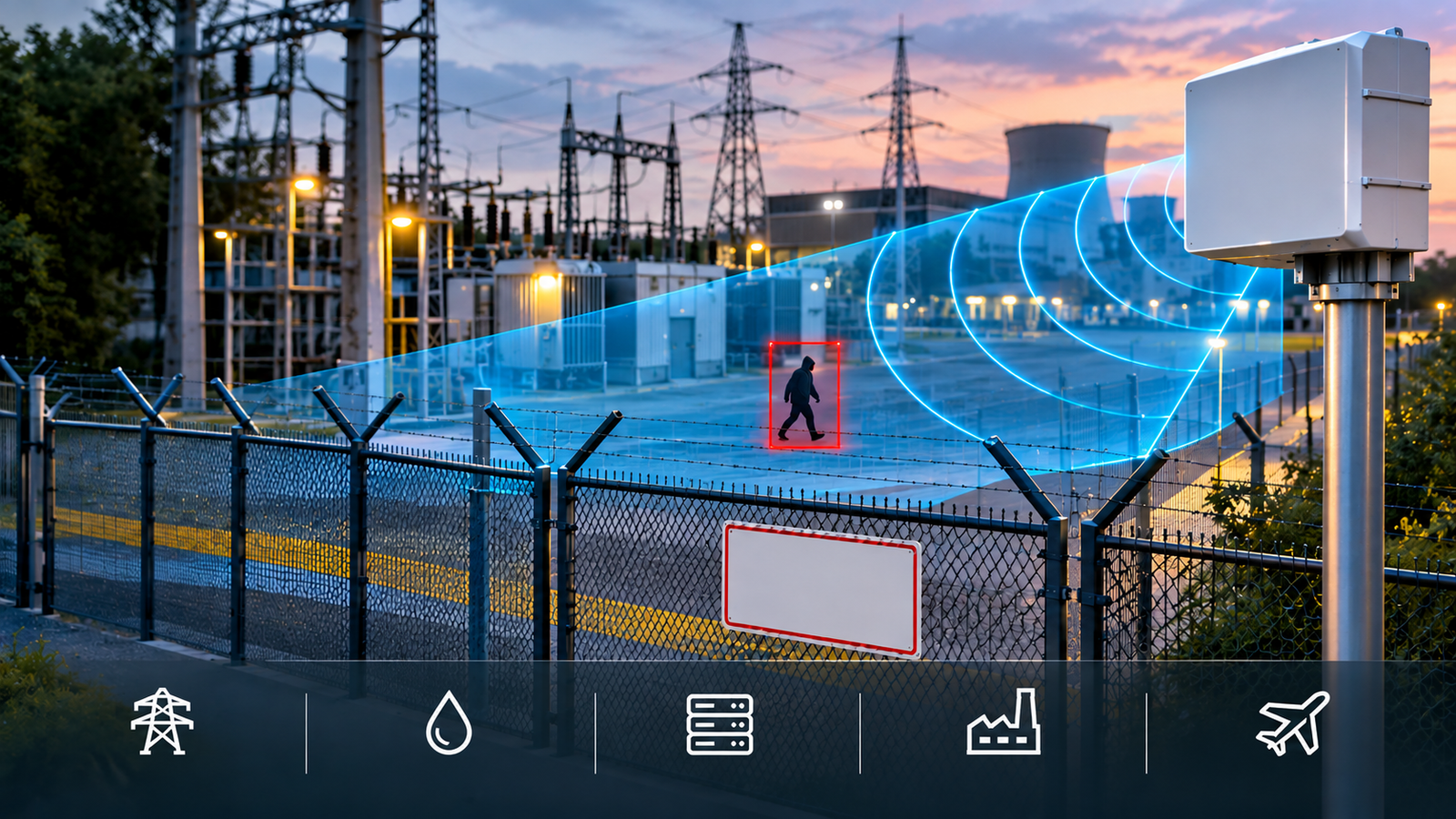
Radar-based perimeter detection can monitor movement within defined outdoor areas.
This may be particularly useful for compounds with extensive open spaces, designated approach zones or complex layouts.
How radar perimeter detection works
Radar technology detects movement within a configured coverage area.
Depending on the system, it can provide information about detected targets and their movement.
When activity meets the configured alarm criteria, the system generates an alert for assessment.
Potential applications in vehicle compounds
Radar-based PIDS may be considered for:
- Monitoring selected outdoor detection zones.
- Providing additional coverage near vulnerable boundaries.
- Detecting movement in designated restricted areas.
- Supporting perimeter monitoring across larger sites.
However, vehicle compounds can contain numerous parked vehicles, transporters and other structures that affect radar coverage.
Normal vehicle movements must also be considered during system design.
A suitable radar installation therefore requires careful assessment of detection coverage, obstructions, operational activity and environmental conditions.
4. Why Vehicle Compound Fencing Alone May Not Be Enough
Perimeter fencing is an important physical security measure, but it does not automatically provide notification of attempted intrusion.
An intruder may attempt to climb, cut or interfere with a boundary without the activity being noticed immediately.
For large vehicle compounds, this can be particularly concerning where perimeter sections are not continuously observed.
Adding perimeter intrusion detection helps address this limitation.
A correctly specified PIDS can detect certain types of attempted boundary interference and generate an alarm for assessment.
This does not make a compound immune to theft or guarantee that every intrusion attempt will be detected.
Instead, it provides an additional security capability that can improve awareness of potential breaches.
The effectiveness of the arrangement depends on the detection technology, system configuration, maintenance and response procedures.
5. Integrating PIDS with Existing Security Infrastructure
Many vehicle storage compounds already have CCTV cameras, alarm systems or security monitoring arrangements in place.
A new PIDS installation does not necessarily require these existing systems to be replaced.
Where the equipment is compatible, perimeter intrusion detection systems can integrate with existing security infrastructure.
For example, an alarm generated by a fence-mounted sensor may identify a particular detection zone.
The site’s existing monitoring arrangements can then be used to assess the event.
Where compatible CCTV integration is available, the alarm may prompt operators to review footage covering the affected area.
This can help security teams distinguish potential intrusions from environmental disturbances or legitimate activity.
Benefits of PIDS integration
- Improved awareness of activity at protected boundaries.
- More precise identification of affected detection zones.
- Faster access to relevant information for alarm assessment.
- Better use of compatible existing security infrastructure.
- A coordinated approach to perimeter alarm management.
Sysco Technical Solutions specialises in PIDS and associated detection integration. CCTV and other security equipment are considered existing or separately provided systems, rather than services supplied by SyscoTech.
6. Reducing False Alarms in Vehicle Compound Perimeter Detection
False alarms are an important consideration for any outdoor intrusion detection system.
Vehicle storage compounds can present particularly challenging conditions because of frequent vehicle movements, exposed fencing and environmental activity.
Potential sources of unwanted alarms include:
- Strong winds affecting perimeter fencing.
- Loose or damaged fence components.
- Vegetation contacting protected boundaries.
- Wildlife activity.
- Nearby heavy vehicle movements.
- Routine maintenance or authorised activity near detection zones.
Excessive nuisance alarms can increase monitoring workloads and reduce confidence in the system.
However, reducing false alarms should not come at the expense of effective intrusion detection.
How appropriate PIDS design can help
Technology selection
Choose detection equipment suited to the site’s fence construction, environment and operational conditions.
Correct sensitivity settings
Configure sensors to identify relevant intrusion activity while managing expected environmental disturbances.
Detection zoning
Divide the protected perimeter into appropriate zones to help operators locate alarm events.
Fence maintenance
Repair loose fencing, damaged panels and other structural issues that could affect detection performance.
Vegetation management
Keep vegetation from interfering with sensors or protected fence structures.
Regular testing
Test the system under realistic conditions to verify detection performance and identify areas requiring adjustment.
A well-designed and maintained PIDS installation should aim to balance reliable detection with manageable nuisance alarm levels.
7. Vehicle Compound Security for Different Automotive Operations
The security requirements of a vehicle storage compound depend on the type of business operating it.
Automotive logistics and vehicle distribution centres
Automotive logistics businesses often manage large vehicle compounds with frequent arrivals and departures.
Their perimeter detection arrangements must account for operational traffic while monitoring vulnerable boundaries.
Car dealerships and dealership groups
Dealerships may store new and used vehicles in outdoor compounds or separate stockholding locations.
Fence-mounted intrusion detection can provide additional monitoring for suitable perimeter boundaries, particularly outside normal working hours.
Fleet management companies
Fleet operators may store vehicles between assignments or before delivery to customers.
PIDS can support the protection of these assets by providing alerts associated with attempted perimeter intrusion.
Vehicle auction centres
Auction businesses may handle substantial numbers of vehicles across extensive outdoor facilities.
Appropriate perimeter zoning and detection technology can help protect boundaries without unnecessarily disrupting normal operations.
Commercial vehicle and HGV storage sites
Compounds storing vans, trucks, trailers and specialist commercial vehicles may have large open areas and substantial perimeter lengths.
Fence-mounted and radar-based detection may be considered depending on the site layout and risk assessment.
Vehicle preparation and refurbishment centres
Businesses providing vehicle inspection, preparation or refurbishment services may hold customer vehicles for extended periods.
Perimeter intrusion detection can support security arrangements around these storage and operational areas.
8. What to Consider Before Installing PIDS at a Vehicle Compound
A successful vehicle compound intrusion detection system should be based on the site’s actual security requirements.
Before choosing equipment, operators should consider several important factors.
Perimeter length and layout
Long or irregular boundaries may require different detection technologies or multiple detection zones.
Existing fence construction
Fence-mounted detection depends on the suitability and condition of the protected structure.
Gates and vulnerable areas
Vehicle entrances, pedestrian gates and other perimeter access points may require particular attention during system design.
Operational vehicle movements
The system should account for authorised transporters, forklifts, staff and contractors working near the perimeter.
Environmental conditions
Wind exposure, vegetation, nearby roads and other environmental factors can influence technology selection and configuration.
Existing monitoring arrangements
Operators should establish how alarms will be received, assessed and escalated.
Maintenance and testing
Routine inspections and performance testing are important for maintaining reliable operation.
A professional perimeter assessment can help identify the most suitable detection approach.
9. Why Choose Sysco Technical Solutions for Vehicle Compound PIDS?
Sysco Technical Solutions specialises in Perimeter Intrusion Detection Systems (PIDS) for commercial, industrial and high-security environments across the UK.
The company focuses on detecting potential intrusion at protected boundaries and within designated outdoor detection areas.
Its specialist technology range includes:
EcoPoint
Fence and structural intrusion detection technology for suitable perimeter applications.
SinglePoint 3D
Point-based detection designed to identify relevant movement or disturbance at selected locations.
FlexLine
A perimeter detection solution for applications requiring continuous monitoring along suitable protected boundaries.
RadarPoint
Radar-based detection technology for monitoring movement within defined outdoor areas.
The appropriate technology depends on the compound’s perimeter construction, operational activity, security requirements and existing infrastructure.
Sysco Tech can help organisations assess their perimeter detection requirements and identify suitable PIDS solutions.
Where appropriate, these systems can integrate with compatible existing alarm and monitoring infrastructure.
For vehicle storage operators, the objective is to strengthen boundary detection and support an earlier, more informed response to potential intrusion.
Frequently Asked Questions
What is vehicle compound security?
Vehicle compound security refers to measures used to protect vehicles stored within a designated facility. Perimeter Intrusion Detection Systems provide active detection of certain attempted boundary breaches and can support the site’s wider security arrangements.
How can PIDS help prevent vehicle theft?
PIDS can identify activity associated with attempted perimeter intrusion and generate an alarm. Earlier detection may allow security personnel to assess and respond before an intruder reaches stored vehicles.
Can PIDS be installed on existing vehicle compound fencing?
Many fence-mounted intrusion detection systems can be installed on suitable existing fences. The fence construction, condition and stability should be assessed before installation.
What is the best PIDS technology for a vehicle storage compound?
The most suitable technology depends on the site’s layout, fence type, environmental conditions and operational requirements. Fence-mounted sensors, point sensors and radar-based detection may be appropriate for different applications.
Can perimeter intrusion detection integrate with existing CCTV?
Yes. Compatible PIDS equipment can integrate with existing CCTV and alarm management infrastructure, allowing security operators to use visual information when assessing perimeter alarms.
Is radar perimeter detection suitable for vehicle compounds?
Radar may be suitable for selected outdoor areas, depending on the site layout and detection requirements. Parked vehicles, structures and legitimate movement must be considered when designing coverage.
How can false alarms be reduced in perimeter intrusion detection systems?
Suitable technology selection, correct installation, sensitivity configuration, fence maintenance, vegetation management and regular testing can help manage nuisance alarms.
Do vehicle compounds need different PIDS systems for different areas?
Some sites benefit from combining detection technologies or dividing the perimeter into separate zones. This depends on the site’s physical characteristics and security requirements.
How much does a vehicle compound PIDS system cost?
Costs depend on the perimeter length, technology, number of detection zones, installation requirements and integration with existing infrastructure. A site assessment is generally required to prepare an accurate quotation.
Strengthen Vehicle Compound Security with Specialist PIDS
Protecting a vehicle storage compound requires more than a physical boundary.
For automotive logistics businesses, fleet operators, dealerships and vehicle storage facilities, Perimeter Intrusion Detection Systems can provide an additional layer of protection by identifying potential intrusion attempts at the site’s boundary.
Fence-mounted sensors, point detection and radar-based systems offer different ways to monitor vulnerable areas, depending on the compound’s layout and operating conditions.
At Sysco Technical Solutions, we specialise in PIDS designed to strengthen perimeter protection and integrate with compatible existing security infrastructure.
Whether you’re reviewing an existing perimeter detection system or considering a new installation, selecting the right technology begins with understanding your site’s vulnerabilities.
Looking to improve perimeter intrusion detection at your vehicle storage compound?
Contact Sysco Technical Solutions to discuss your perimeter layout, existing infrastructure and suitable PIDS options.