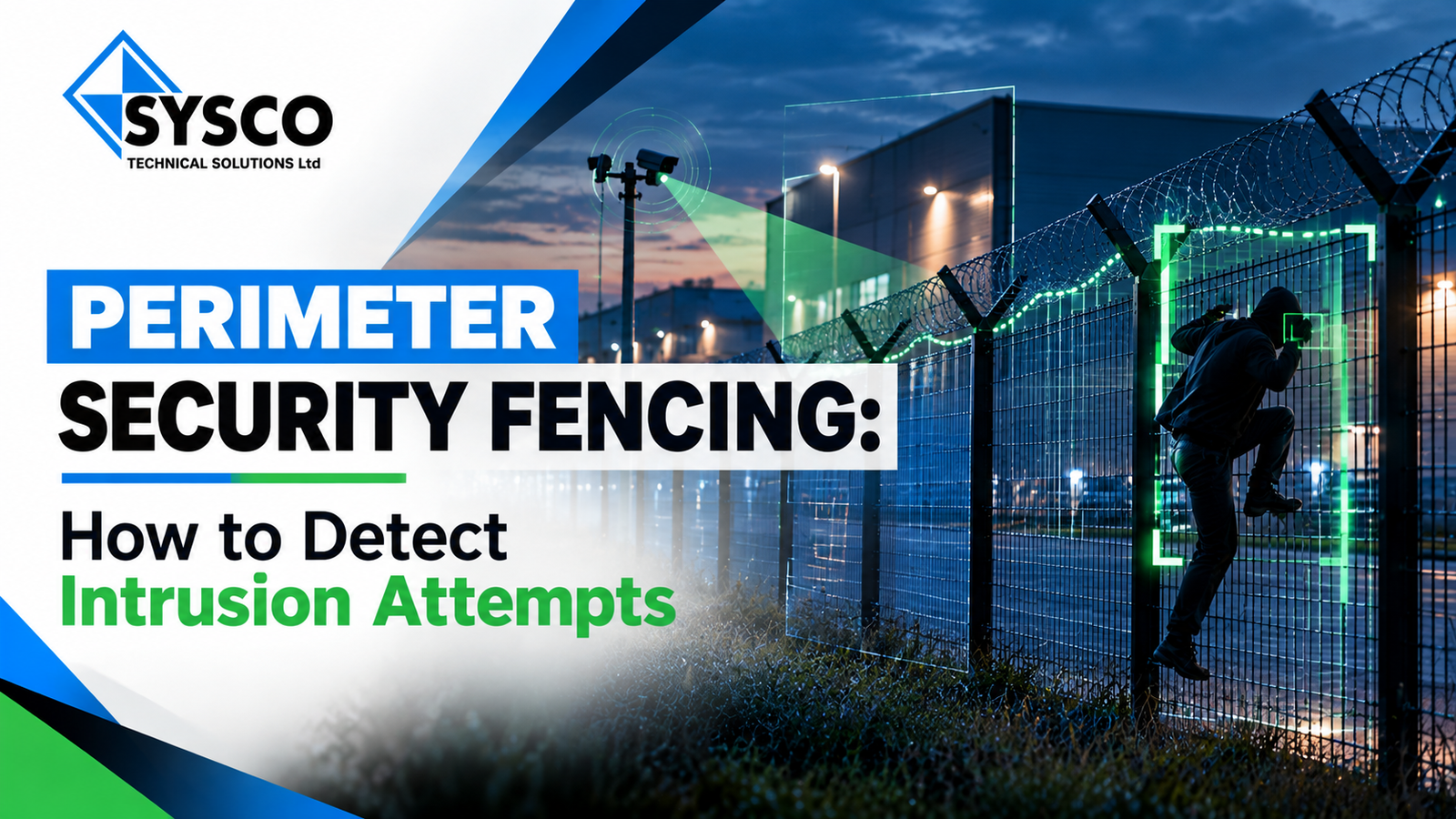
A perimeter intrusion detection system (PIDS) is often installed to meet a particular security requirement. But what happens when the site changes, the technology ages or the system no longer delivers the performance it was originally designed to provide?
For organisations operating warehouses, manufacturing facilities, utilities, data centres and other security-sensitive sites, the question is not simply whether an existing system still switches on. It is whether it remains suitable for the risks, layout and operational demands of the facility.
An ageing system does not automatically need replacing. In some cases, targeted repairs or configuration changes may restore acceptable performance. In others, a perimeter intrusion detection system upgrade may provide better detection coverage, improved alarm management and greater compatibility with existing security infrastructure.
This guide explains when an upgrade may be appropriate, how to assess the available options and what to consider before investing.
1. Your Site Has Changed Since the Original Installation
One of the strongest reasons to review an existing PIDS is a significant change to the site itself.
Security systems are generally designed around the boundary layout, environmental conditions and operational requirements in place during installation.
Over time, a facility may introduce:
-
New buildings, storage yards or loading areas.
-
Additional vehicle gates or pedestrian access points.
-
Changes to perimeter fencing or boundary structures.
-
Expanded warehouse or production operations.
-
Temporary construction areas that become permanent.
These changes can leave the original detection arrangement poorly matched to the current site.
For example, a distribution centre that expands its external storage area may need additional detection zones or revised monitoring arrangements.
When to consider upgrading: If your site has expanded or changed substantially, arrange a review of the original detection design against current operational requirements. The solution may involve extending the existing system rather than replacing it entirely.
2. Detection Performance No Longer Meets Your Security Requirements
A PIDS should be assessed against the security outcomes it is expected to deliver.
That includes its ability to detect relevant intrusion attempts, report alarms to the correct location and support an effective response.
There are two different issues to distinguish:
A system fault means equipment is not operating as intended. It may require repair, maintenance or recalibration.
A capability gap means the system may be functioning as originally designed but can no longer meet the site’s security requirements.
For example, an older installation may provide broad zone-level detection, while an expanded control room operation now requires more precise event localisation.
Repeated sensor repairs will not necessarily resolve that capability gap.
The UK’s National Protective Security Authority (NPSA) recommends evaluating perimeter detection against defined operational requirements and maintaining performance through testing and appropriate system management.
When to consider upgrading: When the security requirement has evolved beyond what the existing equipment can realistically deliver, even after appropriate servicing.
3. The System Generates More Alarms Than Your Team Can Manage Effectively
Frequent nuisance alarms are often treated as a maintenance issue. Sometimes they are.
Weather, vegetation, unstable fencing and incorrect sensitivity settings can affect certain detection technologies.
However, repeated alarms may also indicate that the original technology is not well suited to the site environment or current operating conditions.
The important question is whether the problem can be corrected through servicing and configuration, or whether a different detection approach is required.
NPSA guidance emphasises balancing detection sensitivity against nuisance alarms. A system configured to avoid every unwanted alarm may become insufficiently sensitive, while excessive alarms can make effective monitoring difficult.
When to consider upgrading: If nuisance alarms remain operationally disruptive despite documented fault investigation, appropriate maintenance and performance testing.
4. Your PIDS Does Not Integrate Effectively with Modern Security Systems
Perimeter detection is most useful when it supports a coordinated response.
For many facilities, this means connecting detection events with CCTV, control room monitoring and other compatible security systems.
An older PIDS may still generate alarms but provide limited information about where an event occurred or how it should be investigated.
A suitable upgrade might improve:
-
Identification of the affected detection zone.
-
Communication with existing CCTV systems.
-
Alarm information available to monitoring teams.
-
Reporting and event history.
-
Remote management where supported.
-
Coordination with the site’s established security procedures.
Not every existing platform can support every modern integration, and compatibility should be established before specifying equipment.
When to consider upgrading: If your monitoring team receives alarms but lacks the information or integration needed to assess them efficiently.
5. Replacement Parts or Technical Support Are Becoming Difficult to Obtain
A system can remain operational while becoming increasingly difficult to maintain.
Over time, manufacturers may discontinue controllers, sensors, communication interfaces or software support.
This introduces risks that are not always visible during normal operation.
For instance, a failed component might once have been replaced quickly but could now require specialist refurbishment, a substitute part or a wider system change.
Before deciding on complete replacement, consider whether supported components can be upgraded while retaining suitable existing infrastructure.
When to consider upgrading: When spare parts, software support or repair options are becoming unreliable, making continued operation increasingly difficult to sustain.
6. Your Security Risk Profile Has Increased
A perimeter system designed for a conventional commercial site may not be suitable when the facility begins storing higher-value goods, supporting critical infrastructure or handling more sensitive activities.
A review may be required following changes such as:
-
New high-value equipment or materials being stored on site.
-
More demanding customer or contractual security requirements.
-
Increased exposure to theft or attempted intrusion.
-
Expansion into higher-security operations.
-
Changes to the required alarm verification and response arrangements.
An upgrade should follow a revised threat and risk assessment, rather than simply selecting newer equipment.
For projects requiring evaluated products, the relevant NPSA evaluation status and the scope of any certification should be checked for the specific equipment proposed.
When to consider upgrading: When the existing system cannot meet newly defined security requirements or project specifications.
7. You’re Spending More on Repeated Repairs Without Resolving the Underlying Problem
A single repair is not necessarily a reason to replace a security system.
However, recurring faults, repeated engineer visits, prolonged periods of reduced coverage and obsolete components can make continued maintenance less attractive.
This is where a structured comparison is useful.
Rather than considering only the purchase price of new equipment, compare the expected costs of keeping the current system operating against the costs and benefits of a suitable upgrade.
That assessment should include repair expenditure, maintenance requirements, operational disruption, replacement-part availability and expected future service life.
A targeted upgrade may be more cost-effective than complete replacement, particularly where existing fencing, cable routes, power supplies or monitoring infrastructure remain suitable.
Repair, Upgrade or Replace: Which Is the Right Decision?
Not every performance problem requires a new installation.
| Situation | Likely starting point |
|---|---|
| One damaged sensor or connector | Repair and functional retesting |
| Recurring alarms caused by a correctable site condition | Maintenance or recalibration |
| Site extension beyond existing detection coverage | Partial system upgrade |
| Existing equipment cannot integrate with required monitoring systems | Integration assessment or controller upgrade |
| Manufacturer support has ended for critical components | Upgrade or replacement assessment |
| System cannot meet revised security requirements | Redesign or replacement |
| Multiple recurring failures across obsolete equipment | Whole-life replacement comparison |
The right choice depends on the technology, site conditions, security objectives and results of a competent technical assessment.
How to Plan a PIDS Upgrade Without Unnecessary Disruption
A successful upgrade starts with understanding the existing installation.
Step 1: Review the original security requirements
Check what the system was designed to detect, which areas it protects and how alarms are supposed to be managed.
Compare this with current site risks, boundary arrangements and operational procedures.
Step 2: Assess the condition of existing equipment
Review the physical installation, including sensors, cabling, controllers, communications, power supplies and supporting fence structures where relevant.
Step 3: Examine alarm and maintenance records
Historical information can reveal recurring faults, troublesome zones and changes in detection performance.
Where records are incomplete, suitable diagnostic and performance testing may be required to establish a reliable baseline.
Step 4: Identify infrastructure that can be retained
Replacing everything is not always necessary.
Depending on compatibility and condition, it may be possible to retain elements such as fencing, cable routes or monitoring equipment while upgrading selected detection components.
Step 5: Define the new performance requirements
Establish what the upgraded system must achieve, including coverage, response procedures, integration, monitoring and maintenance arrangements.
Avoid choosing technology before agreeing these requirements.
Step 6: Plan testing and commissioning
Any modified or upgraded detection system needs appropriate testing to demonstrate that it performs as required.
NPSA guidance recommends retesting following repairs, upgrades or adjustments. It also highlights the need to consider temporary protection where areas may otherwise be left without effective coverage.
Can You Upgrade a PIDS Without Replacing the Existing Fence?
Yes, in some circumstances.
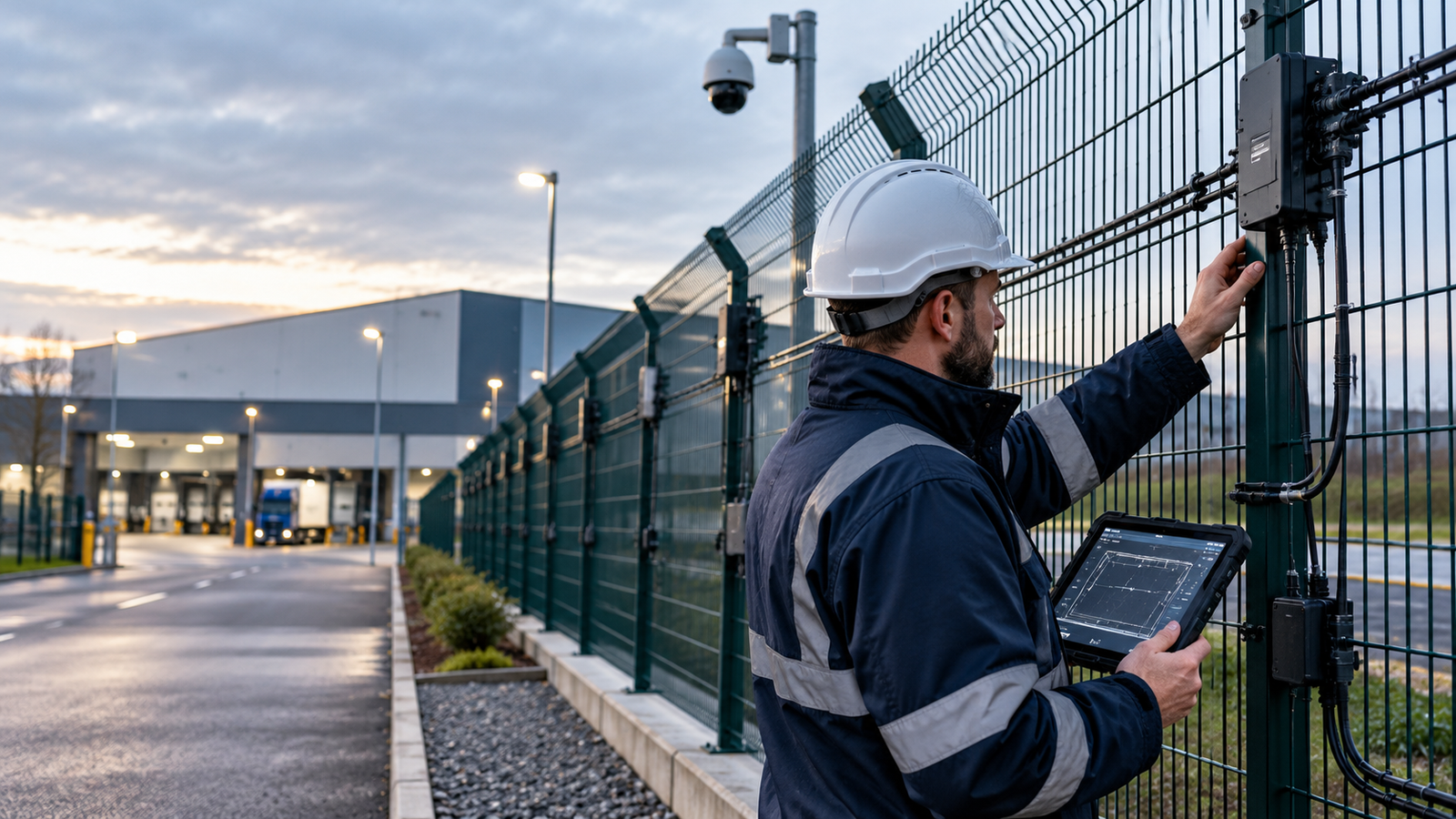
A fence-mounted intrusion detection system may be upgraded while retaining the existing perimeter fence, provided the structure is suitable for the proposed equipment.
A survey should examine fence stability, panel construction, mounting arrangements, environmental conditions and compatibility with the chosen detection technology.
An unstable or deteriorated fence may affect detection performance even when the electronic equipment is functioning correctly.
Similarly, upgrading a controller or monitoring interface may be possible without replacing every sensor, but only if the relevant equipment and interfaces are compatible.
For more detail, see Sysco Tech’s guide to perimeter security fence requirements.
Why a Professional Upgrade Assessment Matters
Upgrading perimeter security is not simply a matter of installing the newest available sensor.
A poorly planned upgrade can introduce additional complexity, create integration difficulties or fail to address the original problem.
The assessment needs to establish whether the current technology is unsuitable, whether individual components require attention or whether the site’s security requirements have fundamentally changed.
At Sysco Technical Solutions, we work with organisations requiring specialist perimeter intrusion detection and integrated security solutions.
Our experience covers site assessment, system design, installation, commissioning and ongoing technical support.
Whether you’re managing an ageing PIDS installation, planning a site expansion or reviewing perimeter security performance, our team can help assess the available options and identify an appropriate solution.
Explore our perimeter security solutions or contact our specialists to discuss an existing installation.
Frequently Asked Questions
How do I know if my perimeter intrusion detection system needs upgrading?
An upgrade may be appropriate if the system no longer meets your security requirements, cannot support a changed site layout, has recurring unresolved performance issues or relies on unsupported equipment. A professional assessment can establish whether repairs, targeted improvements or replacement are justified.
How long does a perimeter intrusion detection system last?
There is no universal lifespan for a PIDS. Service life depends on equipment quality, environmental exposure, maintenance, manufacturer support and changing operational requirements. Equipment age alone should not determine whether a system needs replacing.
Can an older PIDS be connected to modern CCTV?
Possibly. Compatibility depends on the existing controller, communication interfaces, supported protocols and CCTV or monitoring platform. Some installations may require an interface or controller upgrade, while others may need more extensive modification.
Is upgrading a PIDS cheaper than replacing it?
A partial upgrade may cost less initially if existing infrastructure can be retained. However, repeated failures, obsolete parts and future maintenance costs should be considered before deciding. The most appropriate choice depends on whole-life cost and required security performance.
Should a PIDS be retested after an upgrade?
Yes. Following changes to detection equipment or configuration, appropriate commissioning and performance testing should confirm that the modified system continues to meet the agreed requirements.
Ready to Review Your Existing Perimeter Security System?
An existing PIDS doesn’t always need replacing, but it does need to remain effective.
If you’re experiencing recurring faults, planning an extension or considering a perimeter intrusion detection system upgrade, speak to Sysco Technical Solutions.
We can discuss your current installation, security requirements and possible improvement options.
Call: 01772 621716
Email: enquiries@syscotech.co.uk
Website: www.syscotech.co.uk