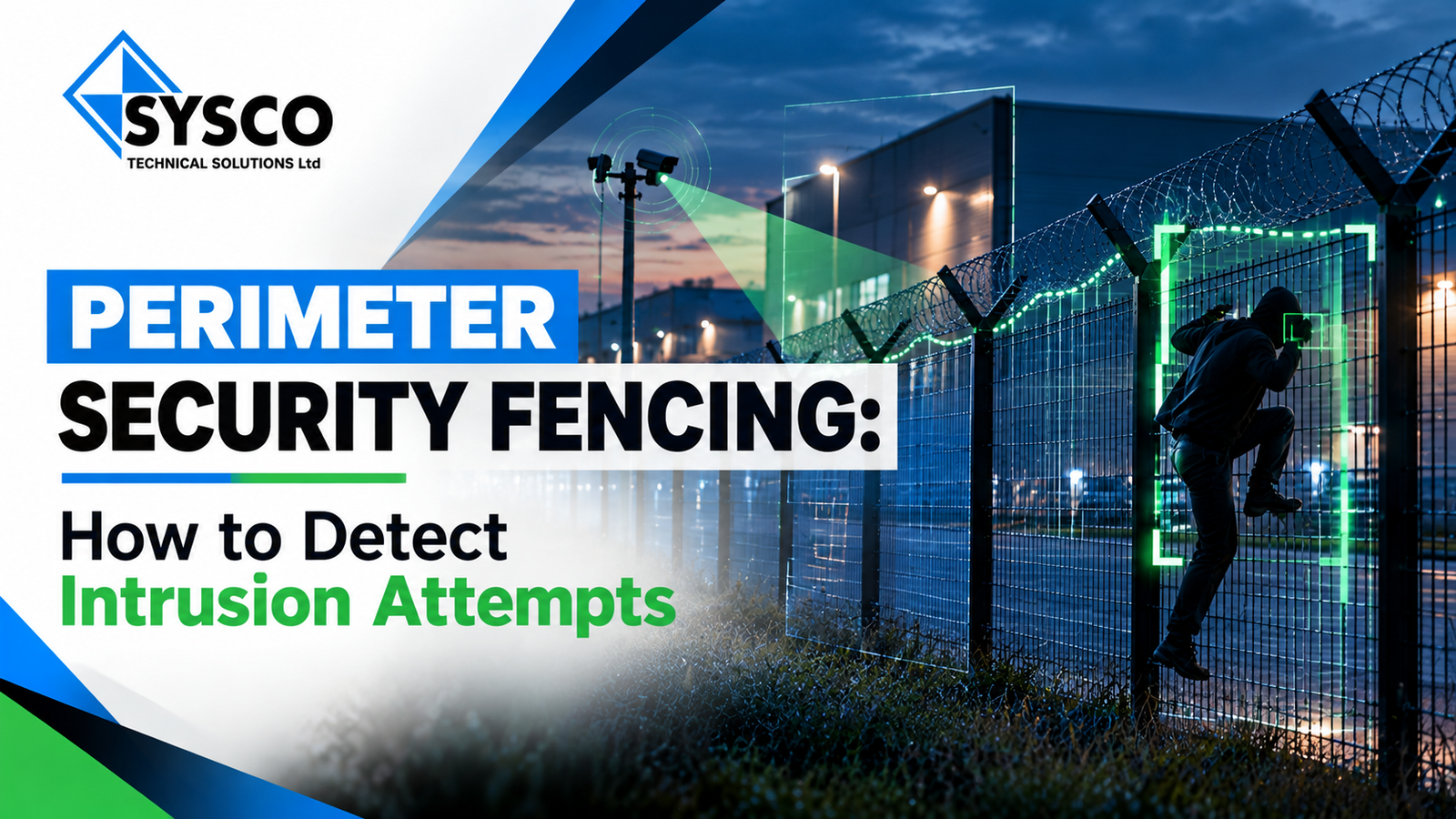
Recent reports of two Latvian nationals being arrested on suspicion of trespass offences at RAF Molesworth have once again highlighted the importance of robust perimeter protection at sensitive sites.
The incident followed the discovery of a breach in the perimeter of the Cambridgeshire RAF base. While the circumstances surrounding the incident remain under investigation, and it would be inappropriate to speculate about what happened or whether any particular security technology could have prevented it, it does raise a broader question for organisations across the UK:
How quickly would you know if someone was attempting to breach your perimeter?
For military establishments, critical national infrastructure, energy facilities, data centres, industrial sites, logistics operations and other sensitive locations, a fence or wall is only one part of the security picture.
Modern perimeter security systems combine physical barriers with technologies designed to detect, verify and support a response to potential intrusions.
That is where perimeter intrusion detection systems (PIDS) can play an important role.
A secure perimeter needs more than a physical barrier
Security fencing, walls, gates and barriers provide an essential physical layer of protection. They establish a boundary, deter unauthorised access and can increase the time and effort required to enter a site.
However, a physical barrier does not necessarily tell a security team that somebody is attempting to compromise it.
An intruder could attempt to climb a fence, cut through it, tamper with a gate or enter through a less protected section of the boundary.
If the organisation only discovers the breach during a routine patrol or after someone has entered the site, valuable response time may already have been lost.
This is why effective perimeter protection is increasingly based on layers.
A typical security strategy might combine:
- Security fencing and gates
- Access control
- CCTV
- Security lighting
- Perimeter intrusion detection
- Fence intrusion detection
- Thermal imaging
- Video analytics
- Alarm management
- Remote monitoring
- Security patrols
The objective is not to rely on one product, but to create a security system where each layer contributes to deterrence, detection, verification and response.
What is PIDS security?
PIDS stands for Perimeter Intrusion Detection System.
A PIDS is designed to detect activity that may indicate an attempt to enter or compromise a protected perimeter.
Depending on the technology selected, a perimeter intrusion detection system can detect activities such as climbing, cutting, tampering or movement within a protected area.
For example, a fence-mounted detection system may identify activity associated with someone attempting to climb or cut through the fence.
Other perimeter detection systems can be designed to protect open areas where a conventional fence is not practical.
The technology chosen should always reflect the characteristics and risks of the site.
A system suitable for a compact industrial facility may not be appropriate for a large rural perimeter, airport, energy site or defence facility.
Why early detection matters
One of the principal benefits of a perimeter intrusion detection system is the opportunity for earlier awareness.
Consider a site with several kilometres of perimeter fencing.
It is unrealistic for security personnel to physically observe every section continuously. CCTV can provide extensive visual coverage, but someone or something still needs to identify suspicious activity.
PIDS provides another layer of detection.
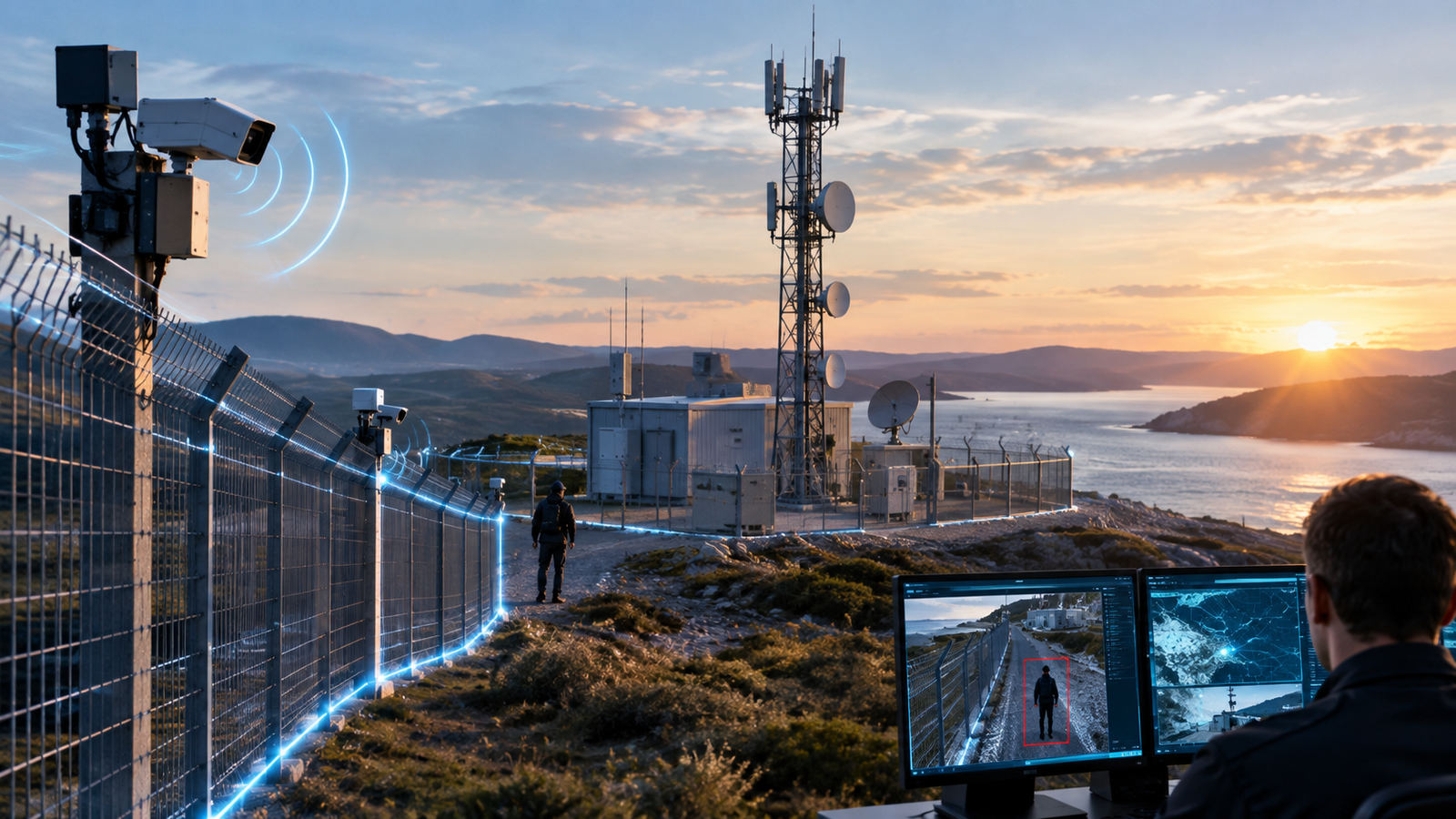
When an alarm is generated, security personnel can be alerted to the relevant area and use other systems, such as CCTV, to investigate.
A typical process might therefore be:
Detect → Locate → Verify → Assess → Respond
This can help security teams understand what is happening before an unauthorised person has progressed further into the site.
The system does not replace human decision-making or an established security response plan. Instead, it provides information that can help personnel make better and faster decisions.
Fence intrusion detection
For many sites, the perimeter fence is the first physical line of defence.
However, fences can be attacked in a number of ways, including climbing, cutting, forcing or tampering.
Fence intrusion detection is designed to identify activity affecting the fence and generate an alarm when activity consistent with an intrusion attempt is detected.
This can be particularly valuable for sites with long or difficult-to-monitor boundaries.
Rather than relying entirely on physical inspections, security teams can receive an alert identifying a particular section of the perimeter that requires investigation.
The ability to identify the approximate location of an event is particularly important on large sites, where sending personnel to investigate an entire perimeter would be inefficient.
Protecting areas beyond the fence
Not every site can be protected using conventional fencing alone.
Large facilities can contain open land, access roads, fields, woodland or other areas where a physical boundary may not provide the complete answer.
This is where different perimeter intrusion detection systems and technologies can be considered.
Depending on the environment and risk assessment, organisations may use a combination of technologies including:
- Fence-based detection
- CCTV
- Thermal cameras
- Radar
- Video analytics
- Ground-based detection
- Access-control systems
The correct approach depends on factors such as terrain, vegetation, weather, wildlife, nearby roads, site activity and the required detection performance.
There is therefore no single “best” perimeter detection technology for every application.
Integrating PIDS with CCTV
A modern perimeter security solution should ideally provide more than an alarm.
Security personnel also need information that allows them to determine whether an event represents a genuine threat.
This is where integrating PIDS with CCTV can be particularly useful.
For example, if a fence intrusion detection system generates an alarm in a particular zone, security personnel can use an associated camera to investigate that location.
They may then be able to establish whether the event appears to involve:
- A person
- A vehicle
- An animal
- Severe weather
- Vegetation
- Maintenance work
- Accidental activity
- A genuine intrusion attempt
This combination of detection and visual verification can improve situational awareness and help security teams prioritise their response.
Managing false alarms
Detection performance is only one consideration when selecting perimeter security systems.
False or nuisance alarms also need to be considered.
A system that produces excessive unwanted alarms can place unnecessary pressure on security personnel and potentially contribute to alarm fatigue.
Environmental factors can influence detection systems, including:
- High winds
- Heavy rain
- Snow and ice
- Vegetation
- Wildlife
- Loose fencing
- Nearby traffic
- Construction
- Maintenance activities
This is why proper site assessment, system design and configuration are so important.
The objective should be to achieve reliable detection while keeping nuisance alarms to a manageable level.
For UK sites in particular, environmental conditions and seasonal changes should form part of the design assessment rather than being treated as an afterthought.
Perimeter protection is part of a wider physical security strategy
PIDS should not be viewed as a replacement for physical security.
A strong security strategy uses multiple layers, each with a specific purpose.
For example:
Fencing creates a physical barrier.
Gates and access control manage authorised entry.
PIDS detects potential perimeter intrusion.
CCTV provides visual assessment.
Security personnel investigate and respond.
Alarm management systems help coordinate events.
This layered approach is why physical security systems need to be considered as part of the wider risk-management strategy.
The most expensive or technologically advanced product is not necessarily the right solution.
The right solution is the one that addresses the site’s actual risks and can operate reliably within its environment.
Who needs perimeter security?
Although perimeter security is particularly important for defence and critical infrastructure, it is relevant to many UK organisations.
Potential applications include:
- Defence and military facilities
- Airports and transport infrastructure
- Data centres
- Energy facilities
- Utilities
- Water infrastructure
- Manufacturing sites
- Warehouses and distribution centres
- Logistics facilities
- Research facilities
- Telecommunications infrastructure
- High-value commercial premises
For these organisations, unauthorised access can result in more than property damage or theft.
Depending on the site, an intrusion could create operational disruption, safety issues, equipment damage, loss of valuable assets or wider business continuity risks.
How to choose the right perimeter security solution
Before selecting perimeter protection products, organisations should assess the site as a whole.
Important considerations include:
What are you protecting?
The value and sensitivity of the assets will influence the level of protection required.
What threats are you trying to detect?
The system should be designed around realistic risks rather than technology for its own sake.
How long is the perimeter?
Large sites may require several complementary detection technologies.
What is the environment like?
Terrain, vegetation, weather and nearby activity can influence system performance.
What security systems are already installed?
PIDS may need to integrate with CCTV, access control and existing alarm systems.
What happens when an alarm is generated?
Detection is only useful if there is a clear and appropriate response process.
Can the system adapt as requirements change?
Future expansion and changes to the site should be considered when designing the system.
A practical perimeter security checklist
UK organisations reviewing their existing security arrangements should consider the following:
- Can every critical section of the perimeter be monitored?
- Would you know if someone attempted to cut or climb the fence?
- Can alarms identify the location of an event?
- Can CCTV verify perimeter alarms?
- Are nuisance alarms affecting security operations?
- Are gates and access points adequately protected?
- What happens if an alarm occurs outside normal working hours?
- Has the site’s threat profile changed?
- Has the perimeter changed since the system was installed?
- Can your current security infrastructure integrate with newer technologies?
These questions can help identify gaps that may otherwise remain unnoticed.
Frequently Asked Questions
What is a perimeter intrusion detection system?
A perimeter intrusion detection system, commonly known as PIDS, is designed to detect activity that may indicate an attempt to enter or compromise a protected site’s perimeter.
What is the difference between PIDS and perimeter protection?
PIDS is one element of perimeter protection. Perimeter protection is the wider strategy covering physical barriers, detection systems, CCTV, access control, security personnel and other measures used to protect a site.
Does PIDS replace security fencing?
No. PIDS and fencing perform different functions. Fencing provides a physical barrier and deterrent, while PIDS provides an electronic detection layer. Combining the two can create a stronger perimeter security strategy.
What is fence intrusion detection?
Fence intrusion detection is technology designed to identify activity such as climbing, cutting or tampering with a security fence and generate an alarm for investigation.
Can PIDS integrate with CCTV?
Yes. PIDS can be integrated with CCTV and other security systems so that an alarm can be investigated visually. The exact capabilities depend on the technologies and integration architecture used.
Are perimeter detection systems suitable for large sites?
Yes. Different perimeter detection systems can be designed for extensive and complex sites. However, system selection needs to take into account the perimeter length, terrain, environmental conditions, threats and existing infrastructure.
How can false alarms be reduced?
Appropriate technology selection, site assessment, installation and configuration can help reduce nuisance alarms. Environmental conditions, vegetation, wildlife, weather and legitimate site activity should all be considered during system design.
Do commercial businesses need PIDS?
PIDS can be appropriate for commercial and industrial businesses where there is a significant risk of unauthorised access, theft, vandalism or disruption, particularly where sites have large perimeters or valuable assets.
What are perimeter protection products?
Perimeter protection products include technologies and equipment used to protect a site’s boundary. Depending on the application, these may include security fencing, gates, barriers, CCTV, PIDS, fence intrusion detection and access-control systems.
Why should perimeter security be professionally designed?
Every site has different physical and environmental characteristics. Professional design ensures that perimeter security systems are selected according to the site’s risks, layout, operational requirements and existing security infrastructure.
Strengthening Perimeter Security
The recent RAF incident is a reminder that perimeter security remains a critical consideration for organisations responsible for sensitive, high-value or strategically important sites.
A fence can establish a boundary, but effective perimeter protection requires organisations to consider what happens when someone attempts to cross or compromise that boundary.
Modern PIDS security, fence intrusion detection, CCTV, access control and other physical security systems can work together to provide earlier awareness, better situational awareness and a more structured response.
The most important question for any organisation is simple:
If someone attempted to breach your perimeter tonight, how quickly would you know?
If the answer is unclear, it may be time to review your existing Perimeter Security Solution.
Sysco Tech can help organisations assess their perimeter security requirements and identify appropriate technologies for their environment, from perimeter intrusion detection systems and fence intrusion detection through to wider integrated physical security solutions.