Quick answer: Distribution centres sit at the busiest, most exposed point of the UK retail supply chain – long unmonitored fence lines, constant vehicle movement, and high-value stock make them a prime target for organised theft. A perimeter intrusion detection system (PIDS) detects an intrusion attempt at the boundary in real time, alerting security teams before stock, trailers, or vehicles are at risk – rather than after a breach has already happened.
Why Distribution Centres Are a Growing Target
UK retail supply chains have consolidated around fewer, larger distribution centres over the past decade, and organised crime has followed the money. A single regional distribution hub can hold stock worth tens of millions of pounds at any given time – electronics, clothing, pharmaceuticals, and fast-moving consumer goods that are quick to move on and hard to trace once they’re off-site.
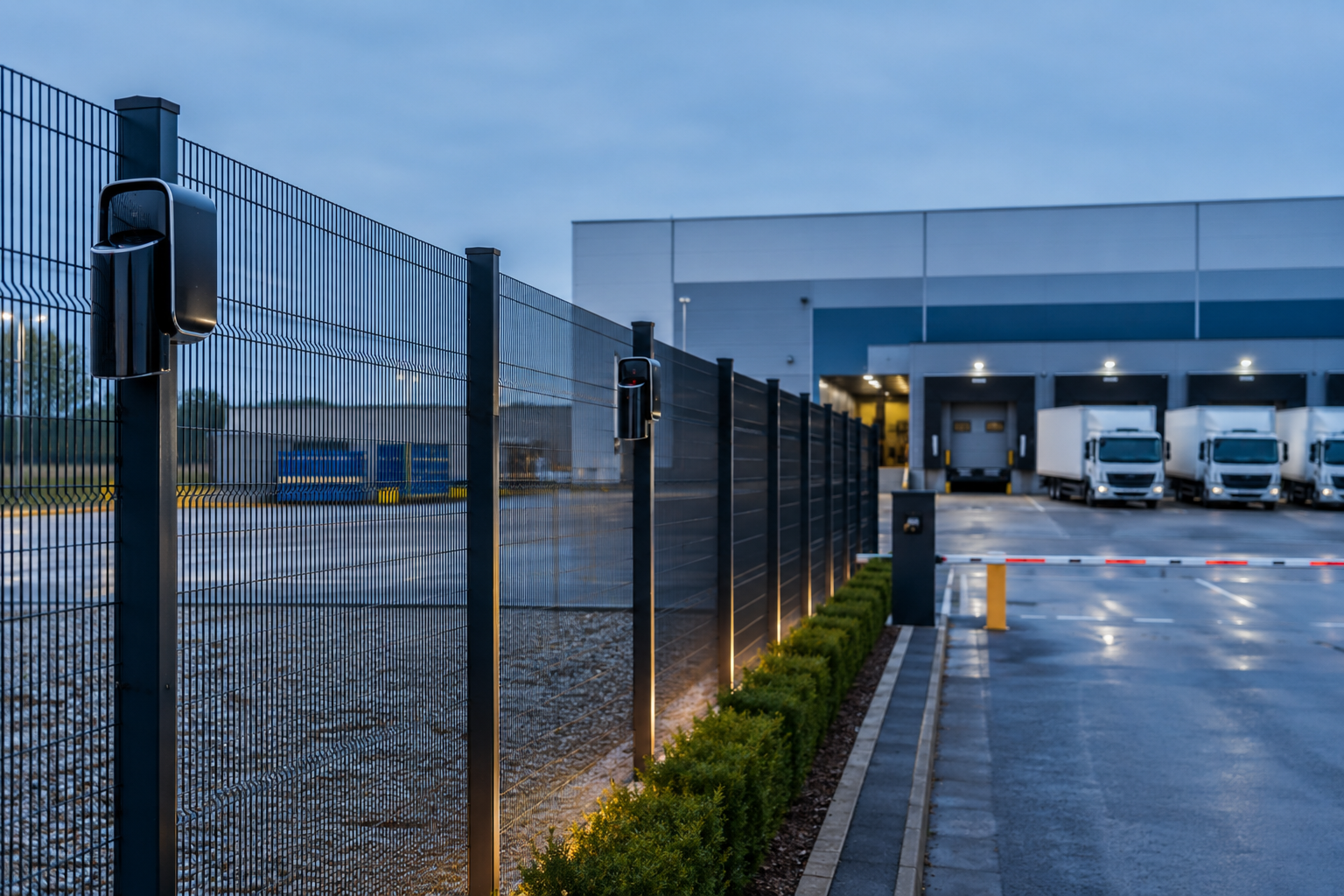
Unlike a retail store, a distribution centre isn’t designed to be secure by default. These sites are built for throughput: wide vehicle access, multiple loading bays, long perimeter fences to accommodate HGV turning circles, and shift patterns that mean the yard is rarely fully staffed around the clock. That combination of scale and operational openness is exactly what makes perimeter intrusion detection systems so valuable here – the fence line, not the building, is usually the weakest point.
Common Security Risks at Distribution & Fulfilment Sites
Organised theft of high-value goods. Supply chain theft is rarely opportunistic. Groups target specific sites after establishing shift patterns, blind spots, and gaps in coverage – often striking overnight or over weekends.
Trailer and load theft. Loaded trailers left in yards awaiting collection or cross-docking are a common target. A single breach can result in an entire trailer disappearing before anyone notices.
Fuel and diesel theft. Sites running large HGV fleets are frequent targets for fuel siphoning, particularly where there’s no dedicated compound protection.
Unauthorised access via vehicle gates. Large sites often have multiple vehicle and pedestrian access points, some less tightly controlled than the main gate – a common route in for intruders.
Perimeter fencing that hasn’t kept pace with site growth. Many distribution centres have expanded in phases, leaving inconsistent detection coverage and weak points that were never part of the original security design.
How Perimeter Intrusion Detection Protects Distribution Centres
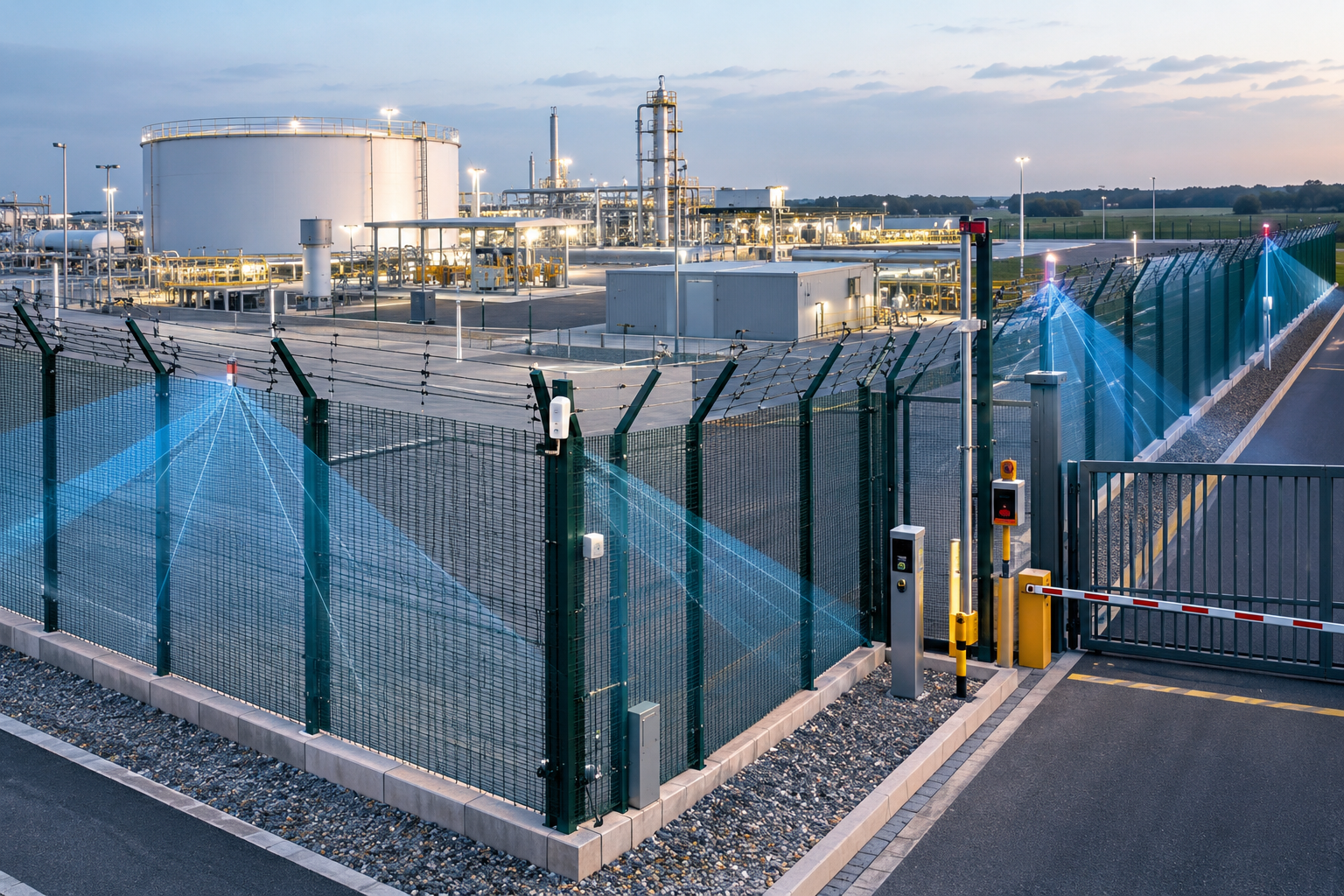
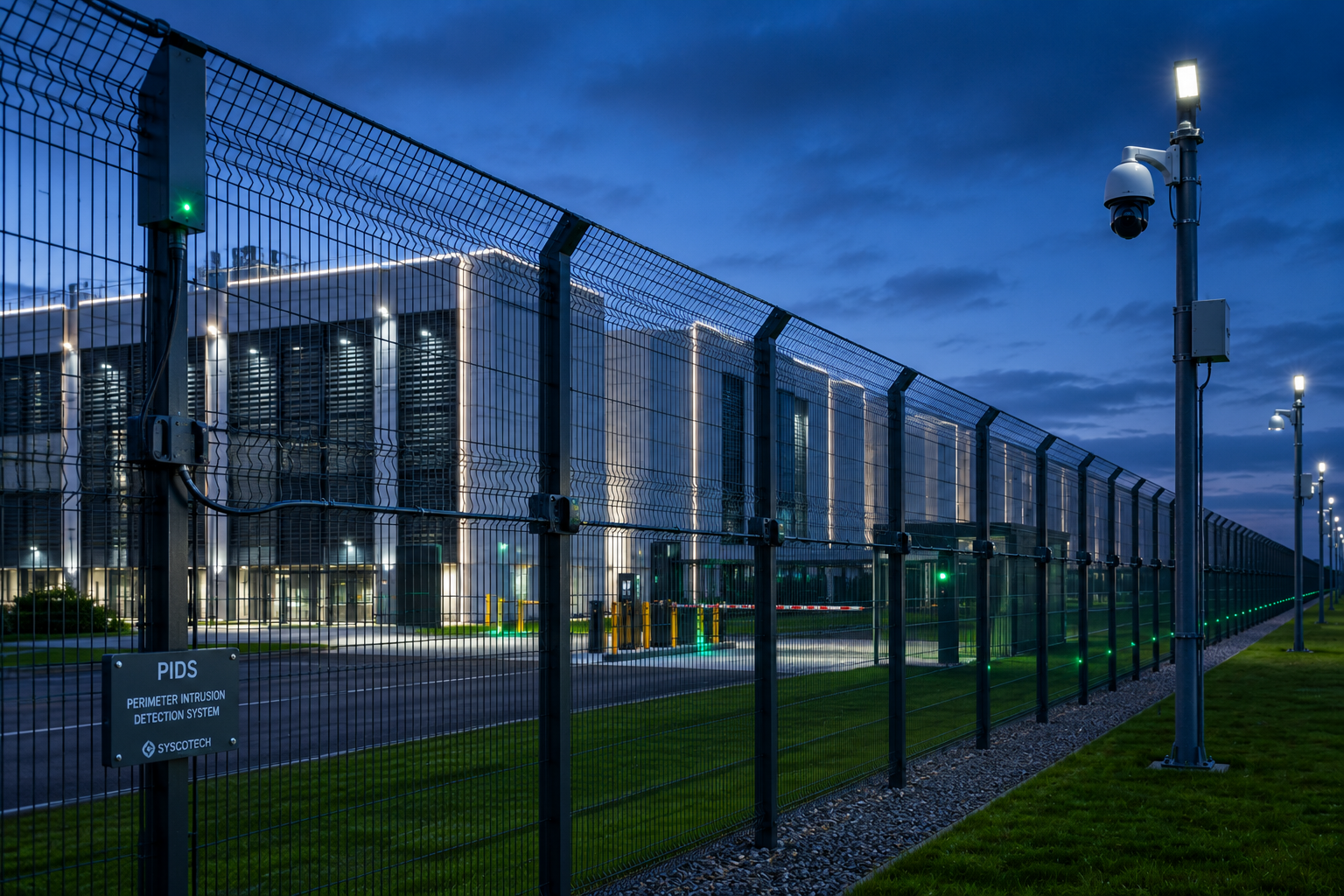
A perimeter intrusion detection system gives distribution centre operators real-time awareness of activity at the boundary, before stock, trailers, or vehicles are at risk. Rather than relying on CCTV review after an incident, it flags an intrusion attempt as it happens – while the threat is still outside the fence line. For long, uniform fence runs typical of logistics parks, this usually means:
- Fence-mounted vibration or fibre optic sensors that detect climbing, cutting, or lifting attempts along the boundary – suited to the extended perimeters common on distribution sites.
- Zoned detection, giving security teams a precise alert location rather than a vague “somewhere on site” notification, critical when a perimeter can run to several hundred metres.
- Integration with CCTV and access control, so an alert automatically triggers camera verification and, where needed, an audio warning to deter the intruder before they reach the yard.
- Remote monitoring, allowing one security operations centre to oversee multiple distribution sites without guards stationed at every fence line.
Sysco Tech’s EcoLine and FlexLine perimeter protection products are both well suited to distribution centre environments – EcoLine for cost-effective boundary protection across large sites, FlexLine where false alarms aren’t tolerable given the value of stock on site. Read more about how perimeter intrusion detection systems work across different site types.
Why the Perimeter Matters More Than the Building
It’s tempting to focus security budget on the warehouse itself – access control on doors, CCTV inside the racking, alarms on internal doors. But by the time an intruder is inside the building, the incident is already underway. The perimeter is the first and best opportunity to detect and deter a threat, and for a distribution centre that means the fence line surrounding the yard, trailer park, and loading areas – not just the building envelope.
This matters most for 24/7 operations, where the site never has a fully quiet period to rely on. A perimeter detection system works continuously regardless of shift patterns, weather, or visibility – something CCTV alone can’t guarantee across large, poorly lit yards. For sites with similar round-the-clock exposure, see how we approach fence intrusion detection for transport and haulage depots.
What to Look for in a Perimeter Detection System for Logistics Sites
- Scalability – can the system extend as the site grows, without needing replacement?
- Low false alarm rate – high-traffic sites with wildlife, wind-blown debris, and constant vehicle movement need a system tuned to avoid nuisance alerts.
- NPSA/CPNI-approved components, where the site’s risk profile or client contracts require it.
- Integration capability, so the perimeter system works alongside existing CCTV, access control, and any third-party monitoring already in place.
- 24/7 support, given most distribution centres operate outside standard business hours.
For a broader look at what to check before signing with a supplier, see our guide on 10 questions to ask a perimeter security installer.
Frequently Asked Questions
Do distribution centres need perimeter intrusion detection, or is CCTV enough?
CCTV alone is a review tool – it helps confirm what happened after an incident but doesn’t stop it. A perimeter intrusion detection system detects an intruder at the boundary in real time, giving security teams the chance to respond before a breach occurs. Most distribution centres use PIDS and CCTV together, with the perimeter system triggering camera verification automatically.
What type of perimeter intrusion detection system is best for a distribution centre?
It depends on the size and layout of the site, but fence-mounted vibration sensors or fibre optic detection are common choices for the long, straight fence runs typical of distribution and logistics parks. Sites with very high false-alarm sensitivity – due to high-value stock or contractual security requirements – often opt for hybrid systems combining multiple sensor types.
How much does a perimeter intrusion detection system cost for a distribution centre?
Costs vary significantly based on perimeter length, sensor type, terrain, and whether remote monitoring is included. A site survey is the only reliable way to get an accurate figure, as pricing is driven almost entirely by site-specific factors rather than a flat rate.
Can perimeter security systems integrate with our existing CCTV and access control?
Yes. Modern perimeter intrusion detection systems are designed to integrate with existing CCTV, access control, and third-party monitoring platforms, giving a single unified view of the site rather than separate, disconnected systems.
How quickly can a perimeter intrusion detection system be installed at an operational distribution centre?
Installation timelines depend on perimeter length and site complexity, but systems are typically designed and installed in phases to avoid disrupting live logistics operations. A site survey will confirm an accurate timeline for your specific site.
Is perimeter security worth it for smaller fulfilment centres, not just large distribution hubs?
Yes. Smaller fulfilment sites often have the same overnight and weekend vulnerability as larger hubs, but with less on-site security presence – which can actually make them a more attractive target, not less.
Protecting the First Line of Your Supply Chain
A breach at a distribution centre doesn’t just mean stock loss – it disrupts the retail supply chain behind it, delays deliveries, and can affect contractual SLAs with retail clients. Investing in perimeter intrusion detection isn’t just a security decision; it’s an operational one.
Sysco Technical Solutions designs, installs, and supports perimeter intrusion detection systems for logistics and distribution sites across the UK, from initial site survey through to 24/7 ongoing monitoring support. If you manage a distribution centre or fulfilment hub and want to understand where your perimeter is exposed, book a free site survey with our team.