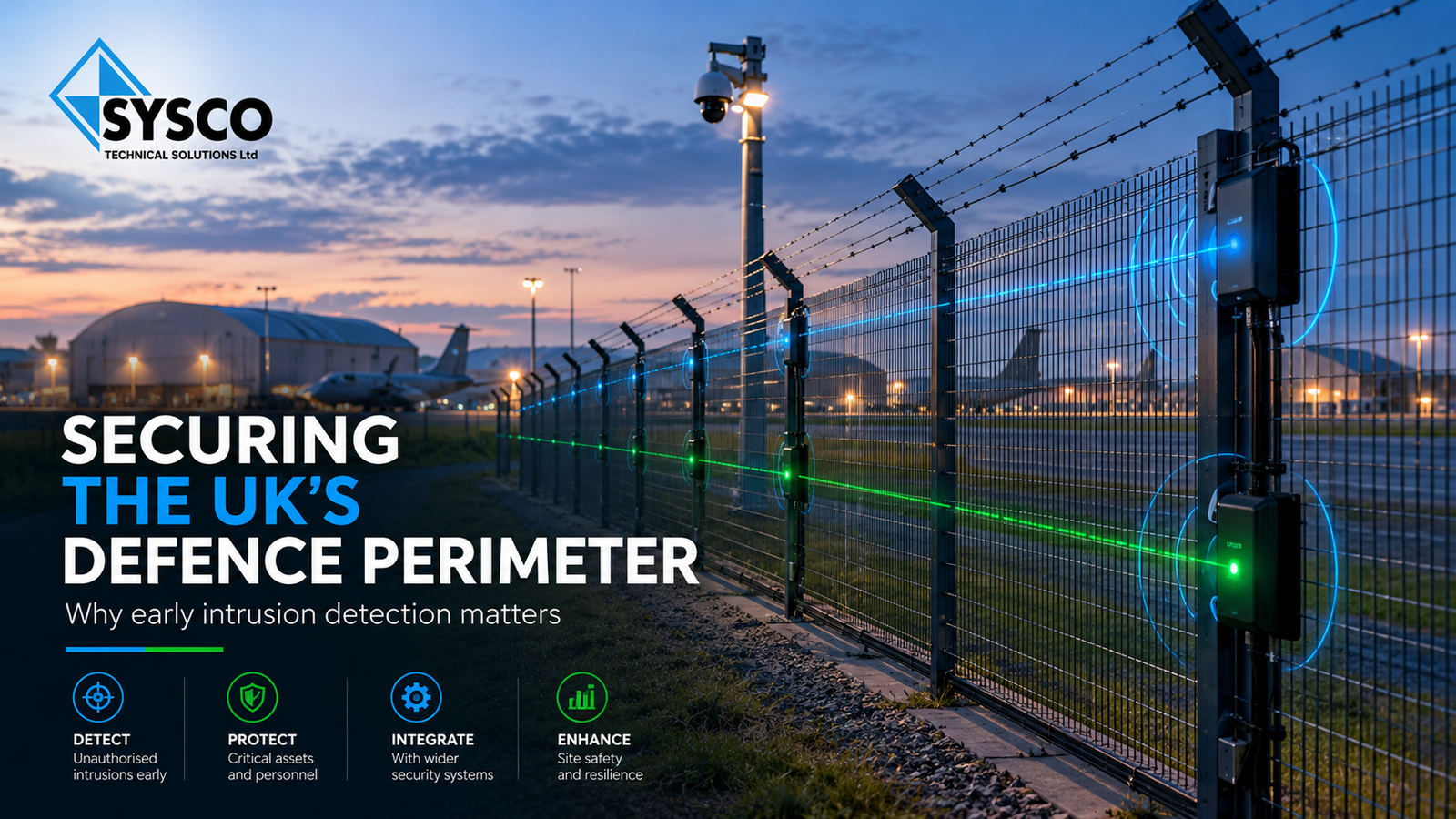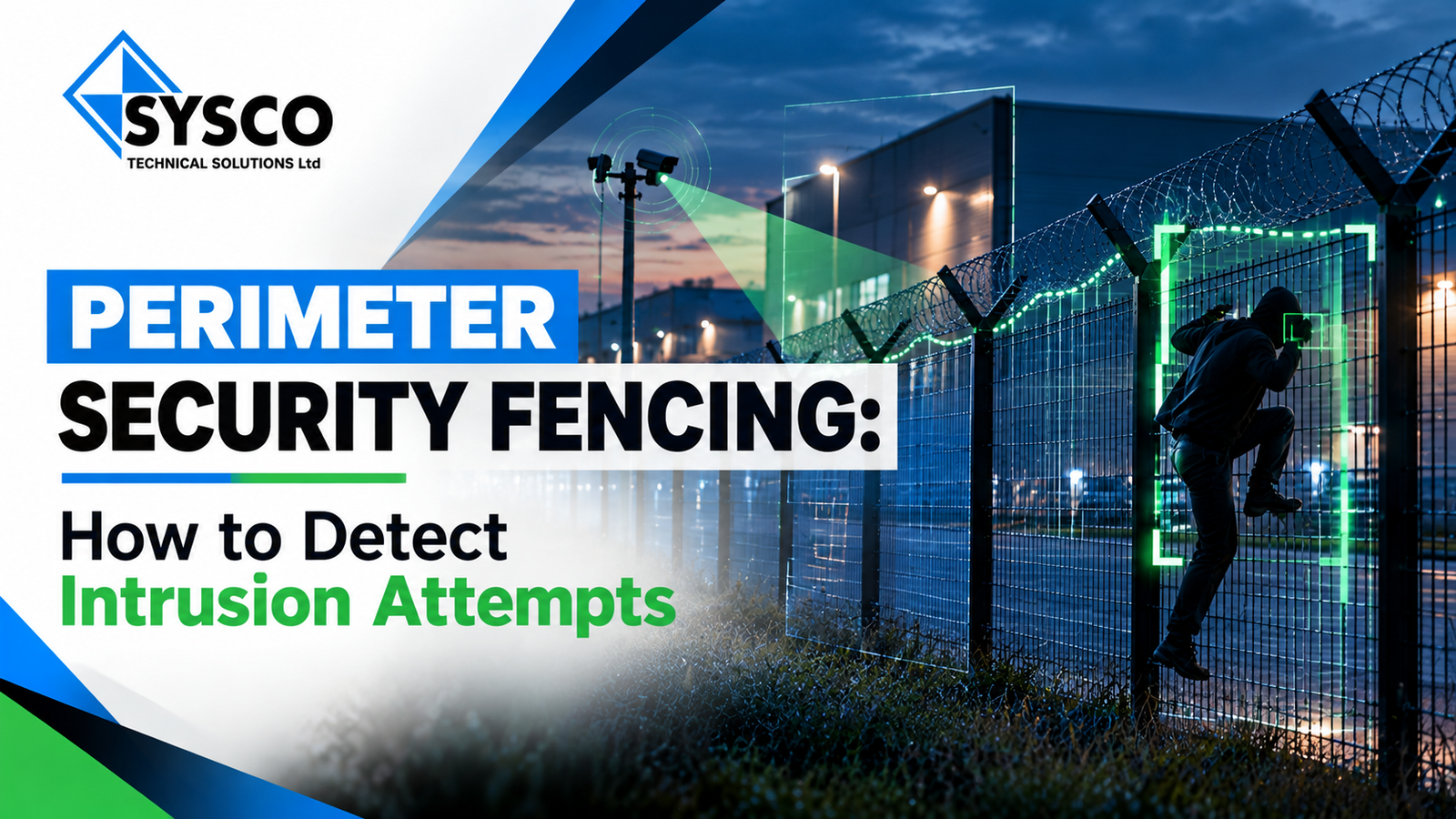

Quick answer: Battery Energy Storage System (BESS) sites are typically unmanned, remote, and house high-value equipment worth millions of pounds – making them attractive targets for theft, vandalism, and sabotage. A Perimeter Intrusion Detection System (PIDS) gives operators real-time alerts the moment someone approaches or breaches the boundary, rather than relying on fencing alone or discovering a breach after the fact on CCTV. As the UK’s BESS capacity expands rapidly toward its 2030 targets, PIDS is becoming a standard requirement – not an optional extra – for site operators, insurers, and grid connection agreements.
Why BESS Security Is Suddenly a Priority
The UK’s battery storage sector is growing at a pace few other infrastructure categories can match. Grid-scale battery capacity has grown roughly fivefold since 2020, and the government’s ambitions push this further still, with capacity targeted to keep climbing toward 2030 as the UK works to balance an increasingly renewable-heavy grid. Individual projects are getting larger too – sites exceeding 1GWh are now common, and developments like Thorpe Marsh in Doncaster are set to become some of the largest battery installations in Europe.
That growth creates a security problem that hasn’t caught up with the pace of deployment. Most BESS sites share the same risk profile:
- Unmanned or minimally staffed. Many sites have no permanent on-site personnel, so a breach can go unnoticed for hours.
- Remote locations. Sites are often sited on former industrial land, brownfield sites, or rural grid connection points – far from a rapid emergency response.
- High-value, high-density equipment. Copper cabling, inverters, switchgear, and transformers represent a substantial resale value to organised metal theft gangs.
- Critical to grid stability. As BESS increasingly displaces gas as a balancing resource, downtime from a security incident has knock-on consequences well beyond the site fence line.
There’s also a growing safety dimension. While UK BESS fires remain rare, the National Fire Chiefs Council significantly expanded its BESS fire safety guidance in the last year, and unauthorised access to a site is itself a safety risk – someone entering a compound without knowing where high-voltage equipment or battery containers are located is a hazard to themselves as well as the site. Controlling who gets near the equipment isn’t just about theft prevention anymore; it’s part of the wider safety case for these sites.
Why Fencing Alone Isn’t Enough
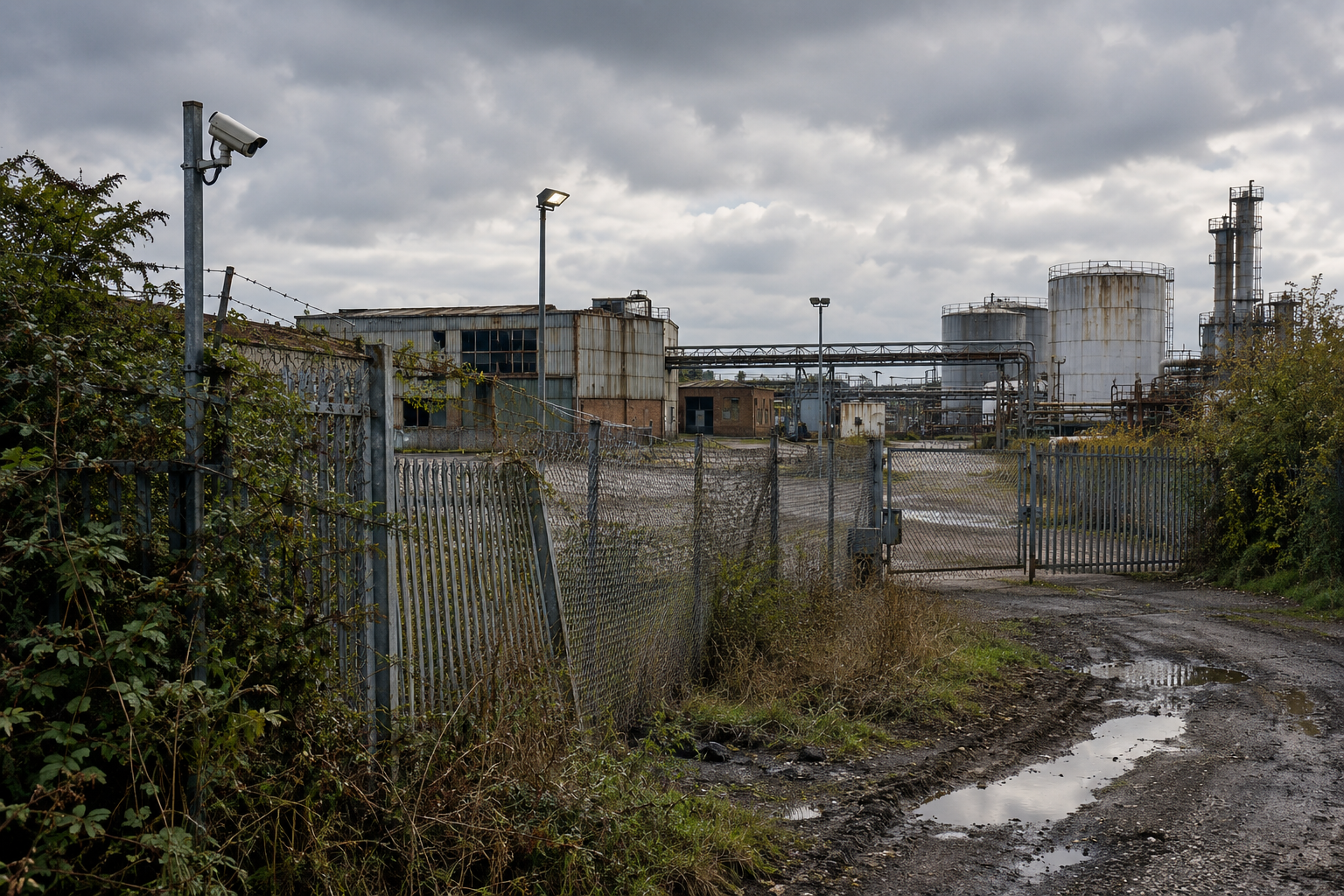
Fencing is the right starting point for any BESS security strategy, and a well-specified perimeter fence does genuine work: it signals a professionally managed site, it delays a determined intruder, and it gives you a physical structure to mount other technology on. But fencing alone is a passive measure. It doesn’t tell you when someone is attempting to breach it – only that they eventually did, if and when it’s discovered.
For a site with no permanent staff, that gap matters. A fence tells you a breach happened. A Perimeter Intrusion Detection System (PIDS) tells you it’s happening, in real time, while there’s still time to respond.
How PIDS Fits a BESS Site Specifically
Not every detection technology suits every site, and BESS locations have some particular characteristics worth factoring into the choice of system:
Long, often irregular boundary lines. BESS compounds can cover large areas with fence runs that don’t follow a simple rectangle. Detection systems need to be zoned accurately so that an alert tells the response team roughly where on a long perimeter the activity is occurring – not just that “something” happened somewhere on site.
Exposure to weather and vibration noise. Rural and coastal BESS sites are exposed to wind, rain, and in some cases nearby traffic or machinery – all of which can trigger false alarms on poorly specified systems. A system with a high detection probability and a low nuisance alarm rate is essential, or the alerts will eventually be ignored.
Minimal or no mains-independent power at the perimeter. Because these sites are remote and unmanned, detection and communications equipment often needs to run reliably on backup or renewable power, maintaining protection even during a grid outage – which is somewhat ironic for a site whose entire purpose is grid support, but underlines why resilient, low-power detection technology matters.
Layered protection around specific assets. As well as the outer perimeter, many BESS sites benefit from secondary detection around transformers, substations, or particularly high-value equipment clusters – creating additional warning time even if the outer boundary is breached.
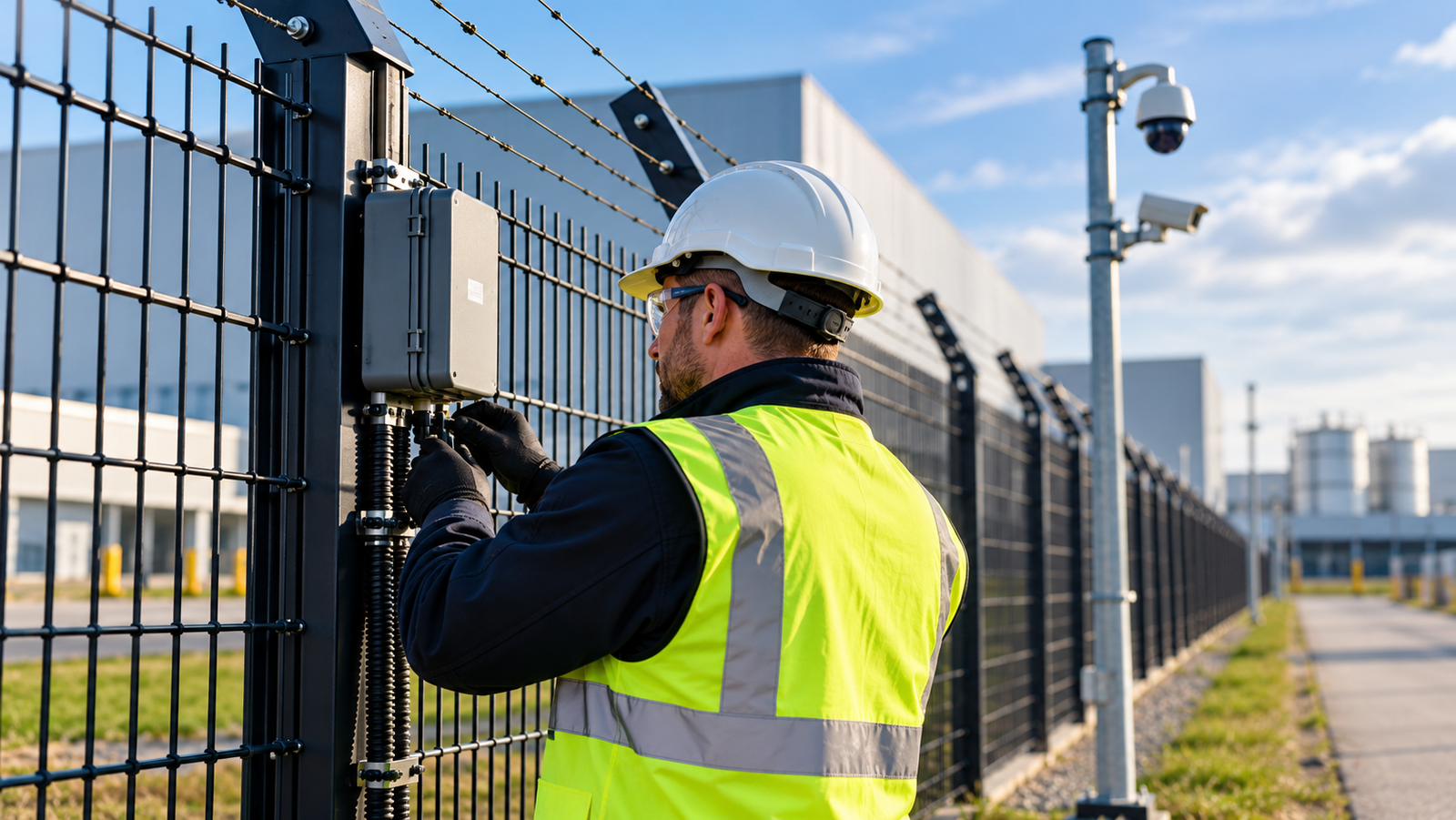
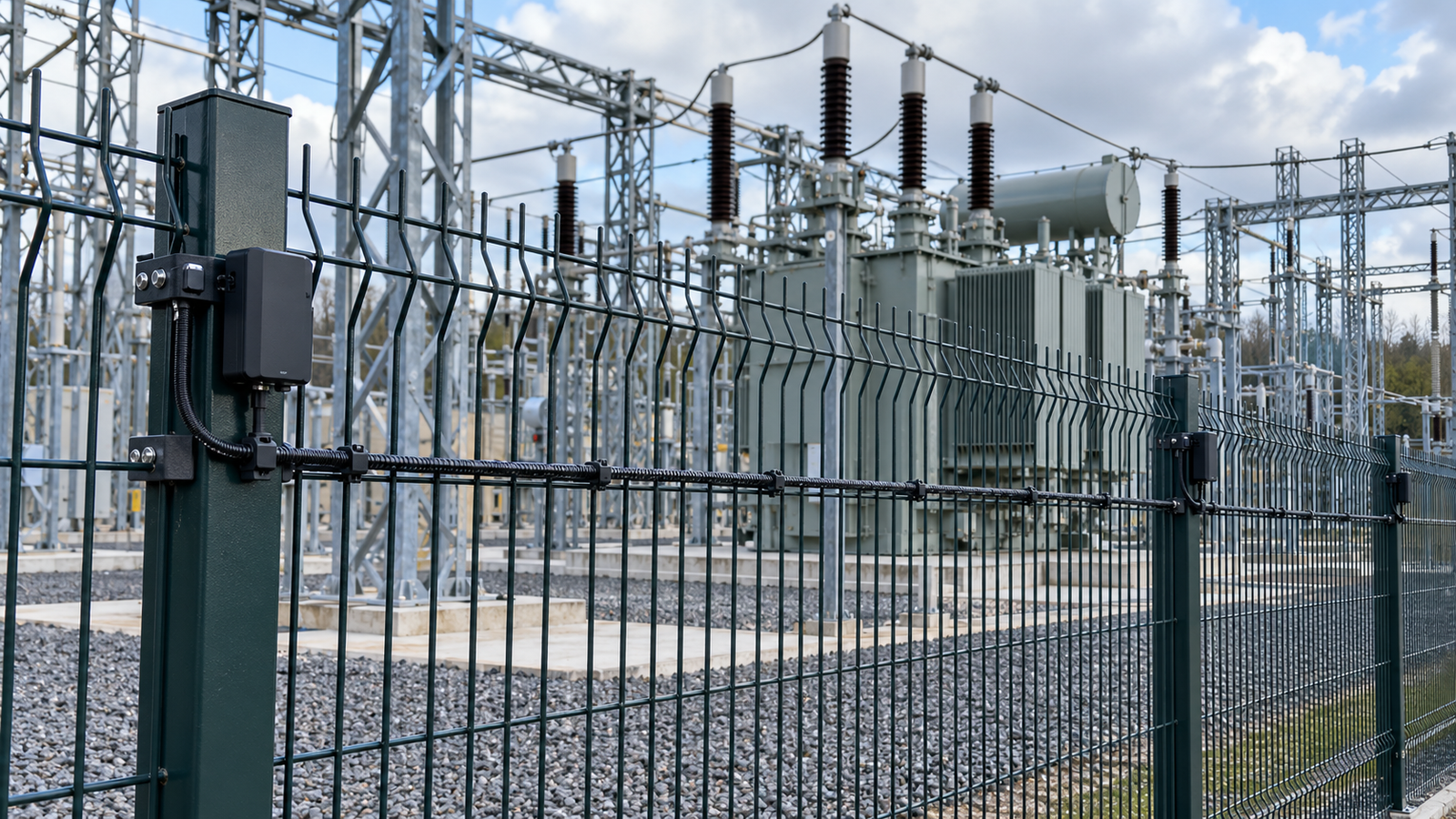
Different sensor technologies suit different combinations of these factors. Vibration-based sensors mounted directly to fencing can detect climbing or cutting attempts along long boundary runs. Dual-sensor systems combining two detection technologies help reduce false alarms triggered by weather alone. Concealed, discreet sensor options are useful where visible detection equipment isn’t desirable. The right choice depends on the site’s layout, risk profile, and existing fencing – which is why a proper site survey, rather than a generic off-the-shelf specification, matters more for BESS sites than almost any other asset class.
What Good BESS Perimeter Security Looks Like
A well-designed approach typically combines:
- A security-rated perimeter fence appropriate to the site’s risk level
- PIDS technology matched to the site’s terrain, boundary shape, and environmental conditions
- Remote monitoring and alarm verification, so alerts are assessed quickly rather than triggering an automatic, resource-heavy response every time
- Resilient power and communications, ensuring detection remains live during outages
- Clear zones and maintained sightlines, so vegetation or debris don’t create blind spots or false triggers
- Reinforced access points, since gates are typically the weakest part of any perimeter
This layered approach doesn’t just deter opportunists – it gives site operators the early warning needed to involve police, security response teams, or on-call staff before equipment is reached, rather than after.
The Bottom Line
BESS is one of the fastest-growing categories of UK energy infrastructure, and security specification hasn’t always kept pace with deployment speed. Sites that were considered low-risk two or three years ago are now attractive, high-value, largely unmanned targets – and insurers, funders, and grid operators are increasingly expecting perimeter intrusion detection as standard, not as an afterthought bolted on after an incident.
If you’re specifying security for a BESS site – whether at planning stage or retrofitting an operational one – a site-specific survey is the right starting point. Generic solutions rarely account for the boundary shape, power constraints, and false-alarm risks unique to battery storage compounds.
FAQs: Perimeter Intrusion Detection for BESS Sites
What is a PIDS, and how does it apply to battery storage sites?
A Perimeter Intrusion Detection System (PIDS) is a technology layer – sensors, alarms, and monitoring software – that detects and alerts security teams to unauthorised attempts to breach a site boundary. On BESS sites, PIDS is typically fitted to or alongside the perimeter fence to give early warning before an intruder reaches battery containers, inverters, or transformers.
Why are BESS sites considered high-risk for security incidents?
BESS sites combine three risk factors: they’re often unmanned or lightly staffed, they’re frequently in remote locations far from rapid response, and they contain high-value equipment – including copper cabling and inverters – that’s attractive to organised theft. This combination makes them a higher priority for proactive detection than many other commercial sites.
Is fencing not enough to secure a battery storage site?
Fencing is an essential first layer, but it’s passive – it delays entry but doesn’t alert anyone when a breach attempt occurs. For unmanned sites in particular, pairing fencing with active detection technology closes that gap and allows a response before equipment is reached, rather than after a loss is discovered.
What type of PIDS technology is best for a BESS site?
It depends on the site’s boundary length, terrain, and environmental exposure. Vibration-based sensors suit long fence runs; dual-sensor systems help minimise false alarms in exposed, weather-affected locations; and concealed sensors suit sites where visible equipment isn’t desirable. A site survey is the only reliable way to determine the right fit.
Do BESS sites need NPSA-approved security systems?
Not every BESS site falls under critical national infrastructure classification, but as sites grow larger and more integrated with the grid, working with NPSA (formerly CPNI) approved systems and installers is increasingly seen as best practice, particularly for sites backed by institutional investors or connected at higher grid capacities.
How does perimeter security help with BESS fire safety, not just theft?
Restricting unauthorised access reduces the risk of untrained individuals coming into contact with high-voltage equipment or battery containers, which is a safety issue as well as a security one. Controlled access also supports the wider emergency response plans that sites are increasingly expected to have in place.
Can PIDS operate reliably at remote, off-grid battery storage sites?
Yes, provided the system is specified correctly. Detection and communications equipment can be run on backup power or renewable supplies to maintain protection during grid outages – an important consideration given how remote many BESS sites are.
Sysco Technical Solutions designs, installs, and maintains custom-engineered perimeter intrusion detection systems for critical infrastructure sites across the UK, including battery energy storage facilities. Book a free site survey to discuss the right approach for your site.