In today’s world, where security threats are becoming more advanced and persistent, organisations can’t rely on traditional surveillance methods. We’re witnessing a significant shift towards smart, sensor-driven technologies that offer real-time awareness and proactive defence.
Among these innovations, fibre optics has become a key player in modern perimeter intrusion detection systems, providing unmatched accuracy, reliability, and scalability. By incorporating Fiber-optic sensing into security frameworks, we can detect, classify, and respond to threats with a level of precision once hard to imagine.
This article delves into how fibre optics is revolutionising perimeter intrusion detection, why they surpass older solutions, and how organisations can use it to safeguard critical assets, infrastructure, and people.
The Evolution of Perimeter Intrusion Detection
Perimeter security has come a long way in the last few decades. In the past, systems mainly depended on physical barriers, basic motion sensors, or straightforward CCTV monitoring. While these methods offered a visible deterrent, they often fell short in providing useful intelligence. Issues like false alarms, blind spots, and slow responses were all too common.
Nowadays, modern perimeter intrusion detection systems emphasise continuous monitoring and smart analysis. Rather than just reacting after a breach happens, they help us spot suspicious activity as early as possible. Fibre optic technology is key to this advancement, transforming the perimeter into a highly sensitive detection medium.
Why Fibre Optics Are Ideal for Intrusion Detection
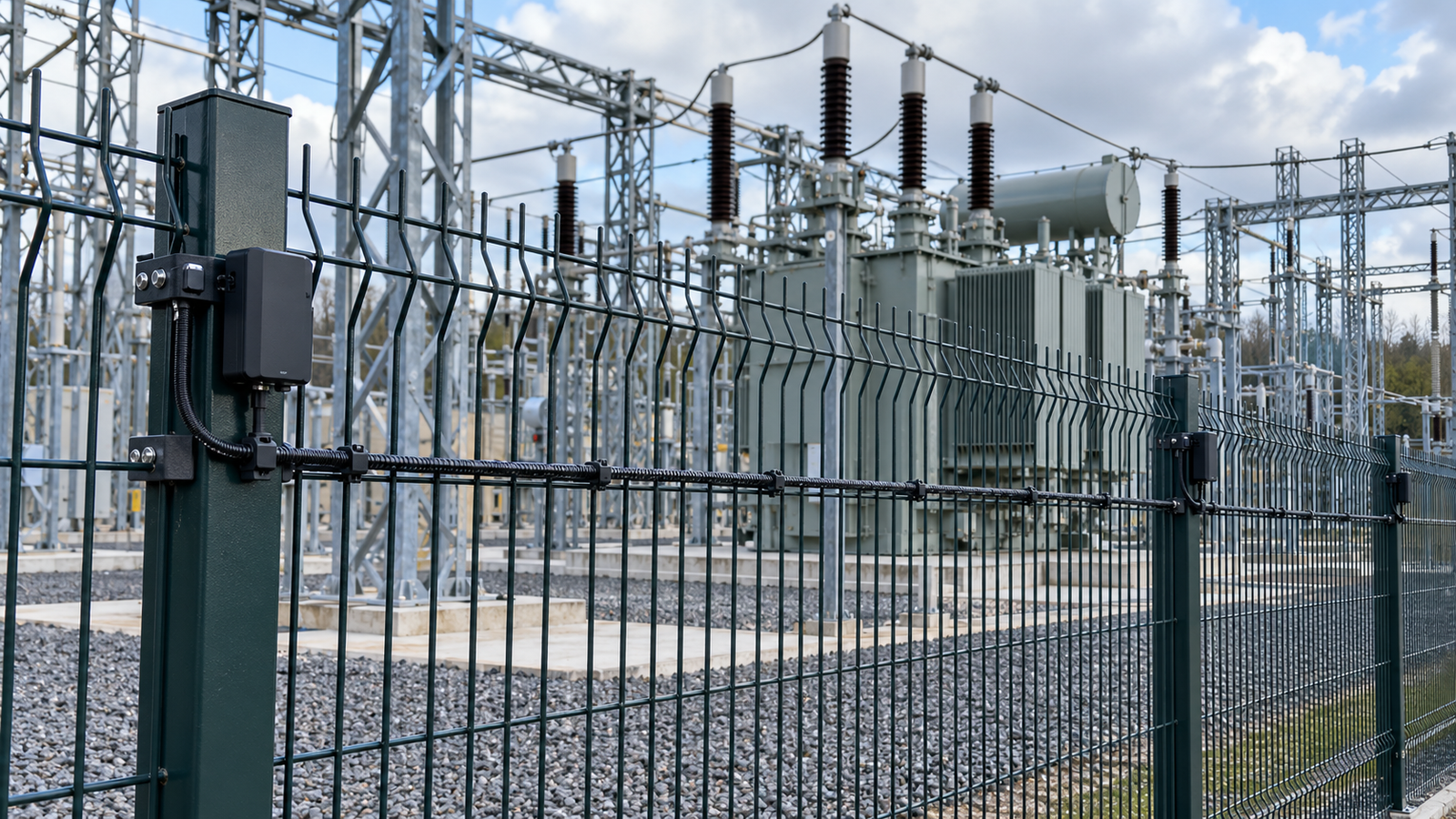
Fibre optic cables are often thought of as the backbone of high-speed data transmission, but they have another impressive role to play as sensors. When installed along fences, buried underground, or attached to walls and pipelines, these cables can pick up even the tiniest vibrations and disturbances.
Here are some key benefits:
- Highly sensitive to vibrations, pressure, and movement.
- They’re immune to electromagnetic interference, which means they deliver stable performance.
- They can cover long distances without any signal loss.
- Operate passively, so there’s no need for electrical power in the field.
These features make fiber optics an excellent choice for perimeter intrusion detection systems, especially in tough or high-risk environments.
How Fibre Optic Intrusion Detection Works
At the heart of fibre-based perimeter intrusion detection lies distributed acoustic sensing (DAS). This innovative technology sends light pulses through a fibre optic cable and analyses the signals that bounce back. Whenever there’s a disturbance along the cable, like someone climbing, cutting, digging, or even just walking nearby, it creates a distinct vibration pattern.
With this system, we can pinpoint:
- The precise location of the intrusion
- The nature of the activity occurring
- The strength and duration of the disturbance
Thanks to advanced algorithms, we can filter out environmental noise such as wind, rain, or wildlife, which significantly cuts down on false alarms. The result is a highly dependable detection system that offers real-time situational awareness.
Applications Across Critical Infrastructure
Fibre optic perimeter intrusion detection systems are essential in various sectors where security is a top priority.
Critical National Infrastructure
Facilities like power stations, water treatment plants, and telecommunications hubs need constant protection. Fibre optic systems are great for monitoring long perimeters with minimal upkeep, ensuring that security remains uninterrupted.
Airports and Transportation Hubs
Airports require accurate, zone-specific detection to safeguard runways, fences, and restricted areas. Fibre optics delivers the precision and scalability necessary to handle these intricate environments.
Military and Defence Facilities
Defence locations gain from covert detection features that work silently without sending out signals. Fibre optics enables discreet monitoring over extensive and remote perimeters.
Commercial and Industrial Sites
Warehouses, logistics centres, and manufacturing facilities rely on perimeter intrusion detection to thwart theft, sabotage, and unauthorised access.
Reducing False Alarms with Intelligent Analysis
One of the major hurdles with traditional security systems is dealing with false alarms. When alerts come in too frequently, it can lead to alarm fatigue, squander resources, and a dip in trust in the system. On the other hand, fibre optic perimeter intrusion detection systems leverage pattern recognition and machine learning to accurately classify events. We can differentiate between:
- Human intrusion attempts
- Vehicle movement
- Environmental factors
- Harmless background activity
This smart analysis means that security teams can focus their responses on real threats, boosting both operational efficiency and response times.
Seamless Integration with Modern Security Platforms
In today’s world, security systems need to work together like a well-oiled machine. That’s where fiber optic perimeter intrusion detection systems come into play. They’re built to integrate smoothly with:
- Video management systems (VMS)
- Access control platforms
- Alarm monitoring software
- Centralised security information systems
When the system detects an intrusion, it can automatically activate cameras, send out alerts, and pinpoint the exact location of the breach. This cohesive strategy boosts situational awareness and allows for coordinated responses across various security layers.
Scalability and Future-Proof Design
As organisations expand, their security systems need to evolve too. Fiber optic solutions provide remarkable scalability. Just one fiber can keep an eye on tens of kilometres, and you can easily add more zones without needing to overhaul the entire infrastructure.
Plus, fiber optic cables boast a long operational lifespan, making them a smart, future-proof investment. With software updates and improvements in analytics, you can boost performance over time without having to swap out any physical components. This makes fiber optics not only a cost-effective option but also a sustainable choice for long-term perimeter intrusion detection strategies.
Operational Efficiency and Cost Benefits
While it might seem like the initial setup costs for fiber optic systems are steeper compared to traditional options, the long-term savings are pretty impressive. You’ll see fewer false alarms, less maintenance, and lower power needs, all of which add up to real savings over time. Plus, we enjoy quicker responses to incidents, less downtime, and better compliance with security regulations. In the grand scheme of things, these benefits far surpass the initial investment, especially for larger or more complex sites.
Why Organisations Choose Fibre-Based Perimeter Security
If you’re part of an organisation looking to boost security, you might want to consider fibre optic perimeter intrusion detection systems. They offer some impressive benefits, including:
- High detection accuracy
- Real-time threat identification
- Strong performance even in tough environments
- Easy integration with your current security setup
By teaming up with seasoned providers like Syscotech, organisations can create and implement customised solutions that align with their unique operational and regulatory needs.
The Future of Perimeter Intrusion Detection
The future of security is all about smart, data-driven systems. Fibre optics will remain crucial as analytics evolve and merge with artificial intelligence. With advancements in predictive threat detection, behavioural analysis, and automated responses, the effectiveness of perimeter intrusion detection will only get better. As threats change, fibre optic technology will help ensure that our security systems stay strong, flexible, and ready to tackle new challenges.
Conclusion
Fibre optics has truly changed the game for modern perimeter intrusion detection systems. By turning physical boundaries into smart sensing networks, they offer unparalleled visibility, accuracy, and reliability. For organisations dedicated to safeguarding critical assets and ensuring smooth operations, investing in fibre optic perimeter security is not just a choice; it’s a necessity.