Communication facilities – data centres, telecom exchanges, broadcast towers, and network hub sites – sit at the core of modern infrastructure. A breach at one of these sites doesn’t just risk theft or vandalism; it can knock out connectivity for entire regions, disrupt emergency services, and cause cascading failures across dependent networks. That’s why perimeter security for these facilities has to be treated differently from a standard commercial site.
Why Communication Facilities Need a Different Approach
Most communication sites share a few traits that make them attractive targets and difficult to protect:
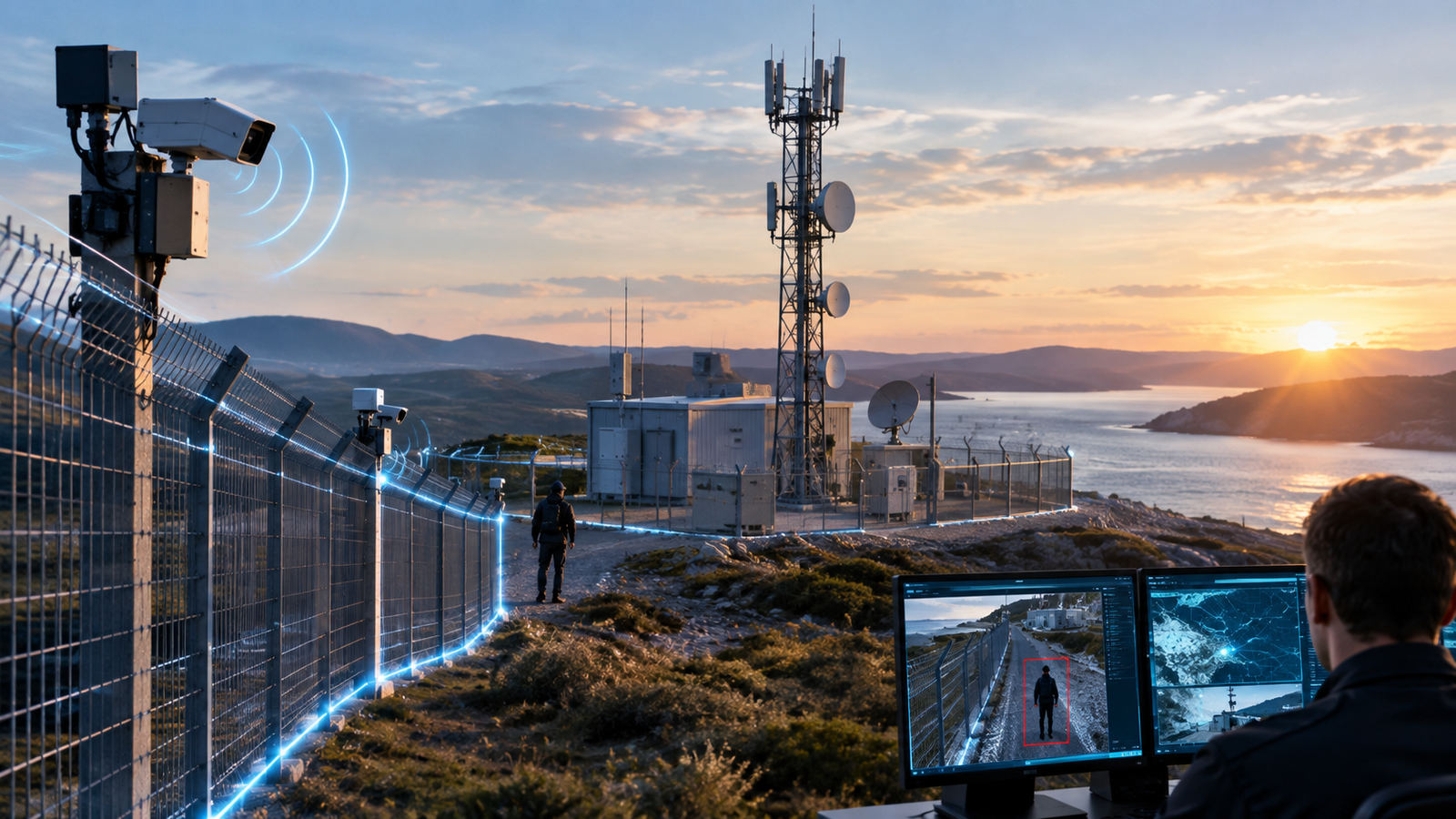
- Remote or unmanned locations – many towers, exchanges, and relay stations have no permanent staff on site, so an intrusion can go unnoticed for hours.
- High-value, low-bulk assets – copper cabling, batteries, and equipment are valuable and easy to remove quickly.
- Critical national infrastructure status – downtime has consequences far beyond the site itself, affecting emergency response, banking, and public services.
- Large or irregular perimeters – exchange compounds and tower footprints often don’t fit neatly into standard fencing or camera coverage patterns.
This combination means a single layer of security – a fence, a camera, or a guard patrol – isn’t enough. The goal has to be early detection, ideally at the perimeter itself, before an intruder ever reaches the building or equipment cabinet.
The Role of Perimeter Intrusion Detection Systems (PIDS)
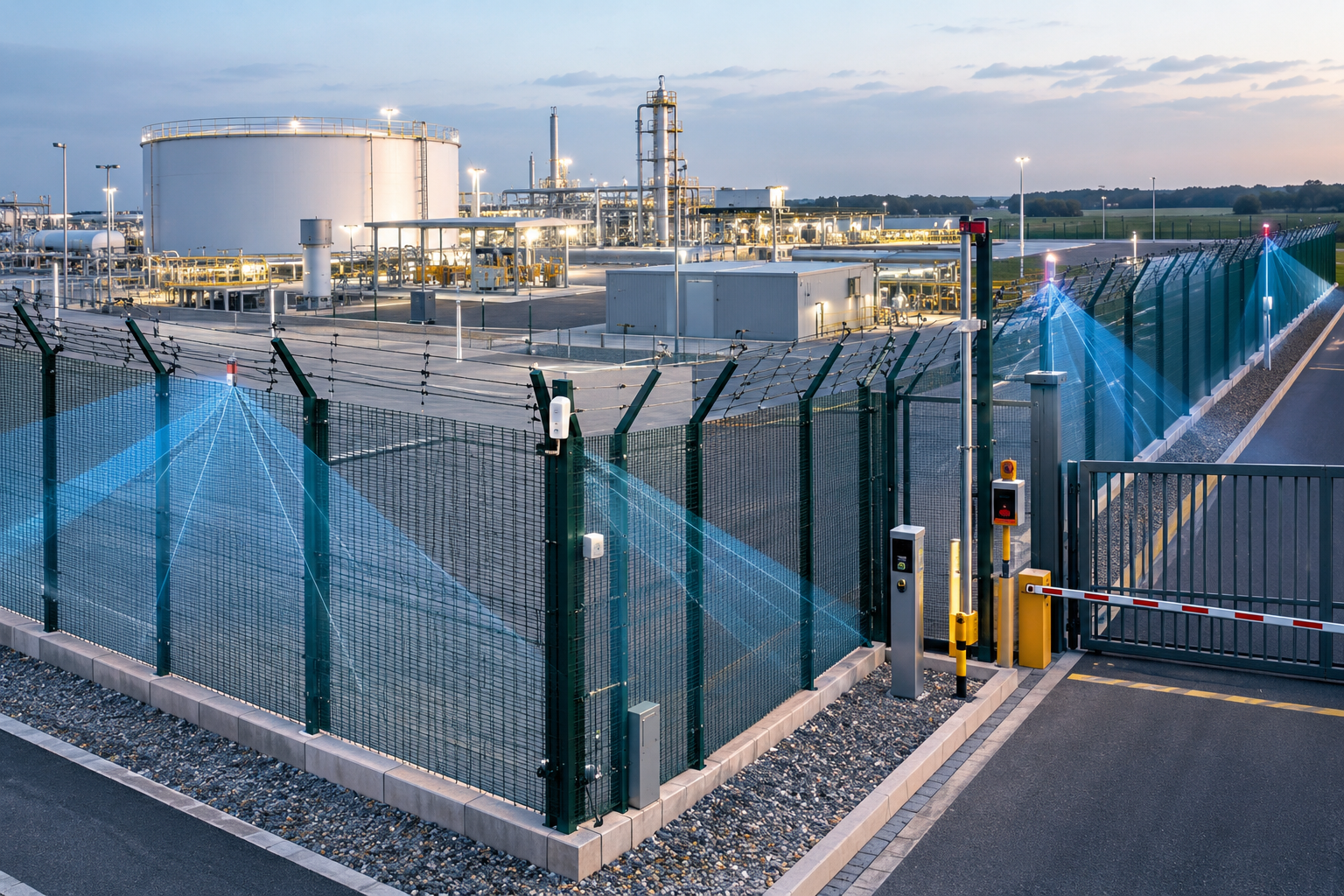
Perimeter Intrusion Detection Systems are designed to do exactly this: detect an intrusion attempt at the boundary of a site, giving security teams advance warning instead of discovering a breach after the fact. Depending on the site, this might mean:
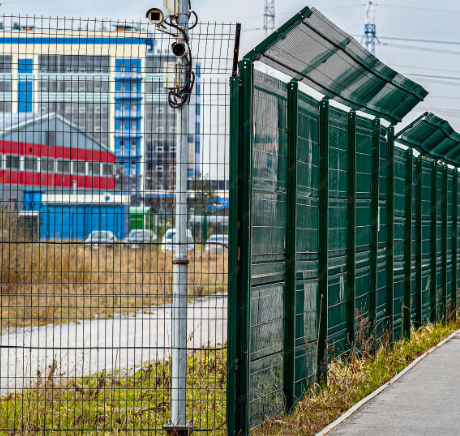
- Fence-mounted detection that senses vibration or movement from someone climbing, cutting, or lifting a fence panel
- Buried or covert sensors for sites where a visible fence line isn’t practical or desirable
- Taut-wire or tension systems that physically resist climbing attempts while also triggering an alarm
- Accelerometer-based monitoring on fences, facades, and rooftops to detect tampering with the structure itself
The right choice depends on the site’s layout, the surrounding terrain, and the level of risk the facility represents.
Integration Matters More Than the Sensor Itself
One of the most common mistakes in perimeter security is treating detection as a standalone product rather than part of a wider system. A PIDS that can’t talk to your existing access control, CCTV, or monitoring platform creates blind spots and delays response times – exactly what you’re trying to eliminate.
This is why a PIDS should be able to integrate with the systems already in place at a site, rather than forcing an operator to rip and replace their existing security infrastructure. Whether a facility already runs a particular access control platform, a VMS for video, or a central monitoring station, the detection layer should slot into that ecosystem and enhance it – triggering camera pre-sets, alerting control rooms, and logging events alongside existing records.
Building a Layered Defence
For communication facilities specifically, a layered approach typically looks like:
- Perimeter detection at the fence line or boundary, providing the earliest possible warning
- Verification via CCTV automatically cued to the alarm zone, so operators can assess the threat in real time
- Physical deterrents, such as reinforced fencing or anti-climb barriers, to slow down any intrusion attempt
- Remote monitoring and reporting, so unmanned sites are never truly unwatched
Each layer buys time – time for a response team to be dispatched, time for law enforcement to be notified, and time to prevent damage before it happens.
Why This Matters Now
As networks expand and more infrastructure moves to unmanned or lightly staffed sites, the pressure on perimeter security only grows. Copper theft, vandalism, and deliberate sabotage of communication infrastructure remain persistent risks, and the cost of downtime at a single exchange or tower can far outweigh the investment in proper detection.
A well-designed, well-integrated PIDS doesn’t just protect equipment – it protects the continuity of the services that depend on it.
Frequently Asked Questions
What is a PIDS (Perimeter Intrusion Detection System)?
A PIDS is a security system designed to detect intrusion attempts at the boundary of a site – such as a fence line, wall, or open perimeter – before an intruder reaches buildings or equipment. It typically triggers an alarm and can cue cameras or notify a monitoring station in real time.
Why do communication facilities need perimeter detection specifically?
Communication sites are often remote, unmanned, and hold high-value equipment like copper cabling and batteries. A breach can also disrupt connectivity for entire regions, so early detection at the perimeter – rather than after entry – is critical to minimising downtime and loss.
Can a PIDS work with the security systems we already have installed?
Yes. A well-designed PIDS should integrate with existing access control, CCTV, and monitoring platforms rather than requiring a full system replacement. This allows detection alerts to trigger existing cameras, alarms, and control room workflows.
What type of PIDS is best for my site?
It depends on the site’s layout and risk level. Fence-mounted sensors suit standard perimeters, buried or covert sensors work where a visible detection system isn’t desirable, taut-wire systems add physical resistance alongside detection, and accelerometer-based sensors are effective for monitoring fences, facades, and rooftops.
Does adding a PIDS mean replacing our existing fencing or barriers?
Not necessarily. Many PIDS options are designed to be fitted to existing fence lines and structures, adding a detection layer without requiring new perimeter infrastructure.
How quickly can a PIDS detect an intrusion attempt?
Detection is typically immediate – sensors respond to vibration, tension, or movement at the point of contact, alerting operators before an intruder has cleared the perimeter.
Is perimeter detection enough on its own, or do we need more?
Perimeter detection works best as one layer in a broader security strategy – paired with CCTV verification, physical deterrents, and remote monitoring – so that an alert leads to a fast, informed response rather than just a notification.