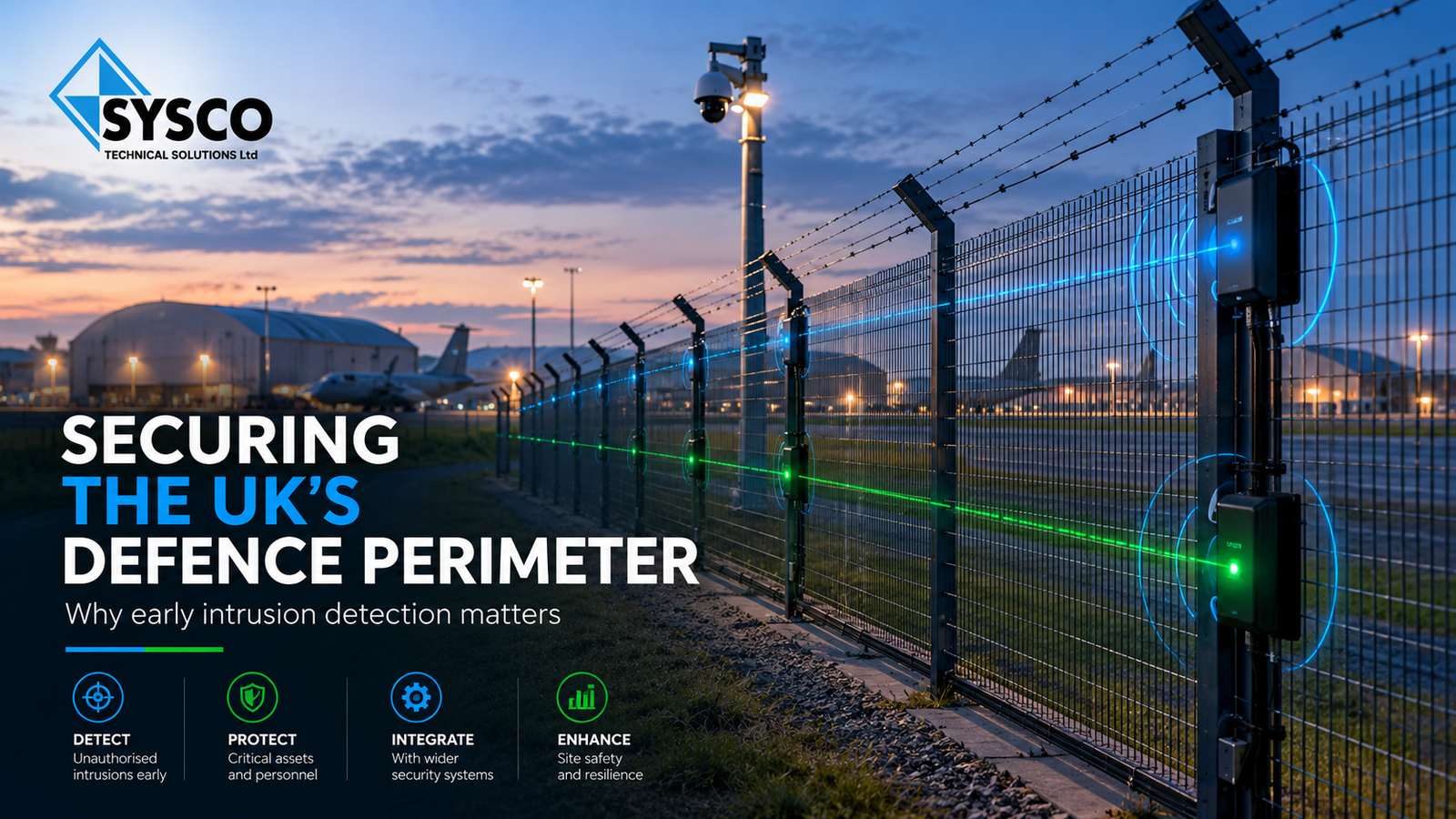

A busy vehicle gate is one of the most demanding parts of any site’s security perimeter. Delivery lorries arrive throughout the day, contractors need access, staff vehicles come and go, and security teams must keep everything moving without compromising protection. With so much activity concentrated in one place, designing reliable perimeter intrusion detection around vehicle entrances requires careful planning.
For warehouses, logistics centres, industrial facilities and critical infrastructure sites, the challenge is straightforward: how do you maintain effective perimeter detection while allowing legitimate vehicles to move freely?
A well-designed perimeter intrusion detection system (PIDS) should identify suspicious activity around the boundary without overwhelming operators with alarms caused by normal site operations. That means considering the gate, adjoining fence, vehicle movements and monitoring arrangements as part of one coordinated security design.
Why Busy Vehicle Gates Need Special Attention
A perimeter fence may provide a continuous physical boundary, but vehicle gates create necessary openings within it. These openings introduce different operating conditions from those found along a fixed fence line.
On a typical industrial site, gates may open dozens of times each day. Heavy goods vehicles can generate ground vibration, waiting drivers may leave their vehicles, and authorised pedestrians may move through nearby access points. Meanwhile, the gate structure itself may behave differently from the surrounding fence, particularly when opening, closing or exposed to strong winds.
These conditions matter when specifying perimeter detection systems. A sensor configuration that works effectively on a quiet fence section may not be suitable immediately beside a busy entrance.
The answer isn’t simply to reduce sensitivity or disable detection whenever vehicles arrive. Doing so without a properly designed alternative could leave an important part of the perimeter insufficiently protected.
Instead, security teams need to establish which activities should generate an intrusion alarm, where detection is required and how authorised movements will be managed.
Start with the Gate’s Daily Operations
Before choosing any perimeter intrusion detection technology, it’s important to understand how the entrance actually operates.
Consider a distribution centre with separate gates for deliveries and staff vehicles. The delivery entrance may experience heavy traffic during scheduled collection periods, while the staff entrance might become busy only at shift changes. Both belong to the same overall perimeter, but they present different detection requirements.
A useful site assessment should establish how frequently gates operate, whether vehicles queue outside or inside the boundary, where pedestrians move, whether the entrance is staffed and what happens outside normal working hours.
It should also identify the types of intrusion that the system needs to detect. These may include attempts to climb or cut adjoining fencing, interfere with gate structures or cross restricted areas without authorisation.
This information forms the basis of the site’s operational requirements and helps determine which detection technologies are appropriate.
At Sysco Technical Solutions, perimeter intrusion detection design begins with understanding the individual site’s security requirements, physical layout and operating environment. This allows the proposed PIDS solution to reflect real conditions rather than relying on a standard arrangement for every entrance.
Choose the Right Detection Technology Around the Entrance
Different perimeter intrusion detection systems respond to different types of activity, so technology selection is particularly important around vehicle gates.
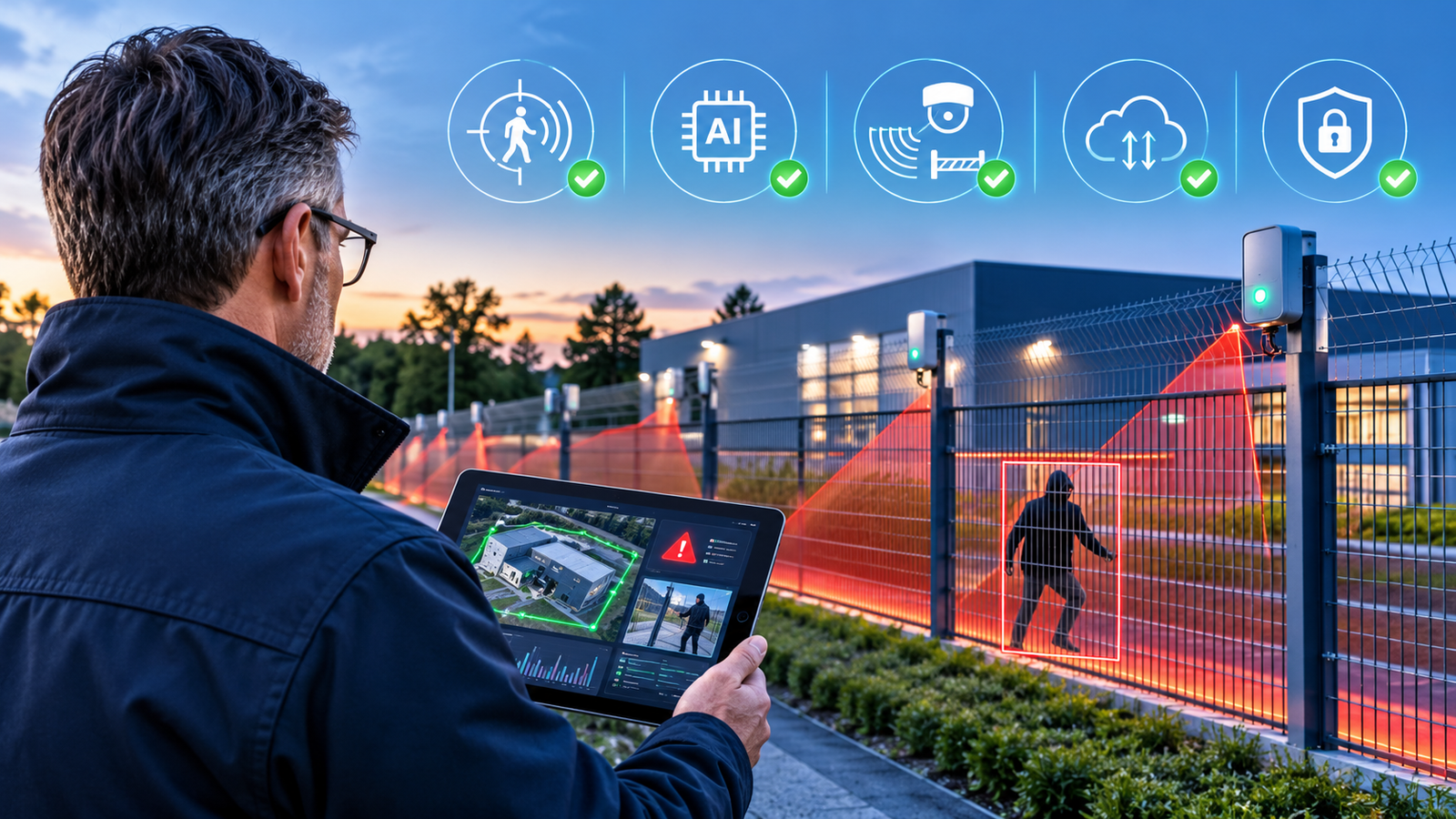
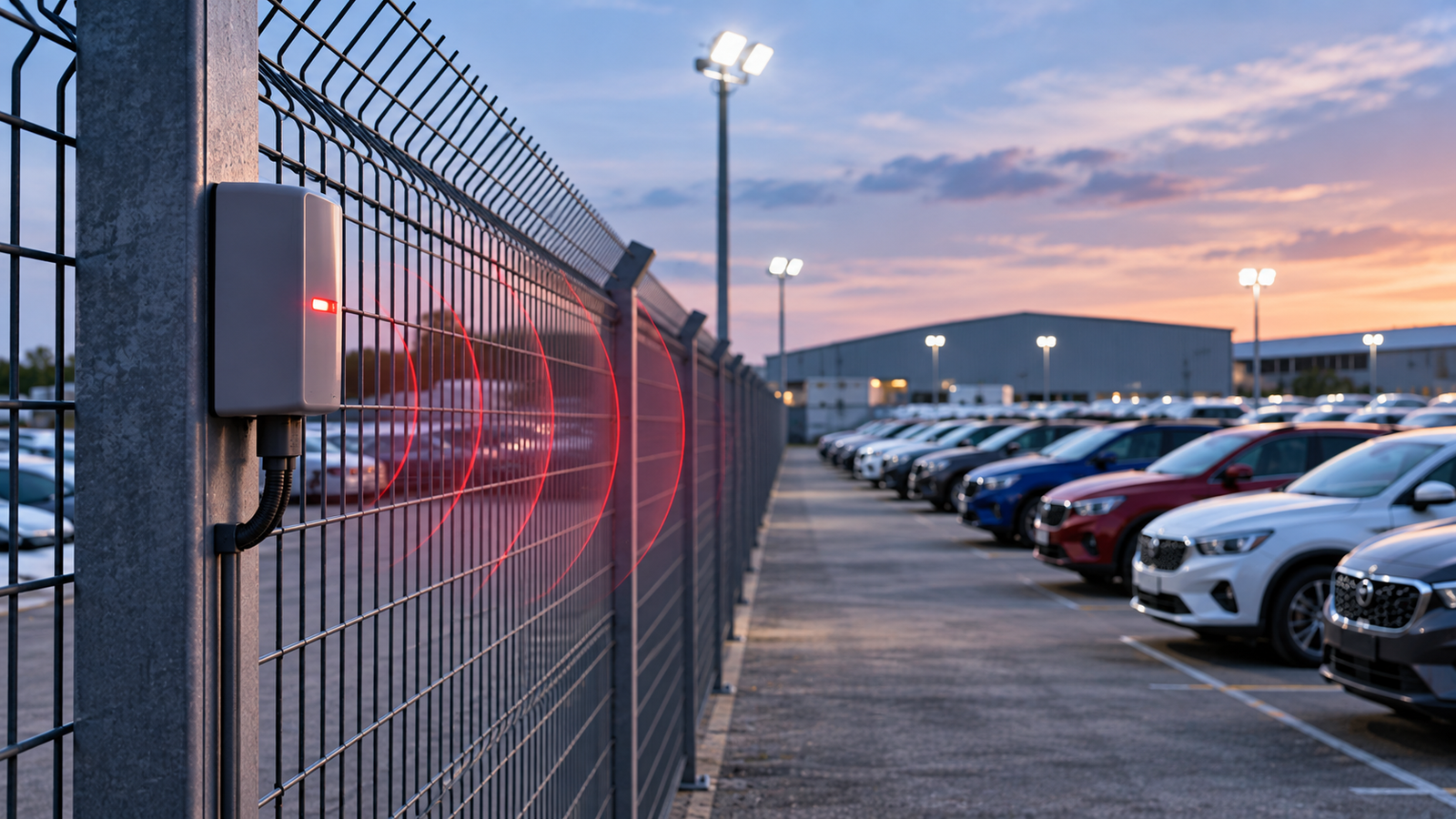
Fence-mounted intrusion detection can provide protection along suitable sections of adjoining perimeter fencing. Depending on the technology, sensors may identify disturbances associated with climbing, cutting or interference with the fence. However, the moving gate structure and its connection to the fixed fence need separate assessment to avoid unsuitable sensor placement or gaps in coverage.
Point sensors may be appropriate for monitoring selected structures or vulnerable locations where more localised detection is required. Their suitability depends on the structure, expected movement and intrusion scenarios identified during the site survey.
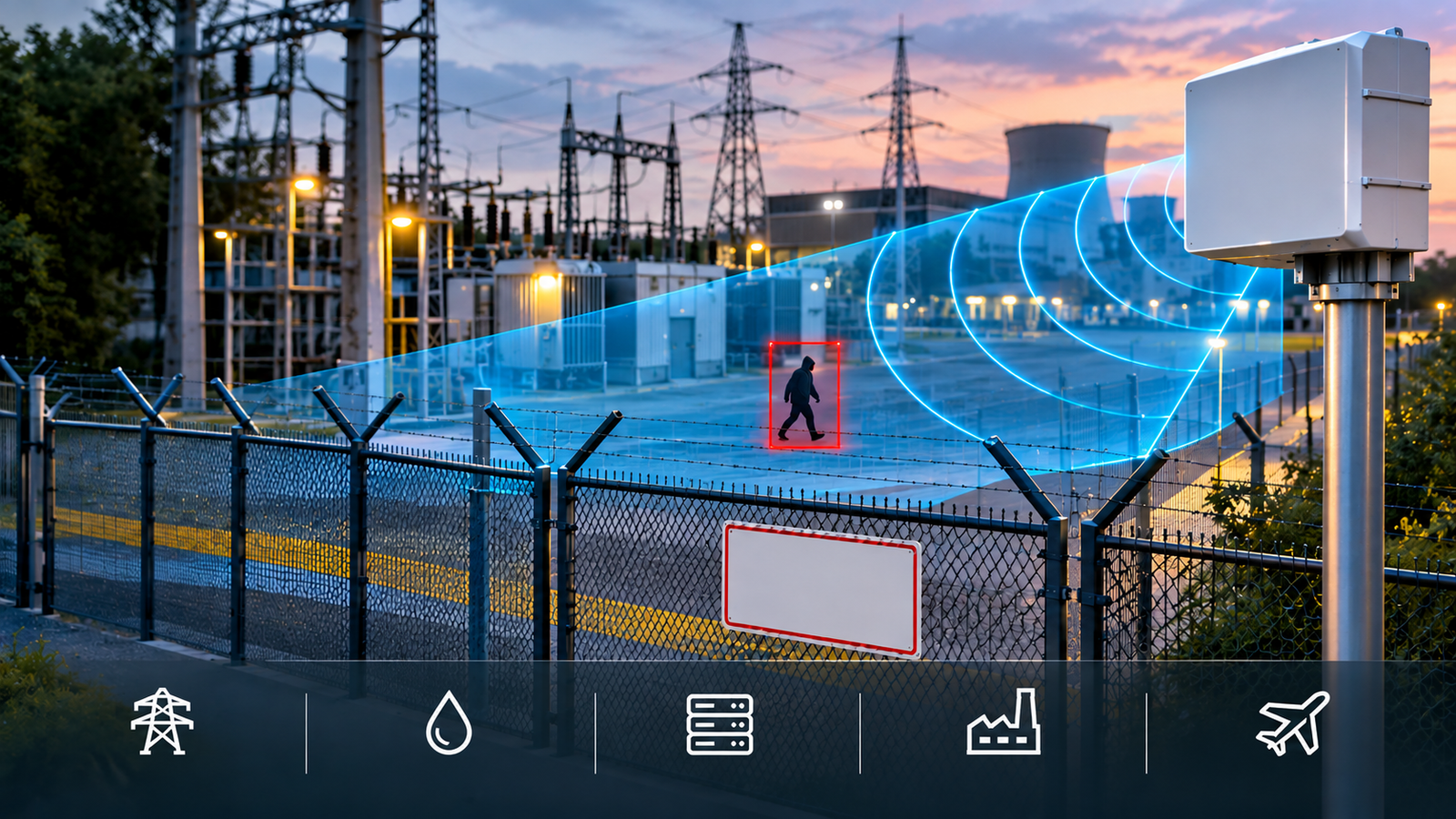
Radar-based perimeter detection can be considered for monitoring defined outdoor areas, particularly where the layout provides suitable coverage and target movement needs to be assessed across a wider space. Its positioning and configuration must account for authorised vehicles, pedestrians and other routine activity.
Other technologies, including selected free-standing or ground-based detection systems, may be appropriate in certain configurations. Each option has operational strengths and limitations, especially near moving vehicles and busy access routes.
The most effective solution is not necessarily one technology installed everywhere. It may involve different detection methods working together to protect the fixed fence, gate surroundings and any identified vulnerable areas.
Sysco Technical Solutions works with specialist PIDS technologies, including fence-mounted detection, point sensors and radar-based solutions, to support site-specific perimeter protection.
Reduce Unwanted Alarms Without Creating Security Gaps
One of the biggest concerns around busy vehicle entrances is the volume of unwanted alarms.
A poorly configured system might respond to normal gate movement, passing vehicles, loose fence components or other routine activity. If alarms become too frequent, security teams can spend unnecessary time investigating events that do not represent an intrusion.
However, simply lowering sensor sensitivity is not an adequate solution if it reduces the system’s ability to detect genuine threats.
Good design starts by identifying the source of unwanted activity. Is it vibration from nearby vehicles? Movement in a gate structure? Poorly maintained fencing? Or a detection zone that overlaps with an authorised access route?
Once the cause is understood, the design can be adjusted appropriately through sensor selection, positioning, zoning, configuration or physical maintenance.
For example, a fence-mounted sensor near a vehicle entrance may require different consideration from one installed along a quiet boundary. Likewise, an area detection system should be configured around clearly defined protected spaces rather than indiscriminately monitoring normal vehicle routes.
The objective is to maintain reliable perimeter intrusion detection while keeping nuisance alarms manageable.
This is particularly important for sites operating around the clock, where control room staff need confidence that alarms represent activity worth investigating.
Make Gate Detection Part of the Wider Security System
Perimeter detection is most useful when an alarm leads to a clear and timely response.
At a busy vehicle entrance, security staff may already have access to gate status information, CCTV footage and access-control records. The PIDS should be designed to work alongside these arrangements where suitable interfaces are available.
For example, when a perimeter sensor identifies suspicious activity beside an entrance, the alarm can be presented to the monitoring team with a defined location. Where compatible systems have been integrated, associated camera views may help operators assess the event.
Gate status information may also help distinguish authorised opening cycles from activity requiring investigation, provided the arrangement is designed and tested against the site’s operational requirements.
Importantly, integration should not create unnecessary dependency on a single system or automatically suppress detection across a wider area than required.
Sysco specialises in perimeter intrusion detection systems and associated detection integration, working alongside existing or separately provided CCTV, gate and access-control arrangements to support a coordinated security response.
For security consultants and site operators, the key is ensuring that detection, verification and response have been considered together from the beginning.
Test the System Under Real Operating Conditions
A perimeter detection system should not be judged solely by whether its sensors respond during an initial demonstration.
At a busy gate, commissioning needs to reflect how the entrance operates on an ordinary working day. That includes considering vehicle movements, authorised access, different gate states and the interaction between adjacent detection zones.
Testing should confirm that the system detects the intrusion scenarios defined in the specification, that alarms reach the correct monitoring location and that any agreed integration functions operate as intended.
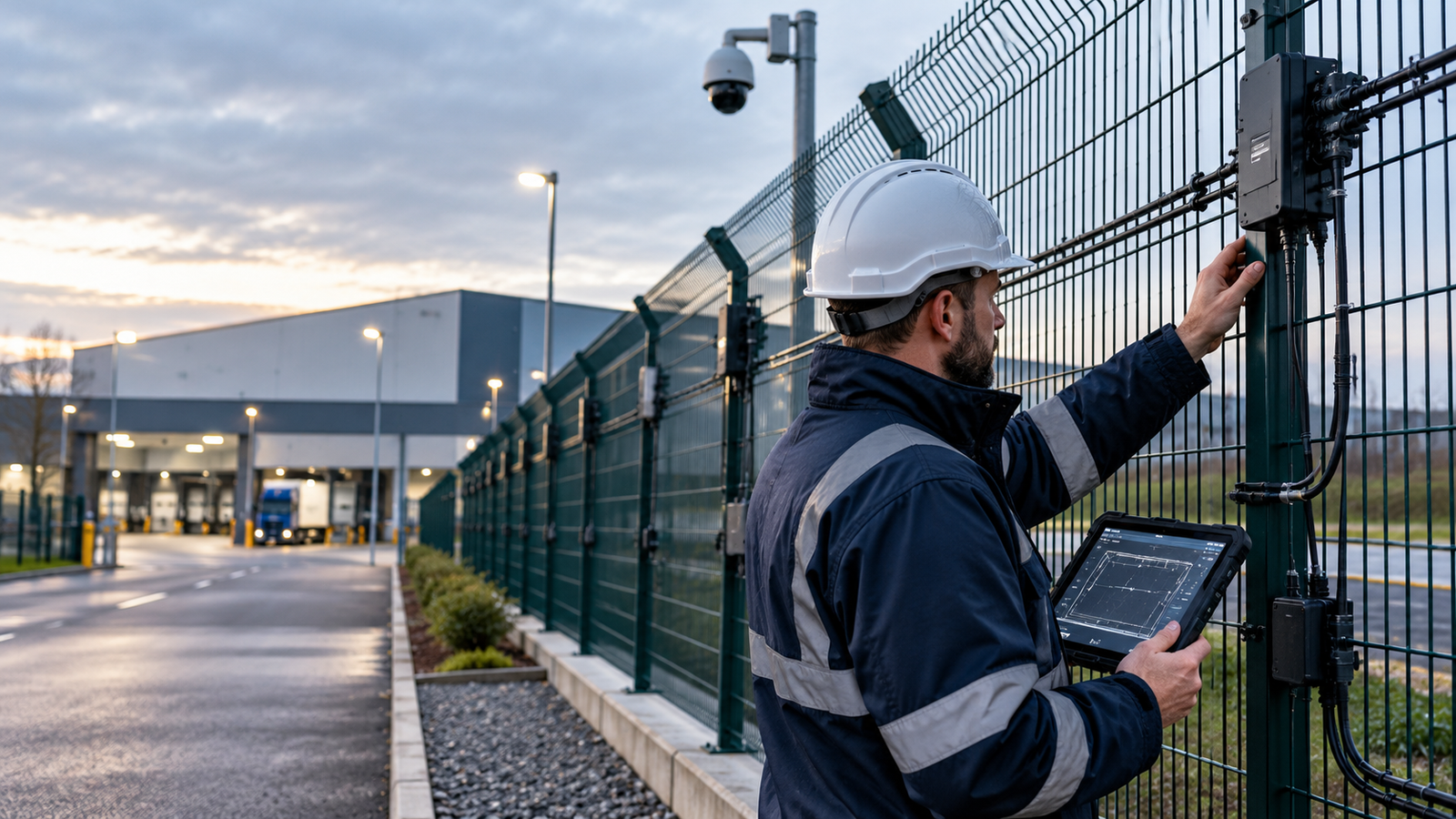
It is also important to examine the boundaries between the gate and adjoining fence. Changes in construction, moving components and sensor coverage can introduce weaknesses if they have not been accounted for during design.
Once commissioned, the system should be maintained and periodically tested. Gates and entrances are working parts of a site, and their conditions can change through wear, repairs, alterations and changes in traffic patterns.
Reviewing PIDS performance following significant site changes helps ensure that the system continues to meet its original security requirements.
Why Site-Specific PIDS Design Matters
There is no single perimeter detection arrangement that suits every vehicle entrance.
A logistics hub with continuous HGV traffic has different operational demands from a remote utility site with occasional authorised access. A high-security industrial facility may also require more detailed detection zoning, additional protective measures or closer integration with existing monitoring arrangements.
What these environments share is the need for a perimeter intrusion detection system that accounts for normal operations without overlooking vulnerable parts of the boundary.
That is where specialist design and installation expertise becomes valuable.
Sysco Technical Solutions provides perimeter intrusion detection system design, supply, installation, commissioning and maintenance for commercial, industrial and high-security environments across the UK. Our approach considers the site’s boundary, operating conditions, detection requirements and existing security infrastructure to develop an appropriate solution.
Rather than treating vehicle gates as separate from the perimeter, we assess how they affect the protection of the site as a whole.
Frequently Asked Questions
Can perimeter intrusion detection systems work around busy vehicle gates?
Yes. PIDS can be designed for sites with regular vehicle movements, provided the technologies, detection zones and operating arrangements are appropriate for the entrance. A site survey is essential to establish the right solution.
How can unwanted PIDS alarms be reduced near vehicle entrances?
Unwanted alarms can be managed through suitable sensor selection, positioning, configuration, detection zoning and maintenance. The aim is to address the causes of nuisance alarms without compromising the detection of genuine intrusion activity.
Can perimeter detection systems integrate with existing CCTV and access control?
Many PIDS technologies support integration with compatible security systems. This can allow intrusion alarms to be associated with camera views, monitoring software or relevant gate status information, depending on the equipment and system design.
What should be checked before installing PIDS around a vehicle gate?
The assessment should consider the entrance layout, gate construction, adjoining fencing, vehicle and pedestrian movements, potential intrusion routes, environmental conditions, monitoring arrangements and the site’s defined security requirements.
Protecting Busy Entrances Without Compromising Operations
Vehicle gates are essential to keeping commercial and industrial sites operating, but they should never become an overlooked part of perimeter security.
By understanding everyday vehicle movements, selecting appropriate detection technologies and planning how alarms will be managed, organisations can achieve more effective perimeter intrusion detection around these demanding access points.
The key is to design the system around the site, not force the site to accommodate an unsuitable detection arrangement.
Need to review perimeter detection around a busy vehicle entrance?
Contact Sysco Technical Solutions to discuss your site’s security requirements and explore specialist perimeter intrusion detection solutions for your facility.