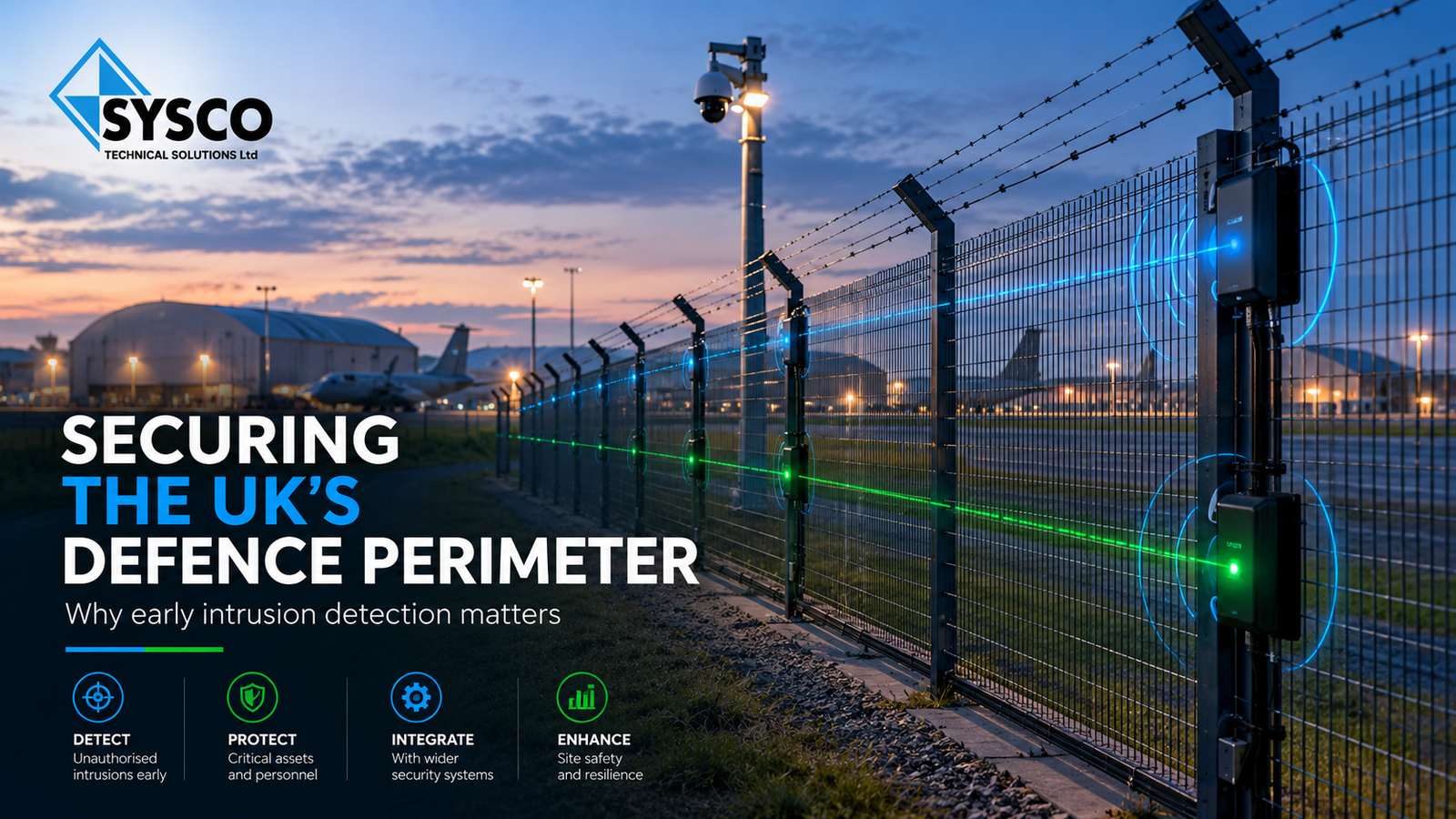
The UK Government has confirmed an additional £470 million investment to strengthen security at critical military sites, alongside £240 million for enhanced counter-drone capabilities through Project PRESAGIUM.
The announcement reflects growing recognition that military installations and critical national infrastructure must be prepared for a changing security environment, including physical intrusion, hostile reconnaissance, sabotage and emerging threats.
For defence estate managers, security consultants and infrastructure contractors, it raises an important question: Are existing perimeter security systems capable of detecting and responding to modern threats before they reach critical assets?
At Sysco Technical Solutions, we believe effective protection begins with understanding where a site is vulnerable and ensuring potential intrusions can be identified at the earliest possible opportunity.
A Major Investment in UK Defence Infrastructure Security
As reported by the UK Defence Journal, the Government’s investment forms part of broader efforts to improve national resilience and protect essential defence infrastructure.
The additional £470 million is intended to improve the security of critical military sites, while the separate £240 million investment in Project PRESAGIUM will support enhanced counter-drone detection and defeat capabilities.
Although the specific allocation of funding to individual security technologies has not been announced, the programme highlights the importance of reviewing how military facilities are protected against both conventional and emerging threats.
Modern military installations often include extensive boundaries, multiple access points, sensitive equipment, operational facilities and large areas requiring continuous monitoring.
Securing these environments demands more than a robust physical barrier. It requires a coordinated approach combining physical protection, reliable intrusion detection, monitoring and effective security response.
Why Perimeter Security Is Critical for Military Sites
The perimeter forms one of the earliest opportunities to identify unauthorised activity before it reaches sensitive areas.
Military establishments, defence storage facilities, airfields and operational compounds can present complex security challenges due to their size, location and operating conditions.
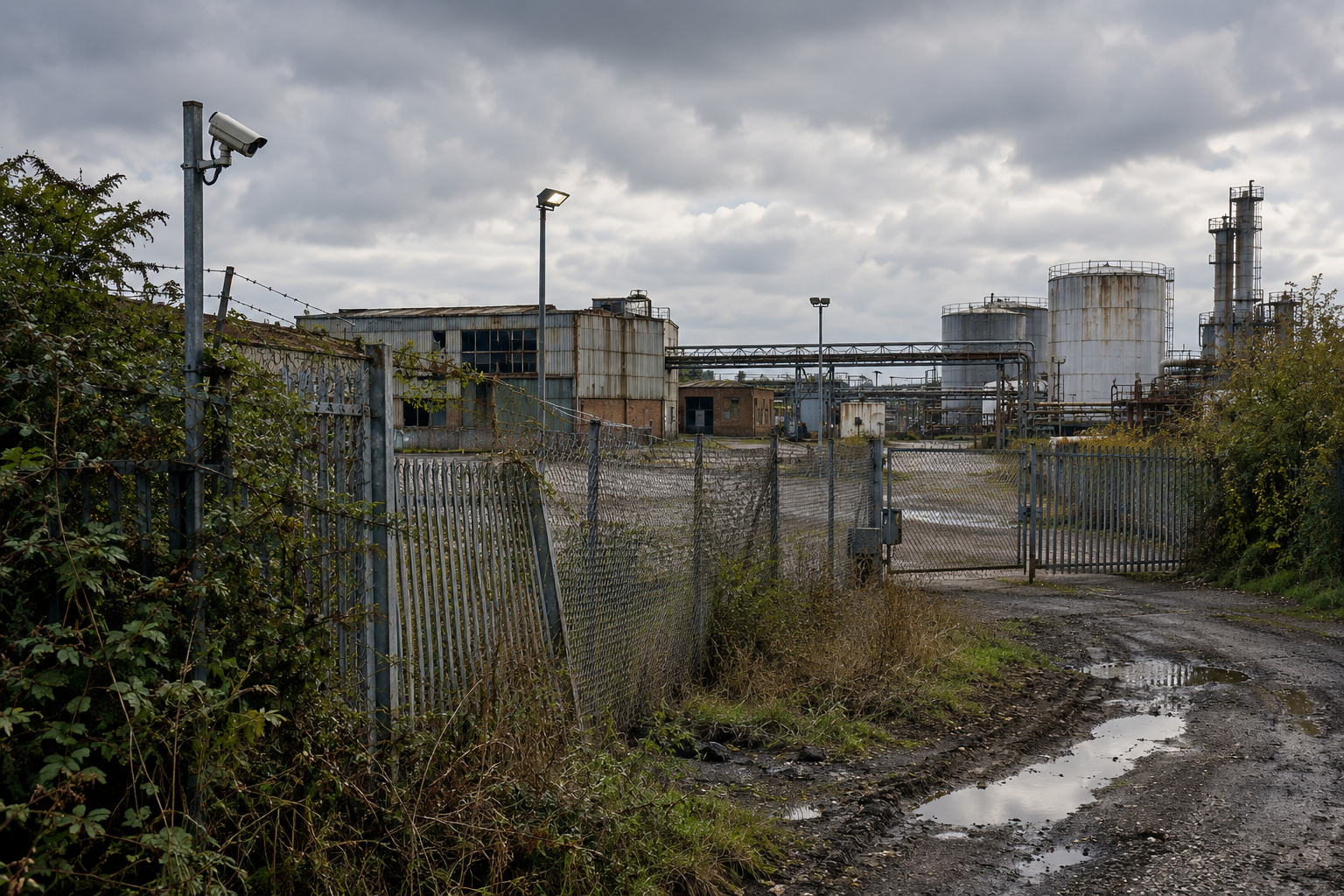
Traditional fencing and security patrols remain important, but a fence alone cannot notify security personnel when an intrusion is attempted.
Similarly, CCTV can provide valuable visual information, but its effectiveness depends on camera coverage, monitoring arrangements, analytics and the ability to recognise suspicious activity quickly.
This is where Perimeter Intrusion Detection Systems (PIDS) play an essential role.
By detecting attempted intrusion at or near the site boundary, PIDS can provide earlier warning and help security personnel investigate and respond before an incident escalates.
For military facilities, where the consequences of an undetected breach may be significant, early detection is an important element of effective protective security.
The Role of Perimeter Intrusion Detection Systems (PIDS) in Defence Security
A Perimeter Intrusion Detection System is designed to identify unauthorised activity along a protected boundary.
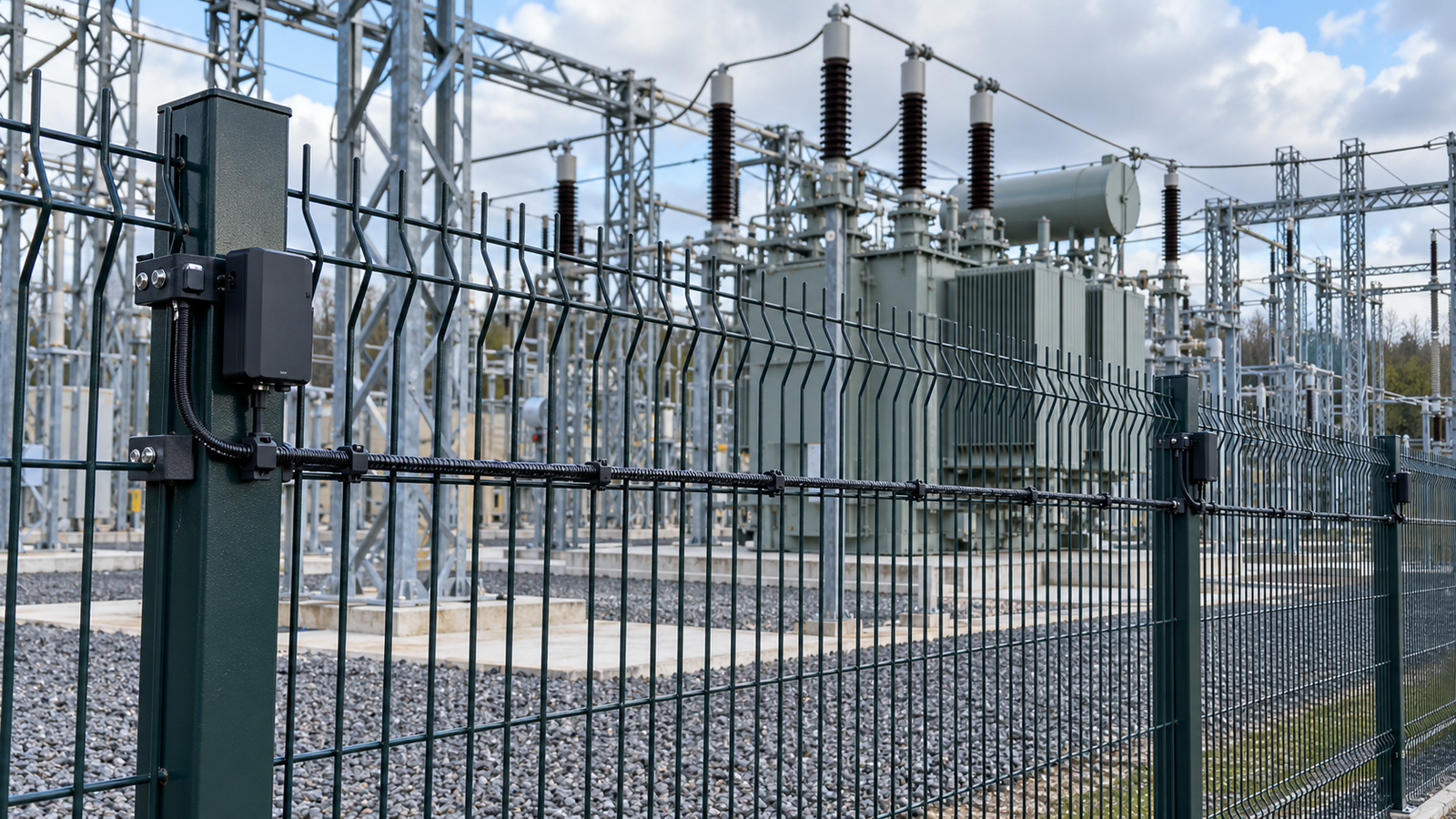
Depending on the technology and installation, a PIDS may detect attempts to climb, cut, disturb or otherwise interfere with perimeter fencing, as well as movement within designated detection areas.
When suspicious activity is detected, the system generates an alarm that can be linked to security monitoring platforms, helping operators identify the affected area and initiate appropriate action.
For military and high-security environments, several capabilities are particularly valuable.
-
Early Detection of Intrusion Attempts
Rather than relying entirely on detecting an intruder after they have entered a restricted area, PIDS can identify activity at the perimeter itself.
This provides an additional opportunity to assess the incident and coordinate an appropriate response.
-
Accurate Alarm Location
Modern sensor-based systems can identify the affected perimeter section or, with suitable technology, provide more precise intrusion localisation.
For facilities with extensive fence lines, accurate alarm information can help security teams direct resources towards the area requiring attention.
-
Continuous Perimeter Monitoring
Military and critical infrastructure sites may require security coverage at all hours, including overnight and during periods of reduced staffing.
Properly designed PIDS solutions support continuous monitoring, subject to system availability, maintenance and operational arrangements.
-
Reduced Nuisance Alarms
Outdoor security systems operate in challenging conditions.
Wind, heavy rain, wildlife and nearby traffic can influence the performance of some perimeter detection technologies.
Selecting suitable sensors, configuring them correctly and carrying out appropriate site testing can help minimise nuisance alarms while maintaining effective intrusion detection.
-
Integration With Other Security Systems
PIDS is most effective when considered as part of a wider physical security strategy.
Integration with CCTV, access control, alarm management and security monitoring systems allows alerts to be assessed alongside other available information.
For example, a perimeter alarm can prompt an operator to review camera coverage of the affected area and determine whether further action is required.
This coordinated approach can improve situational awareness and support more effective incident management.
Why Military and Critical Infrastructure Sites Need Layered Security
No individual security technology can address every potential threat.
Effective military site protection therefore relies on a layered approach, with different protective measures performing complementary functions.
Physical barriers can delay unauthorised entry, perimeter detection systems provide early warning, surveillance supports verification, and access control helps manage legitimate movement through designated entry points.
The objective is not simply to install more equipment. It is to ensure that the different elements work together in a way that reflects the site’s operational needs and assessed risks.
A carefully designed security strategy should consider:
- The length, construction and condition of the perimeter.
- Potential intrusion routes and vulnerable access points.
- The type and sensitivity of assets being protected.
- Local environmental conditions and sources of nuisance alarms.
- Integration with existing CCTV and security management systems.
- Alarm verification, response arrangements and ongoing maintenance.
For high-security facilities, appropriate testing and independently evaluated security products may also form part of the specification process.
The National Protective Security Authority (NPSA) provides guidance relevant to protective security and security system selection.
How Advanced PIDS Technology Supports Modern Perimeter Protection
As security requirements evolve, so does the technology available to protect critical infrastructure.
Modern perimeter detection solutions can offer improved localisation, flexible deployment and integration with wider security management platforms.
At Sysco Technical Solutions, our perimeter security portfolio includes sensor-based technologies designed for different site requirements.
- Fence-mounted intrusion detection: Systems such as EcoPoint and SP3D can be used to detect attempts to interfere with protected fence lines, with technology selected according to perimeter construction and operational requirements.
- Flexible perimeter detection: Solutions such as FlexLine provide additional options for protecting sensitive installations where dependable detection is particularly important.
- Integrated monitoring and control: Centralised monitoring and compatible control platforms can support alarm management and integration into a wider security environment.
The suitability of any system depends on factors including site layout, environmental conditions, assessed threats and the required level of performance.
For military and critical infrastructure applications, detailed site assessment and correct system specification are essential.
What the £470m Defence Security Investment Means for the Wider Industry
The Government’s additional investment provides an important opportunity for the defence infrastructure sector to examine the resilience of existing security arrangements.
Although details of individual procurement packages are yet to be confirmed, the announcement highlights several considerations for defence organisations, estates contractors and security professionals.
- Assessing existing infrastructure: Older security installations may require evaluation to determine whether their detection capabilities remain appropriate for current threats.
- Improving system integration: Sites using separate security technologies may benefit from assessing how detection, surveillance and monitoring systems work together.
- Planning for long-term reliability: Perimeter systems need to remain effective under changing environmental conditions and operational demands, making appropriate maintenance and lifecycle support essential.
- Prioritising security based on risk: Not every perimeter requires the same level of protection. Investment decisions should reflect the importance of the assets, potential vulnerabilities and consequences of intrusion.
These considerations are relevant beyond military establishments, extending to energy facilities, utilities, transport infrastructure, data centres and other sensitive locations.
Supporting High-Security Perimeter Protection Across the UK
At Sysco Technical Solutions, we specialise in Perimeter Intrusion Detection Systems and integrated physical security solutions for sites where reliable protection is essential.
With more than 20 years of industry experience, our team supports clients through site surveys, system design, supply, installation, commissioning and ongoing maintenance.
Our approach focuses on understanding the individual security requirements of each site rather than assuming that one technology or standard installation will be suitable for every environment.
Our capabilities include:
- Perimeter Intrusion Detection Systems (PIDS).
- Fence intrusion detection and alarm localisation.
- Integration with CCTV and security management systems.
- Physical security systems and access control integration.
- System upgrades, maintenance and technical support.
Whether an organisation is reviewing existing perimeter protection or planning new security infrastructure, careful assessment and effective system integration are fundamental to achieving dependable protection.
Conclusion: Early Detection Is Essential to Effective Site Security
The UK’s £470 million investment in military site security reinforces the importance of strengthening protection around critical defence infrastructure.
While emerging technologies such as counter-drone systems will play an increasingly important role in responding to new threats, ground-level physical security remains a fundamental consideration.
Perimeter Intrusion Detection Systems provide a valuable early-warning capability, helping security teams recognise potential intrusion attempts before threats reach sensitive facilities or assets.
For defence estate operators, infrastructure contractors and security professionals, the priority should be to ensure that perimeter protection systems remain appropriate, reliable and properly integrated with wider security arrangements.
As the UK’s defence security requirements continue to evolve, effective perimeter protection will remain an important part of building more resilient infrastructure.
Speak to Sysco Technical Solutions
If you are reviewing perimeter security at a military facility, government site or critical infrastructure installation, Sysco Technical Solutions can help you assess suitable PIDS technologies and integration requirements.
Contact Sysco Technical Solutions to discuss your perimeter security requirements.
Source: UK Defence Journal, “Britain puts millions into protecting military sites”, 17 October 2026