
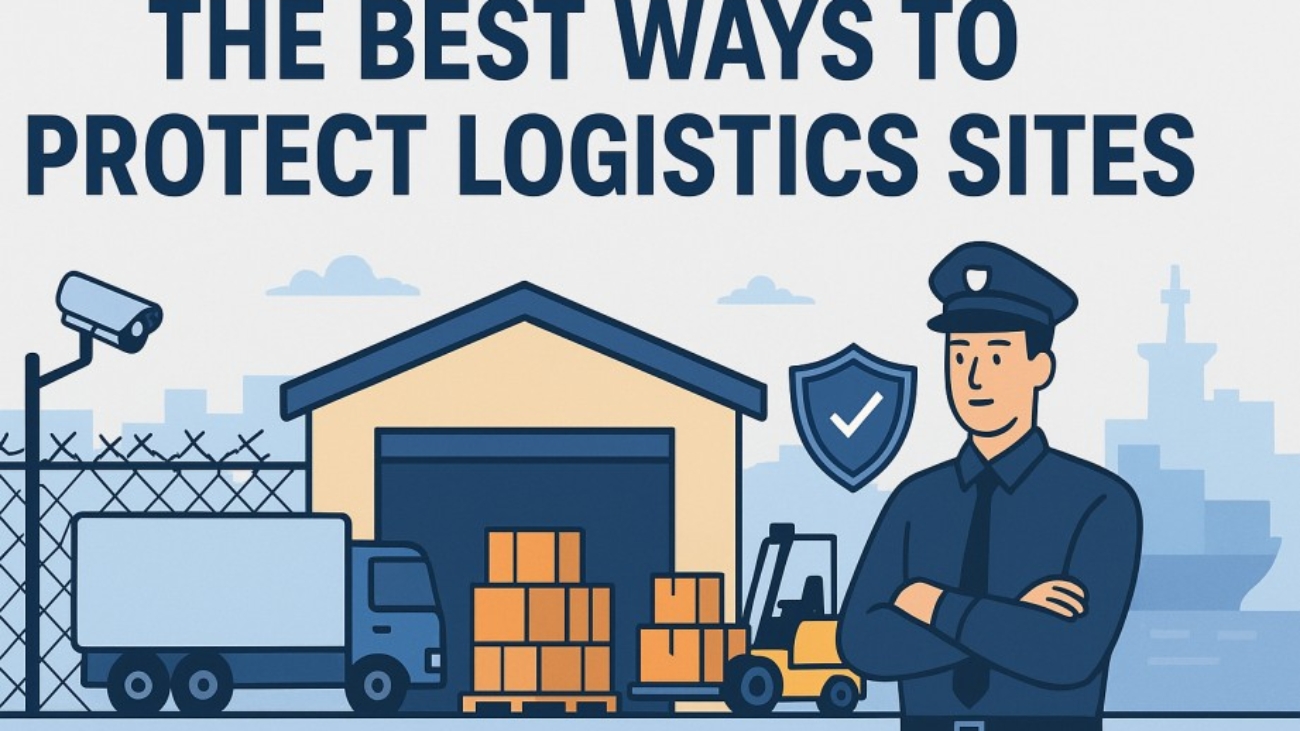
This has never been a more important concern in ensuring the high-level site security of logistics. Increased theft, vandalism and advanced crime combine at warehousing and transport stations, and therefore a robust, multi-layered security policy is necessary. To ensure smooth operations, managers and owners must get reliable perimeter protection, high-level intrusion detection, as well as intelligent 24/7 supervision.
These are the best attributes to use in securing logistics locations.
Understanding Why Logistics Site Security Matters
Rising Threats in the Logistics Sector
This is because storage facilities are valuable inventory and are likely to be targeted by the logistics sites. Weak perimeters, blind spots or slow response can be used by criminals and with the increasing global demand or the pressure on the supply chain, even an individual incident can bring activities to a stop.
Impact of Security Breaches on Supply Chains
Breach may lead to delays in shipment, dissatisfied clients, loss of money and a ruined image. It is a wise investment, as companies usually pay more money to recover than to prevent an incident.
Key Components of Modern Logistics Site Security
Perimeter Protection
The first line of defence is the perimeter protection. Good and sturdy boundaries are used to thwart unauthorised access that is strong, well before an intruder gets to valuable assets.
Access Control Systems
Access control restricts the entry of unauthorised personnel, drivers, staff or contractors to restricted areas.
Warehouse Intrusion Detection
The intrusion detection systems detect any suspicious activities within or outside the warehouse and allow a quick response.
Best Ways to Protect Logistics Sites
Strengthening Physical Barriers
Fencing and Gates
Automated gates, welded mesh panels and high-security fencing are used to discourage unauthorised entry. The anti-climb designs provide an added challenge to intruders.
Vehicle Blockers
Bollards, barriers and road blockers reduce the attempts of ram-raiding and access to the vehicles without permission- the usual threats to logistics facilities.
Implementing Advanced Perimeter Protection Systems
Thermal Cameras
Thermal images enable the security personnel to identify the intruders in total darkness, fog, or severe weather.
Laser Sensors
Perimeter systems are laser-based logistics systems that establish invisible fences to give alerts when they are violated.
Video Analytics
Video analytics based on AI automatically identify strange behaviour, loitering, and perimeter intrusion.
Enhancing Warehouse Intrusion Detection
Motion Sensors
At the doors, walls and aisles in the warehouse, the motion sensors are used to identify any unusual movement very fast.
Vibration Detection
Vibration sensors detect cutting, drilling, or breaking of walls, fences and windows.
Access Control and Monitoring
Biometric Authentication
Fingerprint, facial recognition or iris scans are used to make sure the people who access it are verified.
License Plate Recognition
LPR cameras automate entry logging of vehicles to enhance flow and enhance the accuracy of security.
Smart Surveillance Integration
CCTV with AI
Alerts on suspicious movement, CCTV and AI are available in modern CCTV to mitigate human monitoring errors and also give real-time alerts.
Real-time Monitoring
Specifically, the control rooms are centralised so that the security personnel can monitor two or more locations simultaneously to enhance reaction speed.
Cybersecurity for Logistics Operations
Protecting IoT Devices
The IoT sensors are applied to logistics sites to track their inventory and regulate the work. The protection of such devices will eliminate data breaches.
Securing Warehouse Management Systems
Warehousing management systems are not vulnerable to cyber attack with strong firewalls, encryption and frequently updated systems.
On-Site Security Teams and Training
Still, well-developed technology can do nothing without professional security staff. Frequent training would make sure that the staff would be knowledgeable on the way to respond to alerts, emergencies and suspicious behaviour.
Creating a Layered Logistics Perimeter System
Combining Physical and Digital Security
Physical barriers, advanced monitoring, and cybersecurity are the best security strategies for logistics sites. This multi-layered strategy would protect all points of entry, warehouse areas and even the digital systems.
Conclusion
The security of logistics facilities is a multi-layered solution that is integrated with technology and a combination of physical infrastructure and human resources. The facilities are well-protected in terms of perimeter security systems, integrated warehouse intrusion surveillance, and efficient logistics perimeter systems that allow minimising the risks and ensuring the uninterrupted workflow. Consequently, modern security will not only save a loss, but it will also enhance trust, reliability, and ultimately, success in the long-run operation.
FAQs
- What is the most effective way to secure a logistics site?
A layered security system combining perimeter protection, surveillance, and intrusion detection is the most effective. - Are AI cameras useful for logistics security?
Yes, AI-powered CCTV enhances detection accuracy and reduces false alarms. - Why is warehouse intrusion detection important?
It detects unauthorised activity early, preventing theft and operational disruption. - Do logistics sites need cybersecurity?
Absolutely—modern logistics relies heavily on connected systems that require protection. - How can logistics managers reduce security risks?
By investing in strong perimeter security systems, staff training, and proactive monitoring.

