Introduction
In an era where school and university safety has become a paramount concern for educators, parents, and administrators, the question isn’t whether to implement security measures – it’s how to do so effectively without transforming educational institutions into fortified compounds. Perimeter security systems represent a balanced, intelligent approach to campus protection that maintains the welcoming atmosphere educational institutions require while providing comprehensive safety coverage.
This comprehensive guide explores how modern perimeter protection and perimeter intrusion detection systems can safeguard students, staff, and valuable assets on school and university campuses. We’ll examine the latest technologies, best practices, and real-world implementation strategies that prioritise both safety and community.
Understanding Perimeter Security for Educational Institutions
Perimeter security refers to the integrated use of technologies and protocols designed to monitor, control, and protect the boundaries of a facility. For schools and universities, this means creating a secure outer shell that allows authorised access while preventing unauthorised entry and detecting potential threats.
Why Perimeter Security Matters in Educational Settings
Educational institutions face unique security challenges:
- High-value targets: Schools and universities attract large populations of young people, making them potential security concerns
- Open campuses: Unlike corporate facilities, educational institutions often pride themselves on accessible, inviting environments
- Diverse populations: Managing access for thousands of daily visitors – parents, vendors, contractors, and community members – requires sophisticated systems
- Asset protection: Universities house expensive research equipment, laboratories, and technology infrastructure requiring protection
Modern perimeter intrusion detection systems address these challenges by creating invisible barriers that alert security teams to unauthorised access attempts before incidents occur.
The Technology Behind Effective Perimeter Security
PIDS Security and Perimeter Intrusion Detection
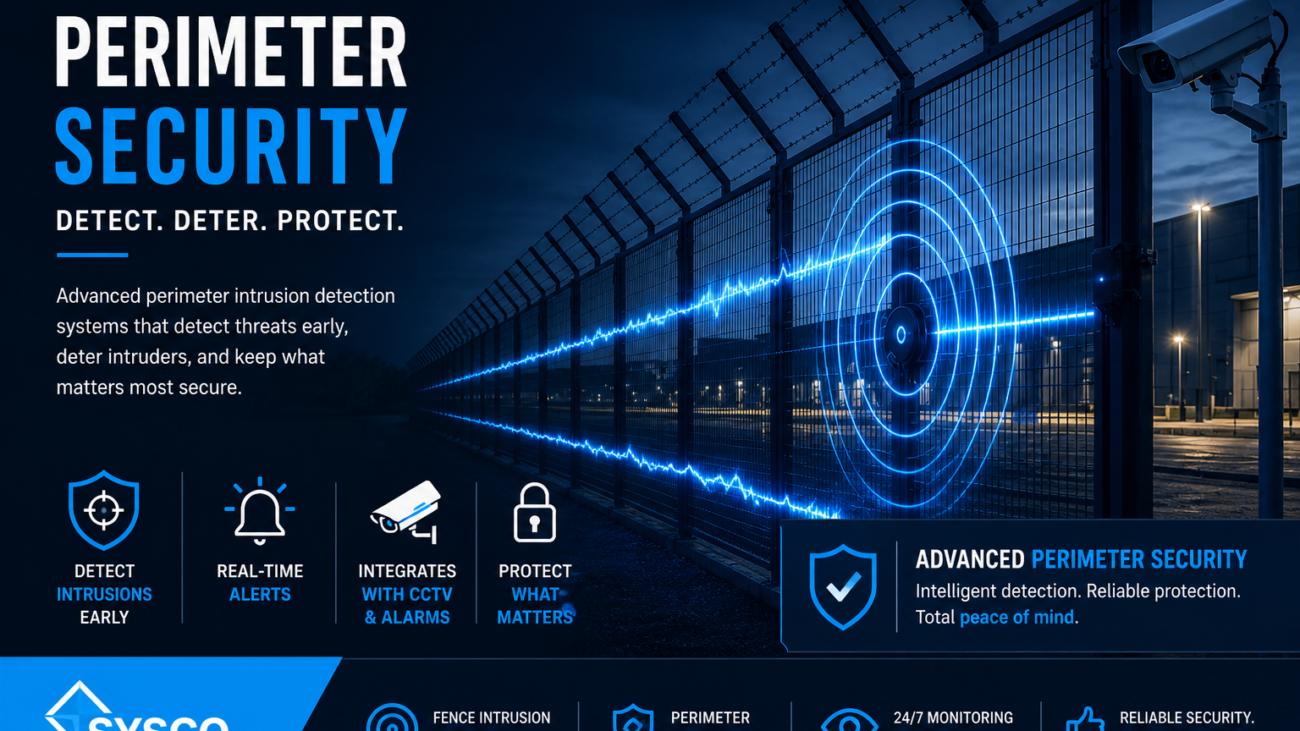
PIDS (Perimeter Intrusion Detection System) represents cutting-edge security technology specifically designed for educational environments. These systems utilise advanced sensors, artificial intelligence, and real-time monitoring to detect when someone attempts to breach the perimeter.
Unlike traditional fences and barriers, PIDS systems:
- Detect actual intrusion attempts rather than relying solely on physical barriers
- Minimise false alarms through intelligent filtering technology
- Operate 24/7 with real-time alerts to security personnel
- Integrate seamlessly with existing campus security infrastructure
Physical Security Systems Integration
Comprehensive physical security systems combine multiple technological and procedural elements:
Perimeter Protection Components:
- Access control gates and bollards at entry points
- CCTV surveillance integrated with perimeter detection
- Advanced fencing systems with intrusion sensors
- Lighting systems that enhance visibility without creating intimidating environments
- Mobile patrol integration with automated alerts
Perimeter Detection Systems work in concert with these physical elements, creating layered security that’s both effective and unobtrusive.
Designing Security Without Creating Prison-Like Environments
The critical challenge for schools and universities is implementing security while preserving the open, welcoming character that makes these institutions effective learning environments.
Aesthetic Integration of Security Technology
Modern perimeter security installation at educational institutions should:
- Blend with campus aesthetics: Security measures should complement rather than dominate the visual landscape
- Maintain accessibility: Legitimate visitors and community members should experience minimal friction
- Preserve outdoor spaces: Athletic fields, courtyards, and common areas should remain functional and inviting
- Support community engagement: Security measures shouldn’t isolate the institution from its surrounding community
Practical Implementation Strategies
Key Perimeter Security Installation considerations for schools and universities:
Controlled Access Points:
- Implement smart gates that provide quick, trackable entry for authorised personnel
- Create visitor check-in systems that are secure but welcoming
- Design traffic flow that accommodates school pickup/drop-off while maintaining perimeter integrity
Strategic Perimeter Protection Placement:
- Focus on administrative buildings, research facilities, and vulnerable areas
- Use landscaping creatively to integrate security barriers naturally
- Implement graduated security zones allowing different access levels for different areas
Technology-Forward Approaches:
- Install perimeter intrusion detection systems that operate silently and invisibly
- Use mobile technologies enabling security staff to monitor from patrol vehicles
- Deploy AI-powered analytics reducing false alarms and improving response efficiency
Perimeter Security Systems for Different Campus Environments
Primary and Secondary Schools
Schools require:
- Controlled single-entrance designs during instructional hours
- Monitoring of recreational areas and field facilities
- Perimeter intrusion detection systems detecting after-hours access
- Integration with emergency communication systems
Implementation example: A school might install electronic gates at the main entrance requiring visitor verification, combined with PIDS security sensors around the perimeter that alert staff to any climbing or fence-cutting attempts, particularly after hours.
University Campuses
Universities face different challenges:
- Multiple entry points across extended grounds
- 24/7 operations with varying pedestrian density
- Research and residential security requirements
- Community event hosting and campus partnerships
Implementation example: A university might implement distributed perimeter protection across critical zones, with different security levels for research facilities, dormitories, athletic areas, and public spaces. Perimeter detection systems would focus on deterring theft and unauthorised access to laboratories and technology centers.
Benefits of Modern Perimeter Security Installation
Immediate Safety Advantages
- Threat Detection and Deterrence: Visible security measures deter casual intrusion attempts; sophisticated PIDS security systems detect determined attackers
- Rapid Response Capability: Real-time alerts enable security teams to respond to incidents within seconds
- Incident Documentation: Integrated CCTV provides evidence for law enforcement and insurance purposes
- Emergency Lockdown Support: Perimeter security enables rapid building isolation during emergencies
Long-Term Institutional Benefits
- Insurance premium reductions: Security measures often qualify institutions for insurance discounts
- Liability protection: Documented security systems demonstrate reasonable care
- Community confidence: Parents and stakeholders feel reassured by visible security measures
- Operational efficiency: Modern systems reduce manual patrol requirements, optimising security staff allocation
Psychological and Social Benefits
Beyond physical protection, proper perimeter protection provides:
- Reduced anxiety among students and staff
- Confidence in emergency preparedness
- Visible commitment to community safety
- Support for learning and work without security concerns
Implementing Perimeter Security: Best Practices
Assessment and Planning
Before perimeter security installation, conduct thorough assessments:
- Map all entry and exit points
- Identify vulnerable areas and high-value assets
- Evaluate current security measures
- Determine appropriate access control levels for different zones
- Assess integration with existing security infrastructure
Technology Selection
Choose perimeter intrusion detection systems based on:
- Campus geography and climate conditions
- Integration with existing CCTV and access control
- False alarm rates and filtering capabilities
- 24/7 monitoring support options
- Scalability for future expansion
Staff Training and Protocols
Technology alone cannot ensure security. Staff must:
- Understand system capabilities and limitations
- Follow standardised response protocols
- Receive regular training updates
- Maintain equipment properly
- Conduct regular drills and security reviews
Community Communication
Transparent communication prevents misunderstandings:
- Explain security measures to students and families
- Outline emergency procedures clearly
- Emphasise that security is designed to prevent incidents, not respond to existing threats
- Regular updates on security effectiveness
Addressing Common Concerns
“Won’t visible security intimidate students?”
Modern perimeter protection systems are designed for minimal visual impact. Electronic sensors and smart fencing systems work invisibly, while visible elements like gates and access points can be designed as integral campus features.
“How much does perimeter security installation cost?”
Costs vary based on campus size, existing infrastructure, and technology selection. However, the investment pays dividends through:
- Insurance premium reductions (often 10-20%)
- Staff efficiency improvements
- Potential prevention of costly incidents
- Long-term liability protection
“Can systems be flexible as needs change?”
Modern perimeter intrusion detection systems are designed for scalability and modification. As campuses expand, security needs change, and new threats emerge, systems can be updated and reconfigured.
The Sysco Tech Approach to Campus Security
At Sysco Tech, we understand that educational institutions require security solutions that are simultaneously:
- Effective: Utilising latest technology to prevent unauthorised access
- Unobtrusive: Integrating seamlessly with campus environments
- Scalable: Growing with institutional needs
- Reliable: Operating 24/7 with exceptional uptime and support
Our perimeter security systems and PIDS security solutions have been implemented successfully across UK schools and universities, protecting communities while maintaining the open, welcoming character essential to education.
Conclusion
Perimeter security for schools and universities represents an essential investment in institutional safety that need not compromise educational values or campus character. Through intelligent application of perimeter protection, perimeter intrusion detection systems, and integrated physical security systems, institutions can create secure learning environments where students, staff, and visitors feel protected without feeling imprisoned.
The question isn’t whether to implement perimeter security installation – modern educational institutions can no longer ignore security requirements. The question is how to do it intelligently, maintaining the open, welcoming spirit that makes schools and universities valuable community institutions.
Modern perimeter detection systems and PIDS technology provide the answer: comprehensive security that operates invisibly, responds intelligently, and protects effectively.
Ready to discuss perimeter security solutions for your educational institution? Contact SyscoTech today for a comprehensive security assessment and personalised recommendations.
About Sysco Tech
Sysco Tech provides enterprise-grade perimeter security systems, PIDS security, and integrated physical security systems for educational institutions, corporate facilities, and critical infrastructure throughout the UK. We combine cutting-edge technology with decades of security expertise to deliver solutions that protect people and assets without compromising accessibility or community values.
Visit us at syscotech.co.uk for more information about our comprehensive security solutions.