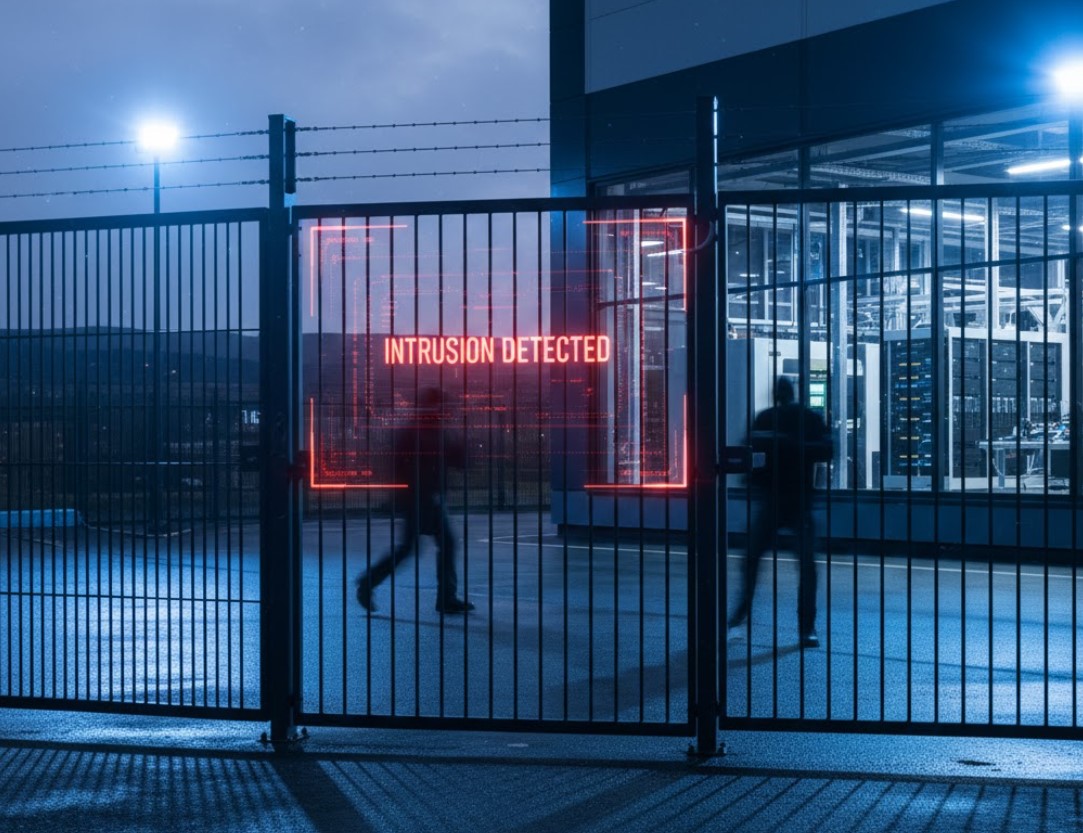
At Sysco Tech, we work with industrial, manufacturing, and critical infrastructure organisations across the UK that are facing a rapidly changing threat landscape. Facilities that were once considered low-risk are now being targeted by organised groups with clear intent, planning, and knowledge of site layouts, supply chains, and vulnerabilities.
Recent high-profile incidents involving break-ins, vandalism, and deliberate damage to machinery have highlighted a hard truth: traditional security approaches are no longer enough.
In January 2026, an aerospace manufacturing facility in Musselburgh, near Edinburgh, suffered a deliberate overnight break-in that resulted in extensive damage to CNC machines, servers, and computer systems. The incident demonstrated how determined intruders were able to access the site perimeter, reach critical assets, and cause severe operational disruption before any effective intervention took place. CCTV alone cannot stop an intrusion, guards can only respond once an incident is already underway, and alarms triggered at the building line are often too late.
This is where perimeter security systems have become a critical requirement rather than an optional upgrade.
What Are Perimeter Security Systems?
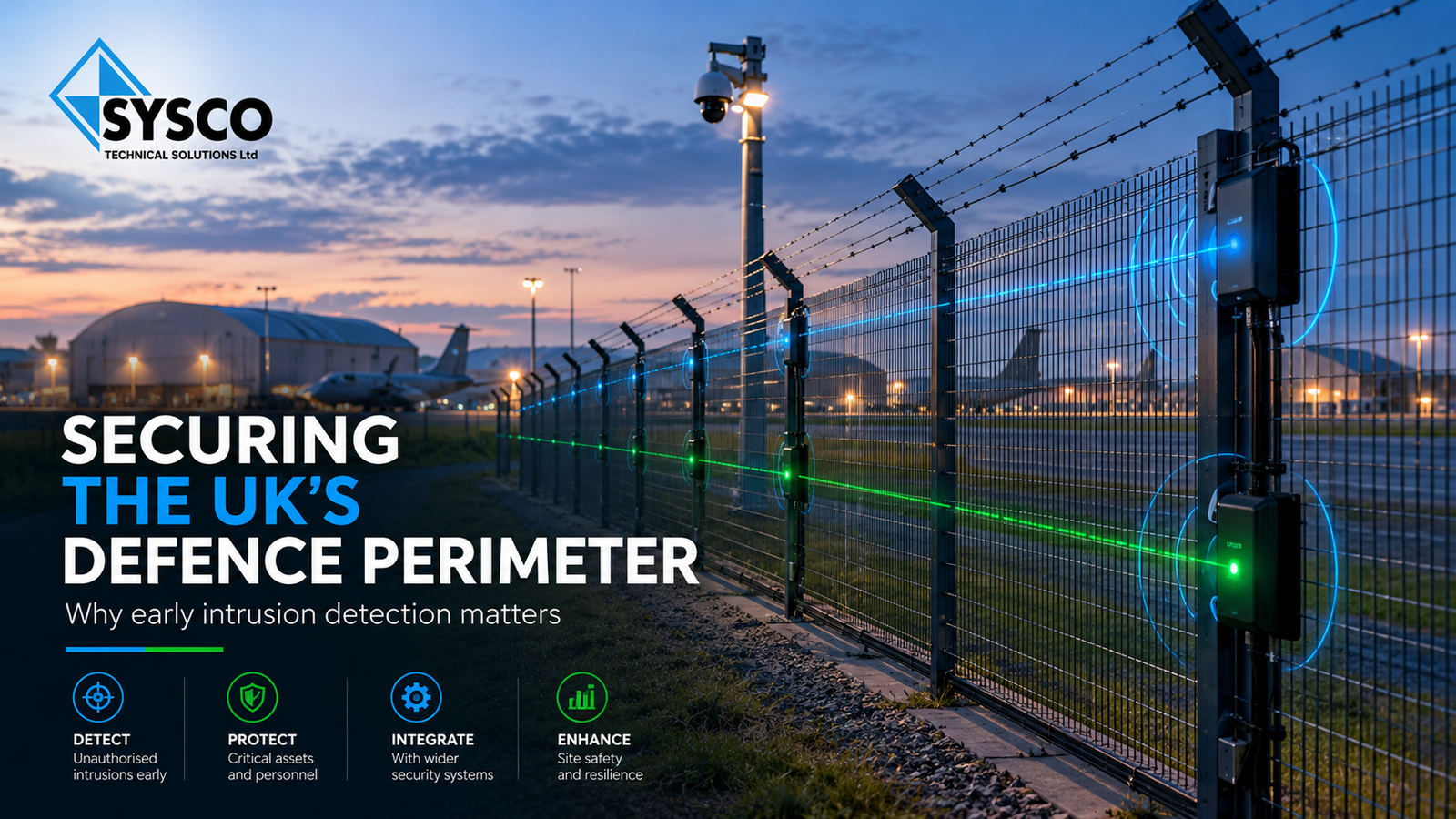
Perimeter security systems are technologies and solutions designed to detect, deter, and delay unauthorised access at the outer boundary of a site. Instead of waiting for intruders to reach buildings, perimeter protection focuses on identifying threats at the earliest possible stage.
A properly designed system provides an early-warning layer that gives security teams valuable time to assess, verify, and respond.
At Sysco Tech, perimeter security systems typically combine:
- Physical barriers such as fencing or walls
- Electronic perimeter intrusion detection technologies
- Centralised monitoring and alerting
- Clear response and escalation procedures
Together, these elements create a proactive defence strategy rather than a reactive one.
The Shift From Reactive Security to Proactive Perimeter Protection
Historically, many organisations relied on CCTV, access control, and internal intruder alarms. While these measures still have a role, they share a critical weakness: they activate after the perimeter has already been breached.
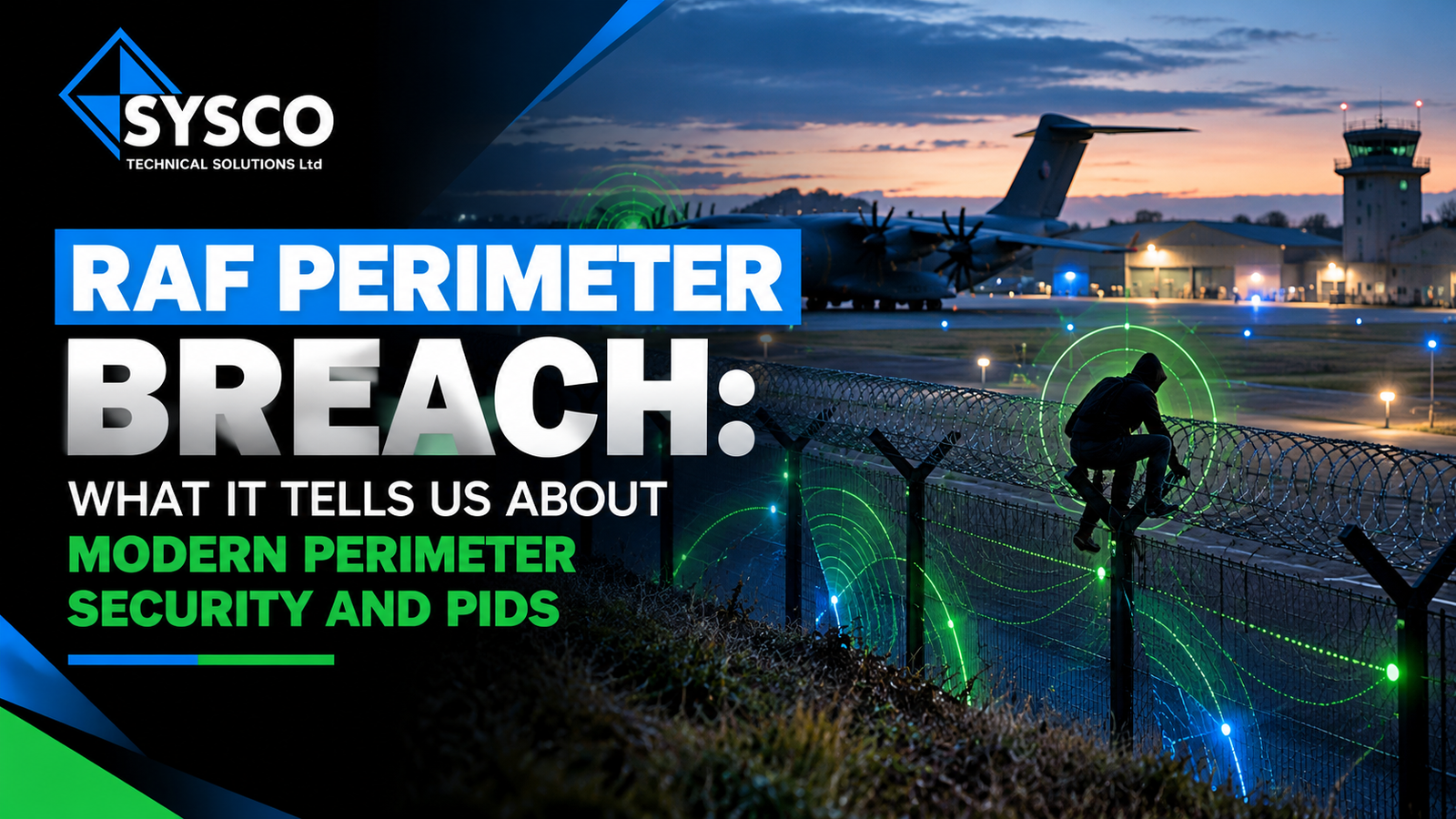
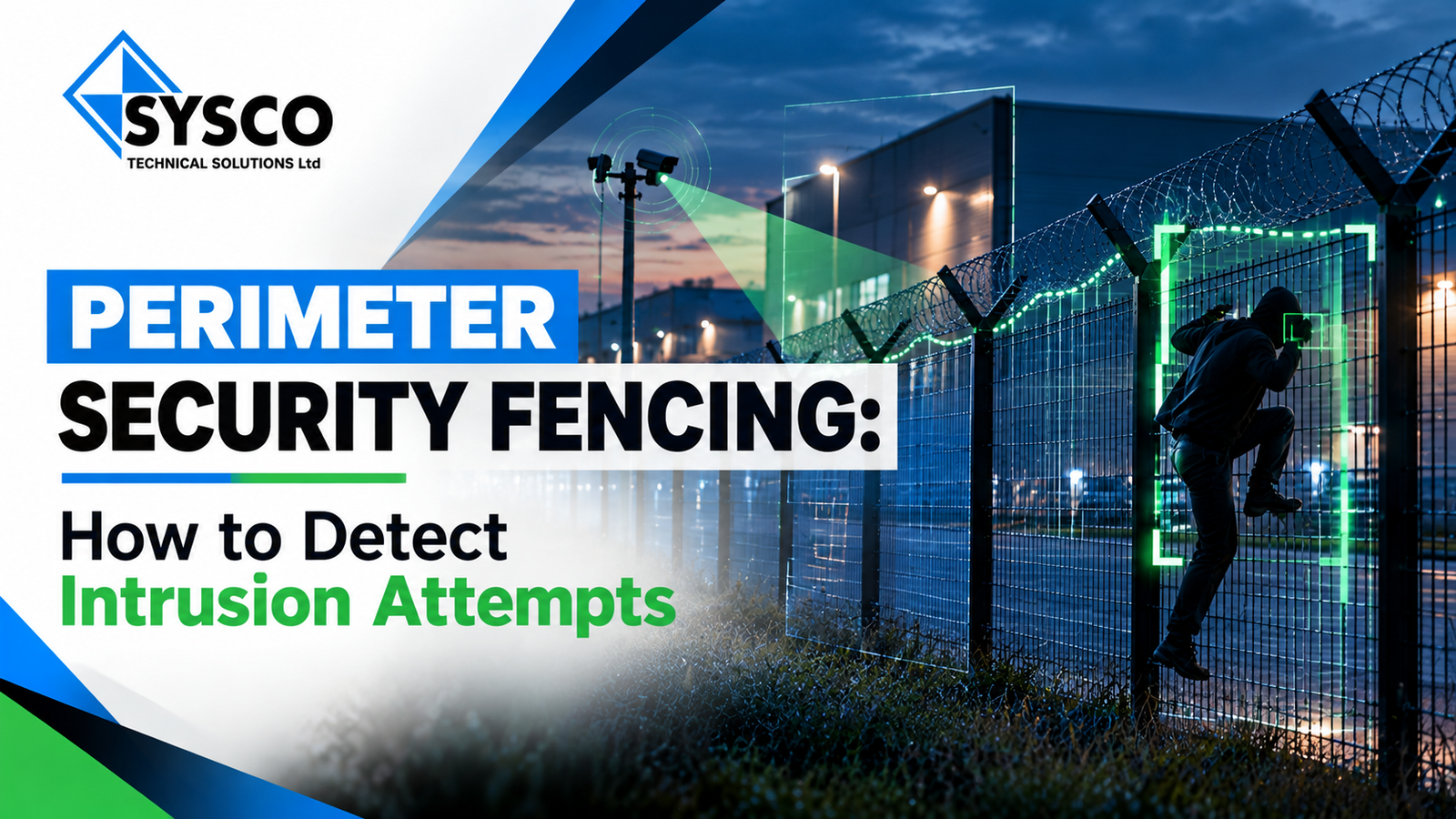
Perimeter protection changes this model by detecting climbing, cutting, lifting, or crossing attempts in real time. In industrial and critical infrastructure environments, minutes matter. Early detection can be the difference between a controlled response and severe operational disruption.
Understanding Perimeter Intrusion Detection
Perimeter intrusion detection refers to the use of sensors and intelligent technologies to identify unauthorised attempts to breach a site boundary.
Modern perimeter detection systems are designed to operate continuously, reduce false alarms, and provide precise location data for faster response.
Types of Perimeter Intrusion Detection Systems
At Sysco Tech, we design perimeter intrusion detection systems based on risk, layout, and operational needs. There is no single solution suitable for every environment, which is why a layered approach is often the most effective.
Fence-Mounted Perimeter Detection Systems
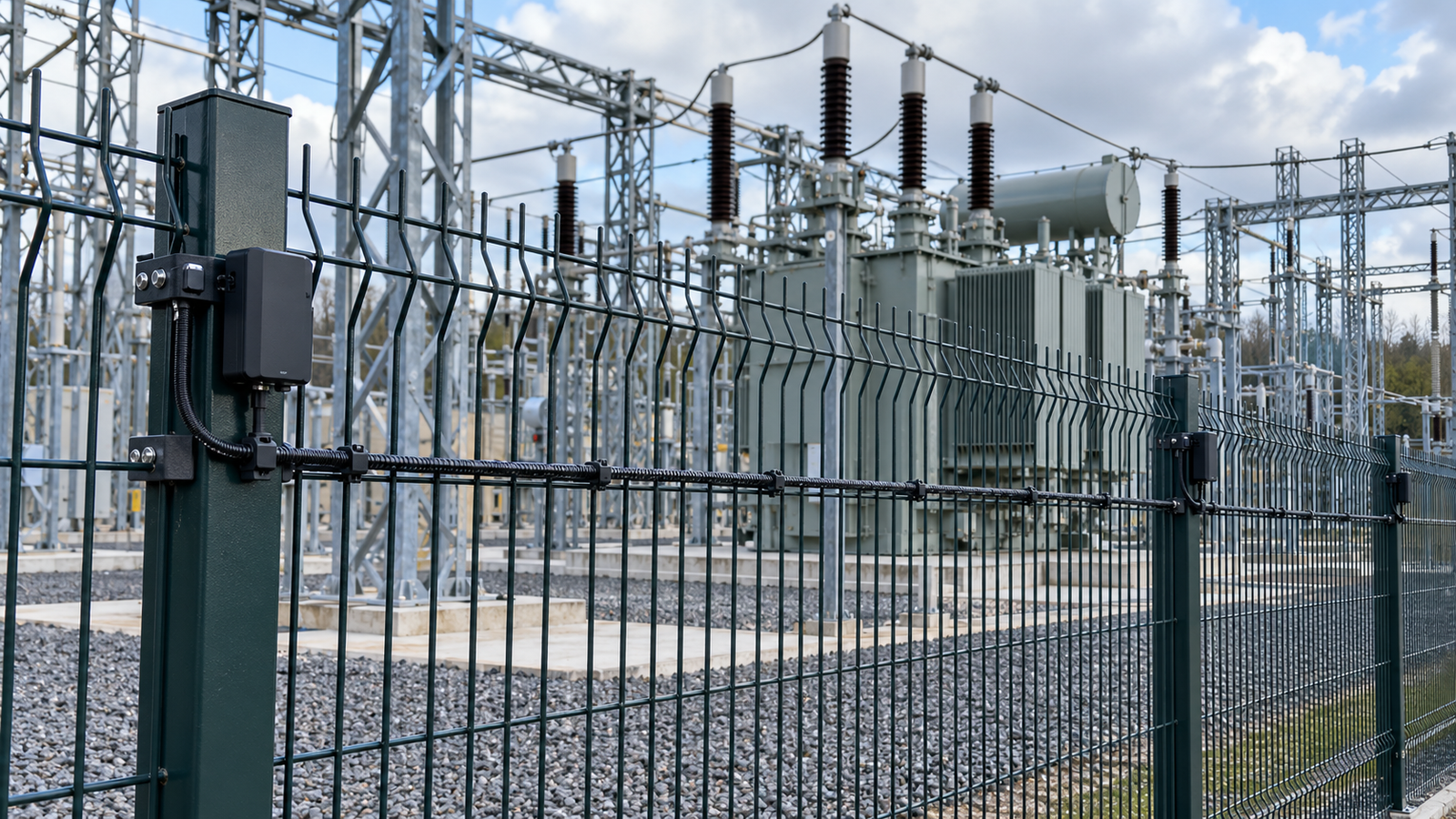
Fence-mounted perimeter detection systems are installed directly onto existing perimeter fencing. These systems detect vibration, cutting, lifting, or climbing attempts and generate alerts at the exact point of attack.
They are particularly effective for industrial and manufacturing sites where fencing already defines the site boundary. When correctly calibrated, modern fence-mounted perimeter intrusion detection systems are highly resistant to wind, rain, and environmental noise.
Buried Perimeter Intrusion Detection
Buried systems create an invisible detection zone beneath the ground, typically along the perimeter line. These perimeter intrusion detection systems are ideal where visible hardware is undesirable or where aesthetics must be preserved.
Buried perimeter protection solutions are commonly used at high-security industrial sites, utilities, and data centres where early detection and discretion are critical.
Radar and Volumetric Perimeter Detection Systems
Radar-based perimeter detection systems monitor open areas and detect movement across defined zones. Unlike fence-mounted solutions, radar systems are well suited to large, open, or irregular perimeters where fencing alone may not provide sufficient coverage.
These systems can distinguish between humans, vehicles, and animals, significantly reducing false alarms while maintaining reliable perimeter intrusion detection.
Fibre Optic Perimeter Intrusion Detection Systems
Fibre optic perimeter intrusion detection systems offer extremely high sensitivity and accuracy. They can be deployed on fences, walls, or buried underground and are capable of detecting even minimal disturbances.
Because of their scalability and precision, fibre optic systems are often used to protect critical national infrastructure and high-risk industrial facilities.
Why Industrial Sites Are Increasingly Targeted
Industrial and manufacturing facilities are increasingly targeted due to the nature of their operations and assets. These sites often contain:
- High-value machinery and tooling
- Critical production lines
- Sensitive intellectual property and data
- Links to defence, aerospace, energy, and transport supply chains
In many recent incidents, attackers were not seeking theft. Instead, their objective was disruption – damaging key equipment to halt operations, create financial loss, and generate publicity.
This shift in threat profile means perimeter protection must focus on prevention and early intervention rather than post-incident investigation. Effective perimeter security systems help organisations stay operational even in the face of evolving risks.
The Role of Perimeter Protection in Risk Reduction
Effective perimeter protection forms the foundation of a layered security strategy. When implemented correctly, it:
- Acts as a visible and psychological deterrent
- Detects threats before intruders reach buildings
- Reduces reliance on internal alarms and guards alone
- Minimises operational downtime and repair costs
At Sysco Tech, we see perimeter intrusion detection systems as the first and most critical layer of defence. By stopping incidents at the boundary, organisations significantly reduce risk across the entire site.
Designing the Right Perimeter Security System
No two sites are the same. A successful perimeter security system must be tailored to the specific environment and threat level. Key design considerations include:
- Site size, shape, and terrain
- Existing perimeter structures
- Local environmental conditions
- Threat likelihood and motivation
- Operational and maintenance requirements
Poorly designed perimeter detection systems can result in blind spots, nuisance alarms, or ineffective coverage. This is why professional risk assessment, system design, and commissioning are essential.
At Sysco Tech, we take a consultative approach to ensure each perimeter intrusion detection system delivers reliable, real-world performance.
Integration With Wider Security Systems
Modern perimeter intrusion detection systems are most effective when integrated with CCTV, alarm management platforms, and remote monitoring services.
Why Choose Sysco Tech?
Sysco Tech specialises in the design, installation, and maintenance of perimeter security systems for industrial and high-risk environments across the UK. Our solutions focus on reliability, scalability, and measurable risk reduction.
FAQs: Perimeter Security Systems
Q: What is a perimeter intrusion detection system?
Ans: A perimeter intrusion detection system uses sensors and detection technologies to identify unauthorised access attempts at a site’s boundary before intruders reach buildings, equipment, or people.
Q: How do perimeter detection systems differ from CCTV?
Ans: CCTV provides visual verification but does not prevent intrusion. Perimeter detection systems actively detect and alert security teams at the earliest stage, enabling a proactive response.
Q: Are perimeter intrusion detection systems suitable for industrial sites?
Ans: Yes. Industrial environments benefit significantly from early detection, particularly where production downtime or equipment damage would have serious consequences.
Q: Can perimeter security systems integrate with existing security?
Ans: Absolutely. Modern perimeter security systems integrate seamlessly with CCTV, access control, alarm management platforms, and remote monitoring services.
Q: How long does it take to install a perimeter security system?
Ans: Installation time depends on site size and technology choice. With proper planning, most perimeter intrusion detection systems can be installed with minimal disruption to operations.
Q: How do I choose the right perimeter protection solution?
Ans: The best solution depends on your site’s layout, risk profile, and operational needs. A professional assessment ensures the selected perimeter protection technology delivers reliable results.
Conclusion
As threats continue to evolve, perimeter security systems are no longer optional. At Sysco Tech, we help organisations protect assets, operations, and people through advanced perimeter intrusion detection systems designed for real-world risk.