
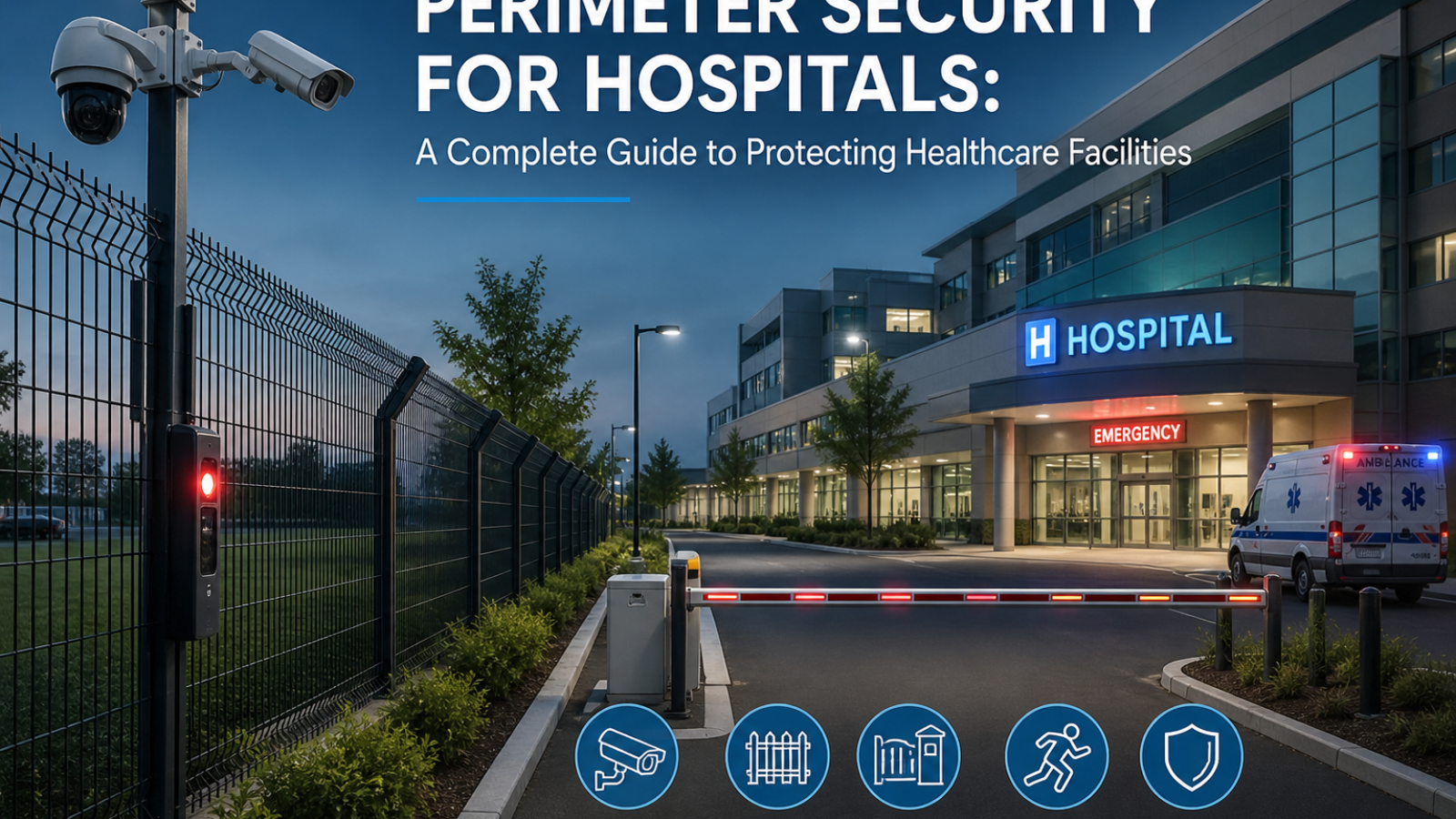
The security landscape for healthcare facilities has fundamentally changed. As hospitals and medical centres face increasing threats – from burglary and vandalism to more serious trespassing incidents – a robust perimeter security strategy has become essential. This isn’t just about compliance; it’s about creating a safe environment for patients, staff, and sensitive equipment.
In this guide, we’ll explore what effective perimeter security for hospitals actually looks like, why it matters, and how healthcare facilities can implement systems that work.
Why Hospital Perimeter Security Matters
Healthcare facilities operate around the clock, making them vulnerable to security threats at any time. Unlike office buildings with standard business hours, hospitals must maintain vigilant security 24/7.
The challenge is multifaceted:
- Patient Safety: Hospitals house vulnerable populations – including patients recovering from procedures, elderly individuals, and pediatric patients who may wander. A secure perimeter prevents unauthorised access that could endanger these patients.
- Valuable Equipment: Medical facilities store expensive diagnostic equipment, pharmaceuticals, and technology. Theft is a genuine concern that impacts hospital operations and patient care.
- Staff Protection: Healthcare workers need to feel safe in their environment, particularly during late-night or early-morning shifts when fewer people are present.
- Data Security: Modern hospitals store vast amounts of sensitive patient data. Physical security is the first line of defense against breaches and unauthorised access.
- Regulatory Compliance: Most healthcare facilities must meet specific security standards outlined by regulations and accreditation bodies. This includes documented perimeter protection strategies.
Understanding Perimeter Security Systems for Healthcare
Perimeter security for medical facilities isn’t a single product – it’s an integrated approach combining multiple technologies and strategies.
What is Perimeter Intrusion Detection?
Perimeter intrusion detection systems are designed to identify threats at the boundary of a facility before they reach the building itself. Rather than relying solely on security personnel to spot problems, these systems provide automated monitoring and alerts.
For hospitals, perimeter intrusion detection works by creating a virtual fence around the facility’s boundary. When someone attempts to breach this line, the system immediately alerts security personnel, allowing for rapid response.
Types of Perimeter Security Systems
1. Fencing and Physical Barriers
The foundation of any perimeter protection strategy starts with physical barriers. For hospitals, this might include:
- Robust, climbing-resistant fencing around the facility
- Controlled access gates at vehicle entry points
- Bollards to prevent vehicle collision
- Secure loading areas for deliveries
These physical elements do more than block entry – they signal that the facility takes security seriously.
2. Perimeter Intrusion Detection System (PIDS)
Modern intrusion detection systems use various technologies:
- Microwave Detection: Emits microwaves to detect movement within a protected zone. Highly reliable but can be affected by environmental factors like heavy rain.
- Infrared Sensors: Detects body heat and movement, particularly effective at night and in low-visibility conditions.
- Vibration Sensors: Mounted on fences, these detect attempts to climb or cut through barriers.
- Laser-Based Systems: Creates invisible beams across the perimeter; any interruption triggers an alarm.
3. CCTV and Video Surveillance
Security cameras are often the visible element of perimeter security, but modern CCTV systems do far more than record footage. Today’s systems include:
- AI-powered analytics that can distinguish between people, vehicles, and animals
- Automatic tracking of suspicious activity
- Thermal imaging for nighttime surveillance
- Integration with other security systems for coordinated response
4. Access Control Systems
For healthcare facilities, managing who enters and exits is critical. Modern access control includes:
- Card readers and biometric authentication
- Visitor management systems
- Temporary access for contractors and vendors
- Activity logging for compliance and investigation
5. Mobile Patrols and Human Monitoring
Technology works best when combined with human oversight. Security personnel using mobile patrols:
- Provide visible deterrence
- Respond to system alerts in real time
- Assess situations that automated systems flag
- Handle incidents that require human judgment
Implementing Perimeter Security in Healthcare Settings
Effective perimeter protection for hospitals requires careful planning tailored to the facility’s specific needs.
Assessment and Planning
Start with an honest evaluation of your current security posture:
- Map the facility’s physical boundaries
- Identify vulnerable points (gates, loading areas, outdoor patient areas)
- Evaluate sight lines and lighting conditions
- Document current security measures and gaps
- Consider future expansion plans
Every hospital is different. A small medical clinic has different security needs than a large trauma centre. Your perimeter security strategy should reflect your facility’s unique circumstances.
Integration is Key
The most effective perimeter protection systems work together seamlessly. When your CCTV system communicates with your intrusion detection sensors, and both alert your access control monitoring centre, you have genuine perimeter security.
Fragmented systems where technologies don’t communicate create blind spots and delayed response times.
Environmental Considerations
Healthcare facilities often occupy campuses with multiple buildings, parking areas, and pedestrian zones. Effective perimeter security must account for:
- The flow of legitimate foot traffic (patients, visitors, staff)
- Vehicle access for deliveries and emergency vehicles
- Outdoor spaces where patients may need supervised access
- Weather conditions and their impact on sensor effectiveness
- Staff shift changes and peak traffic times
A well-designed system distinguishes between normal activity and genuine threats.
Common Misconceptions About Perimeter Security
“If we have cameras, we’re secure”
Cameras record what happens; they don’t prevent it. Modern systems combine cameras with active detection and rapid response protocols. The goal is prevention and early intervention, not just documentation.
“Perimeter security is only about stopping crime”
While preventing crime is important, perimeter security also serves other functions: controlling patient wandering, preventing accidental trespassing, and creating accountability through documented access logs.
“We can rely entirely on technology”
The best perimeter detection systems still need human oversight and response. A sensor that alerts nobody helps nobody.
“Perimeter security is prohibitively expensive”
Healthcare facilities of all sizes can implement effective perimeter protection. Starting with basics like improved lighting and fencing, then adding detection systems gradually, makes sense for budget-conscious organisations.
FAQ: Perimeter Security for Hospitals
Q: What’s the difference between perimeter security and building security?
A: Perimeter security focuses on the boundary and outer edge of a facility, stopping threats before they reach the building. Building security manages access to the facility itself and internal areas. They work together as part of a comprehensive security strategy.
Q: How much does a perimeter intrusion detection system cost?
A: Costs vary significantly based on facility size, technology chosen, and installation complexity. Many healthcare facilities finance these over time.
Q: Can perimeter security systems distinguish between staff and intruders?
A: Modern systems use multiple detection methods. While sensors detect movement or breaches, security personnel and cameras assess whether the person is authorised. Advanced systems may integrate with access credentials for smarter alerts.
Q: Is perimeter security effective for hospitals with open campuses?
A: Yes, though the approach differs from enclosed facilities. Open campuses use a layered approach: perimeter fencing around key buildings, intrusion detection for critical access points, CCTV, and mobile patrols for high-traffic areas.
Q: How does perimeter security protect patient privacy?
A: By controlling who can access the facility, perimeter security prevents unauthorised individuals from entering patient care areas where HIPAA-protected information might be visible or accessible.
Q: What maintenance do perimeter security systems require?
A: Most systems require quarterly testing, sensor calibration, and regular cleaning. Weather and environmental factors can affect performance, requiring seasonal adjustments.
Q: Can existing hospital infrastructure be integrated with new perimeter security?
A: Yes. Modern systems are designed for integration with existing CCTV, access control, and alarm systems. However, older systems may require upgrades for full compatibility.
Q: How long does installation typically take?
A: Small to medium installations may take 2-4 weeks. Larger hospital campuses might take 8-12 weeks depending on scope and site conditions.
Moving Forward with Perimeter Security
Protecting a healthcare facility effectively means thinking like a security professional. What vulnerabilities exist? Where could an unauthorised person enter? What would alert staff immediately? What would allow for rapid response?
The best perimeter security systems for hospitals are those matched to your facility’s specific needs, integrated into a cohesive security strategy, and maintained by trained personnel who understand their operation.
Whether you’re managing a small urgent care clinic or a large medical centre, the principles remain consistent: physical barriers, detection systems, surveillance, and human oversight working together to create a secure environment where patients and staff can focus on healthcare rather than worry about safety.
Perimeter protection isn’t a one-time installation – it’s an ongoing commitment to maintaining a secure facility. As threats evolve and your facility grows, your security strategy should evolve too.
About Sysco Tech
Sysco Tech specialises in integrated security solutions for healthcare facilities, including comprehensive perimeter protection systems, intrusion detection, and access control. We work with hospitals, medical centres, and clinics across the UK to design and implement security strategies tailored to their unique needs.
If you’d like to discuss perimeter security for your healthcare facility, contact our team for a free consultation.

